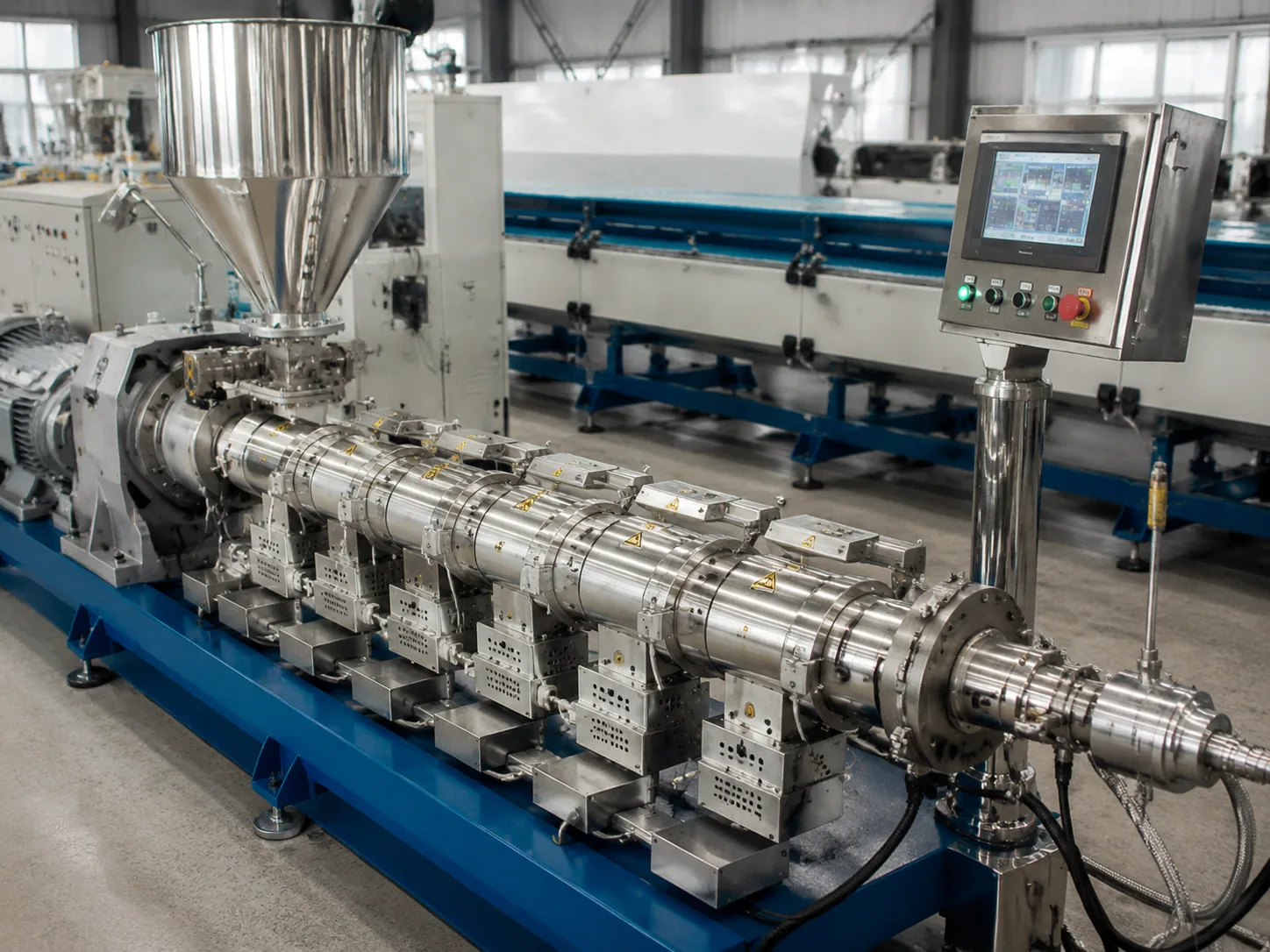
When choosing a powder coating extruder, you might first focus on output, screw diameter, motor power, and price. These are all important. But in real production, one detail often determines the smoothness of the production line’s operation: the number of heating zones.
Should the production line use 2, 3, or 4 heating zones?
The answer depends on the formula, production volume, product finish, and future production plan.
Why Heating Zones Matter in Powder Coating Extrusion
Each heating zone controls one part of the barrel temperature. During extrusion, raw materials do not change all at once. Resin first softens, then melts. Pigments, fillers, and additives are gradually mixed into the melted resin.
Heating zones are not only used for “heating.” They help create a more suitable temperature curve inside the extruder.
More Heating Zones Do Not Always Mean Better
More heating zones give more control, but they also bring higher equipment cost and require better operator experience. A factory producing simple formulas may not need the most complex setup. On the other hand, a factory that produces high gloss, matte, texture, and customized powder coatings will need more control space.
In simple words, the best choice is not the machine with the most heating zones. The best choice is the one that matches the products being made every day.
2 Heating Zones: Simple and Cost-Friendly
A 2-zone powder coating extruder is usually suitable for small production, simple formulas, or entry-level powder coating lines.
When 2 Heating Zones Can Be Enough
A 2-zone extruder can be considered when the factory mainly produces basic powder coatings with stable and simple formulations. If the resin system is not too sensitive, the filler ratio is not too high, and the target finish is not demanding, 2 heating zones may already meet the basic production need.
This type of extruder is typically used in small production lines to produce simple epoxy or polyester powder coatings or products with minimal color and formulation variations.
Where 2 Heating Zones May Be Limited
The limitation is also clear. With only 2 heating zones, the temperature curve is not very detailed. The machine has less room to adjust when the formula changes. A 2-zone extruder may still run, but the batch result may not be as stable. If the factory plans to expand soon, it may outgrow this setup quickly.
3 Heating Zones: A Practical Choice for Many Factories
A 3-zone powder coating extruder is a practical and balanced choice.
Better Balance Between Cost and Process Control
With 3 heating zones, the extrusion process can be divided more clearly. One zone can focus on early heating and softening. The next zone can support melting and mixing. The final zone can help stabilize the material before discharge.
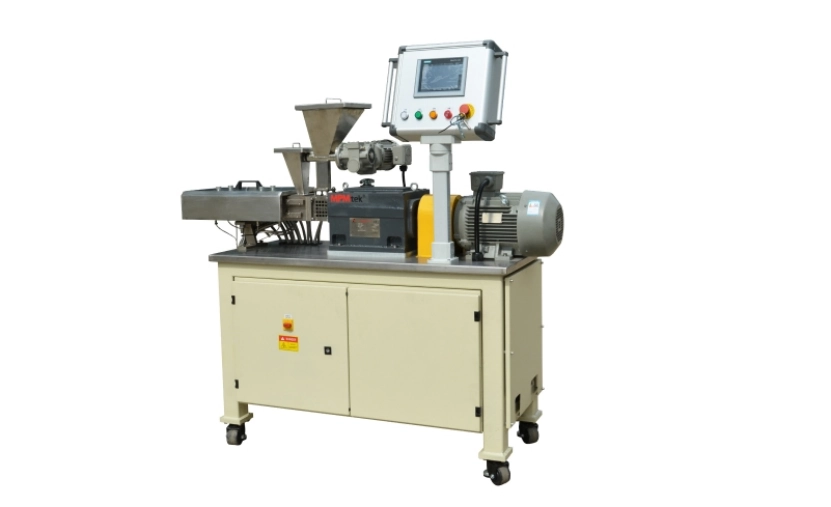
Three-zone extruders are typically suitable for medium-sized production lines. They are capable of producing conventional epoxy resins, polyesters, and blended powders, making them suitable for factories with a wide range of product categories.
Suitable for Mixed Product Orders
One day the line may produce matte black powder. Another day it may produce high gloss white. Later, it may switch to texture powder or a customized color for a specific customer. The extruder can handle more formula changes than a basic 2-zone model. It gives the technician more space to adjust resin melting, material flow, and discharge temperature. It helps reduce trial time, material waste, and repeated machine adjustment.
4 Heating Zones: Better for Demanding Formulas and Higher Stability
A 4-zone powder coating extruder is more suitable for factories that need stronger process control.
When 4 Heating Zones Make Sense
A 4-zone extruder is often recommended when the factory produces powder coatings with more demanding finish requirements. These products usually need a more careful temperature curve and more stable material flow.
It can be a good choice for:
- High gloss powder
- Sand texture powder
- Wrinkle or hammer finish powder
- Low-temperature curing powder
- Formulas with sensitive pigments or additives
With 4 heating zones, the process can be controlled in smaller steps. Feeding, melting, mixing, and discharge can each receive more suitable temperature management. This helps avoid sudden temperature changes inside the barrel.
Better Control for Sensitive Materials
Some pigments, resins, and additives do not like rough processing. If the temperature is too low, dispersion may not be enough. If the temperature is too high, the color, gloss, or surface effect may be affected.
A 4-zone extruder gives more adjustment space. For high-value powder coating products, this matters. A small difference in gloss, color, or texture can affect customer acceptance.
2 vs 3 vs 4 Heating Zones: Quick Comparison
| Heating Zones | Best For | Main Advantage |
| 2 zones | Basic formulas, small output | Lower cost and simple operation |
| 3 zones | Regular powder coating production | Balanced cost and process control |
| 4 zones | High gloss, texture, sensitive formulas, higher output | Better temperature control and batch stability |
In actual projects, the final selection should also take into account screw design, barrel structure, motor power, cooling system, grinding capacity, and the layout of the entire production line.
How to Choose the Right Powder Coating Extruder
It’s best to start with the product itself, not just the machine size.
Before choosing 2, 3, or 4 heating zones, a factory should look at several questions:
- What resin systems will be used most often?
- Will the line produce epoxy, polyester, hybrid, or special powder coatings?
- Is the target product high gloss, matte, texture, or general industrial powder?
- What is the required hourly capacity?
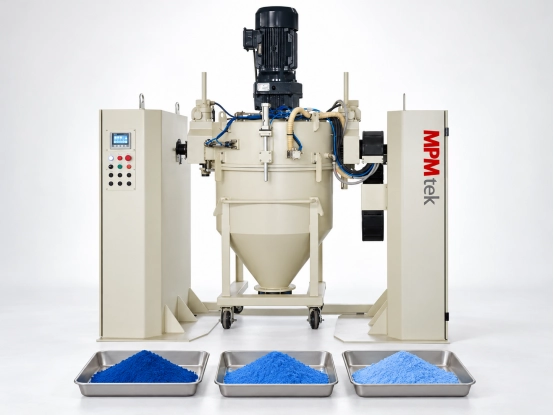
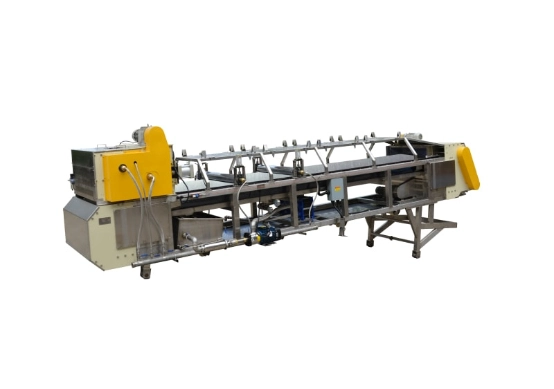
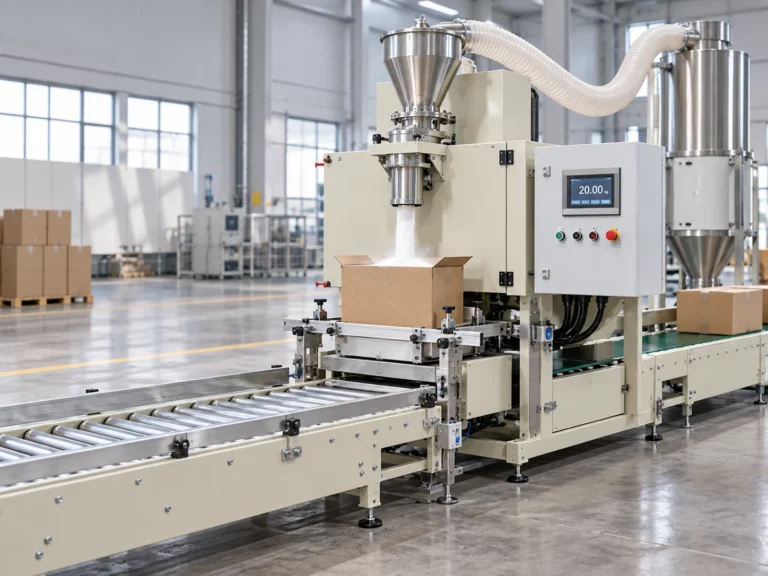
Powder coating extruders do not operate in isolation; they must also be considered in relation to mixers, cooling belts, crushers, ACM mills, classifiers, cyclone separators, dust collectors, and packaging equipment.
Final Recommendation
Choosing a powder coating extruder is not only about heating zones. Screw design, barrel structure, cooling control, motor power, PLC system, and the full line layout all affect final powder quality. MPMtek can help factories select a suitable extruder configuration based on formula type, output target, workshop layout, and long-term production plans.
For buyers who are not sure whether 2, 3, or 4 heating zones are more suitable, sharing product formulas and target output is usually the best first step. Contact us today to share your production requirements and get a practical extruder selection plan for your powder coating line.
FAQs
Q1: Is a 4-zone powder coating extruder always better than a 3-zone extruder?
Not always. A 4-zone extruder gives more temperature control, but many standard powder coating formulas can be produced well with a 3-zone extruder.
Q2: Can a 2-zone extruder produce good powder coating?
Yes, a 2-zone extruder can produce good powder coating when the formula is simple and the production requirement is not too demanding.
Q3: Which heating zone setup is better for texture powder coating?
For sand texture, wrinkle, hammer finish, or other special texture powders, 3 or 4 heating zones are usually recommended.
Q4: What else affects powder coating extrusion quality?
Screw design, feeding system, barrel cooling, motor power, temperature sensors, PLC control, and operator experience also affect extrusion quality.
Q5: How should a factory choose between 3 and 4 heating zones?
If the factory mainly produces regular industrial powder coatings, 3 heating zones may be enough. If the factory handles high gloss, texture, customized colors, sensitive additives, or larger output, 4 heating zones can offer better long-term stability.