مطردة المسمار المزدوج blockages can bring an entire machine to a halt. This is particularly problematic if you are running an automated or semi-automated powder coating line, as the loss of production time is compounded by the loss of materials and energy going to waste. Most problems are caused by a small set of predictable factors and can be addressed by a combination of equipment design improvements and process control.
Twin Screw Extruder Blockage Issues
In powder coating production, maintaining continuous extrusion flow is essential for consistent product quality. When the extruder clogs, everything downstream suffers.
Common Pain Points in Powder Coating Production
Operators often face the same frustrations: frequent extruder blockages that cause unplanned downtime and disrupt the rhythm of production. Material that solidifies inside the barrel becomes waste, leading to inconsistent coating thickness and poor color uniformity. Restarting after a blockage consumes extra energy as the system must reheat and stabilize, while maintenance crews lose valuable hours cleaning compacted residues.
How Blockages Affect Automated and Finish Powder Coating Lines
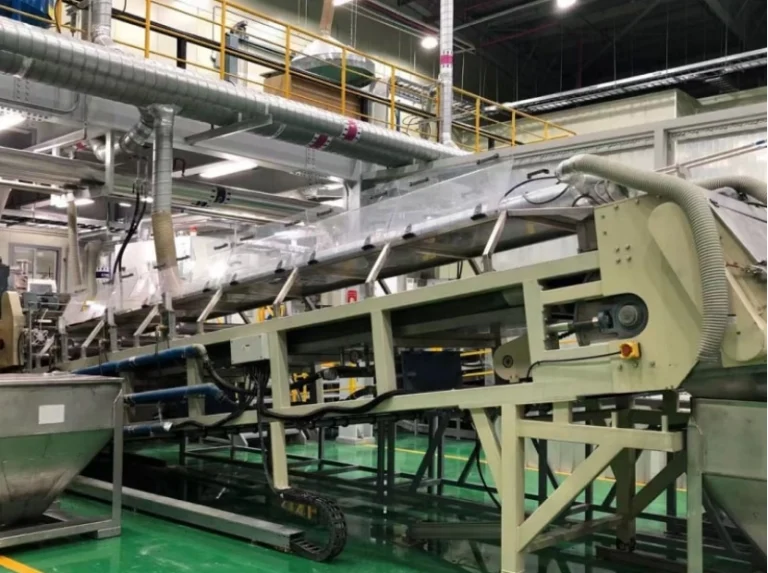
In an automated powder coating line, each stage depends on the previous one. A single stick can cause the whole process to come to a halt as it prevents material from feeding up to the cooling conveyor and mill stations. This in turn causes the idle robots, idle conveyors, and idle curing ovens to become dormant. In finish powder coating lines even a brief shutdown can alter the surface finish decreasing gloss and creating an unsmooth texture due to inadequate dispersion of the resin in the coating. All of these factors combined decrease productivity, cause plant idle time and delay meeting customer delivery promises – a major concern for manufacturers.
Key Causes of Twin Screw Extruder Blockage
Blockages rarely happen without warning; they’re symptoms of deeper process or material issues.
Material-Related Factors
Poor-quality raw materials are one of the biggest culprits. When resins or pigments are not uniformly mixed before entering the extruder, they create dense pockets that resist flow. Moisture contamination is another silent problem—it causes powders to clump and compact inside the barrel. Similarly, incorrect particle size distribution leads to unstable feeding rates that overload specific sections of the screw channel.
Temperature and Process Control Issues
Temperature control is critical in extrusion processing. Overheating or uneven temperature zones can cause partial melting of materials, which then stick to screw surfaces. On the other hand, inadequate cooling results in thermal degradation of resins used in powder coatings. Improper screw speed settings—either too high or too low—can also disturb material flow consistency.
Feeding System Problems
Feeding irregularities are a common mechanical cause of blockage. When feed hoppers are blocked or worn out, material entry becomes restricted. Air leaks or poor sealing inside feeders introduce fluctuations in pressure that destabilize feeding rates. Over time, this imbalance leads to overloading within specific segments of the extruder chamber.
Design Improvements to Prevent Blockage
Modern twin screw extruders have evolved with smarter design features aimed at minimizing these operational risks.
Optimizing Twin Screw Extruder Design for Smooth Operation
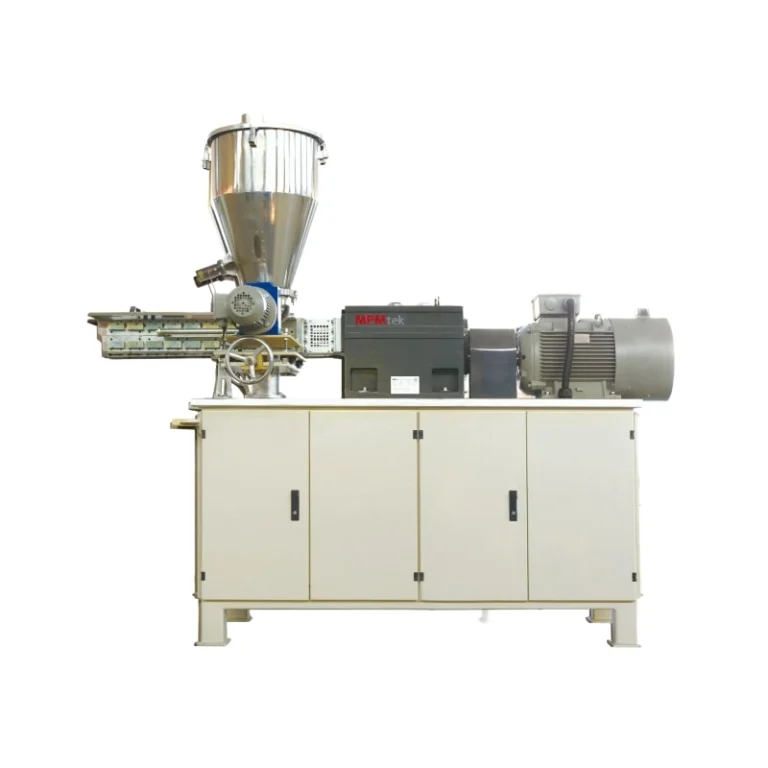
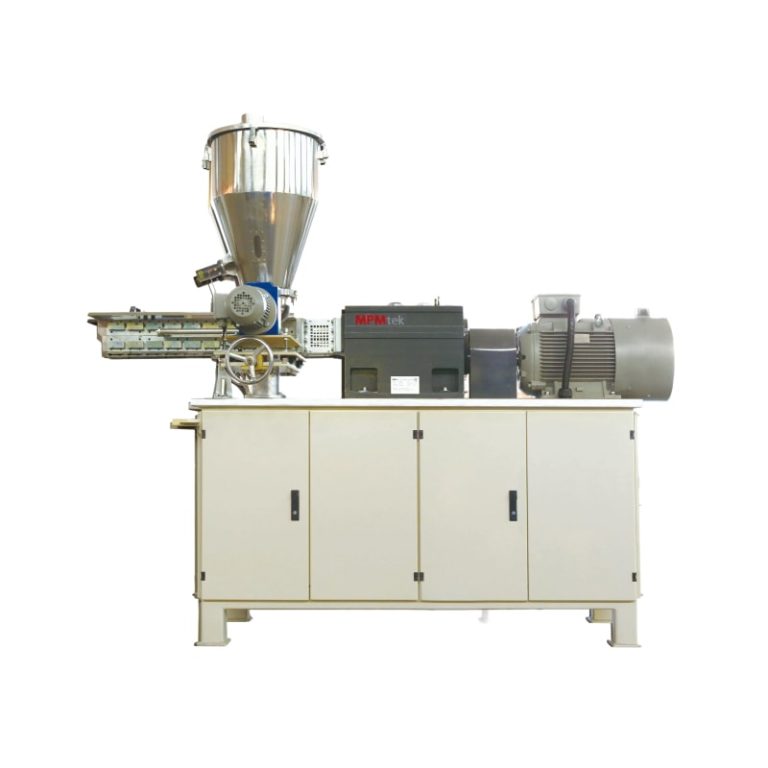
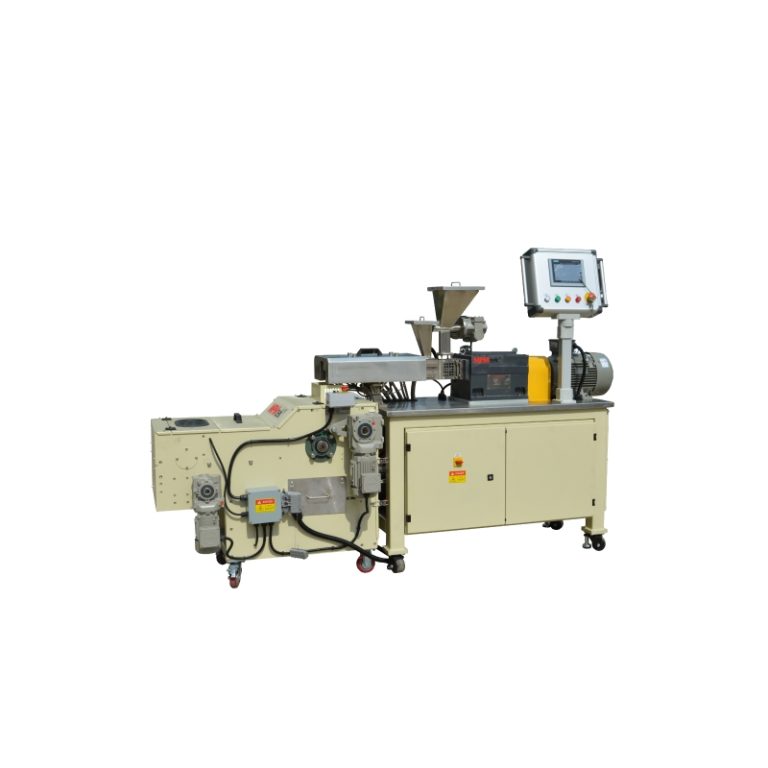
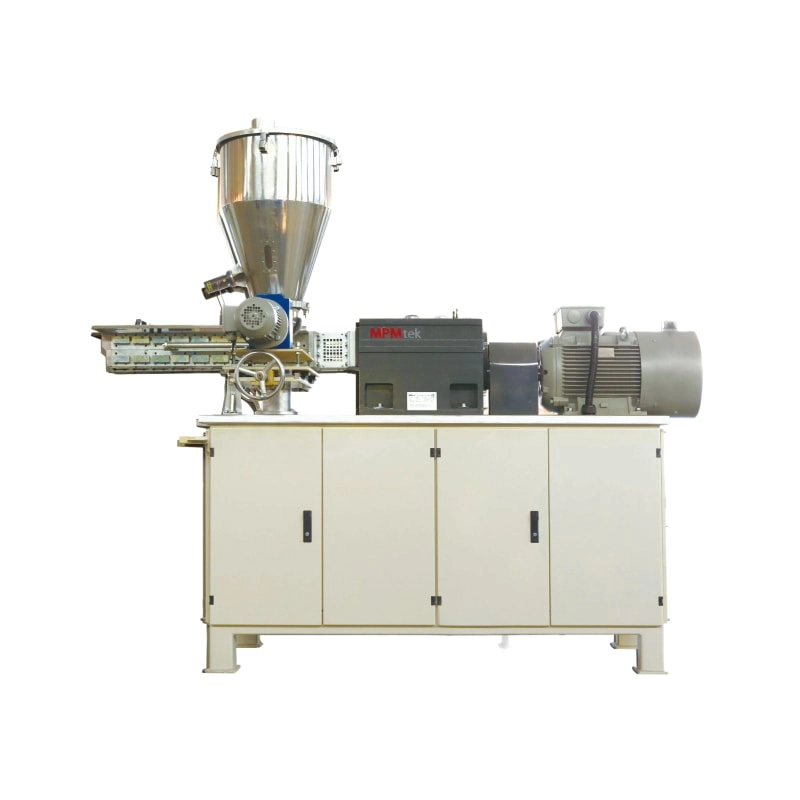
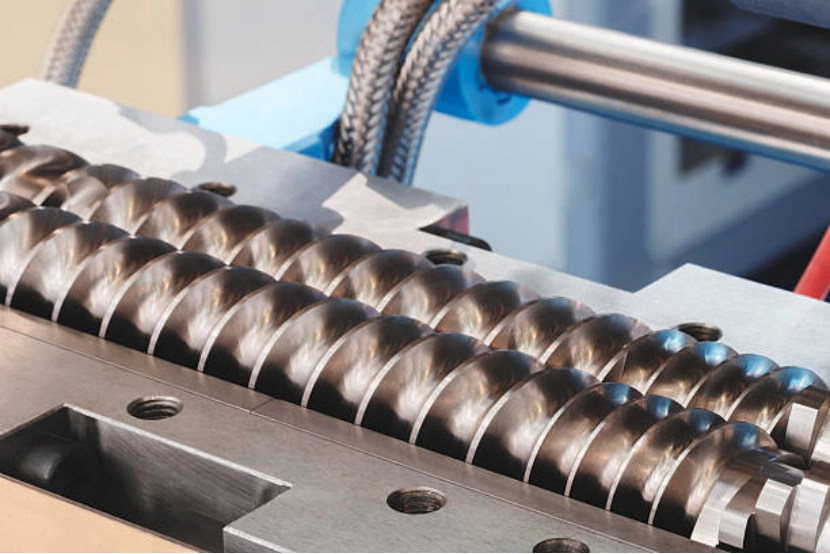
A well-designed طاردة can significantly reduce blockage frequency. Twin Screw Extruder is designed with two co-rotating screw-shafts, Raw materials are perfectly to be dispersed and distributed by precise kneading-elements with high speed in the barrel. This co-rotating design ensures more uniform shear forces during mixing and prevents localized buildup.
Screw segments and kneading blocks are designed and manufactured to be uniform meshing clearance (radically, axially and normally) between both two screw-shafts and screw-shafts to barrel during operation by 3D-CAD & CAM. This precise alignment allows self-wiping action along the screws—meaning fewer solidified particles remain stuck inside after each batch run.
Wear-resistant coatings on screws and barrels further minimize adhesion while venting zones help release trapped air or volatile compounds before they cause back pressure.
Integrating Smart Control Systems
Automation plays a major role in preventing blockages before they occur. PLC and HMI are used for control with friendly interface, easy to operate. Real-time monitoring systems track temperature and pressure variations across multiple zones—ensuring stable operation under varying loads.
Automated alarms can alert operators when torque levels spike abnormally—a sign that material flow resistance is increasing. All processing parameters are recipe-mode managed (data storage, recall and modify), and monitored by the production controller in office terminal or mobile terminal. With this kind of data logging capability, engineers can analyze historical performance trends to fine-tune future batches for better stability.
Quick Cleaning and Recovery Strategies After Blockage
Even with preventive measures, occasional blockages still occur. The key is how quickly operations recover afterward.
Efficient Cleaning Procedures for Downtime Reduction
Mechanical Cleaning Steps
After stopping production safely, screws should be disassembled carefully using non-metal tools to avoid surface damage. Compacted residues can then be removed manually before reassembly. Barrels should be cleaned using heat-resistant brushes or approved solvents suitable for resin removal without corroding metal components.
Thermal Cleaning Methods
Controlled heating cycles work well for clearing residual materials that mechanical cleaning cannot reach. By gradually raising temperature within safe limits, hardened deposits soften enough to be flushed out without damaging internal surfaces.
Typical benefits to a manufacturing facility after implementing designs such as segmented screws and process monitoring into their automated powder coating lines, include: reduced downtime per week, increased throughout through the use of more reliable feeding systems, and better batch-to-batch reproducibility.
Maintenance Tips for Long-Term Reliability
Routine maintenance ensures reliability over years of continuous operation rather than months.
Routine Inspection Practices
Regularly check for wear patterns on the screws, misalignment of the barrel and also the seal around the feed zones. Temperature sensors should also be calibrated at regular intervals as incorrect readings can cause the printer to over heat in the future.
Preventive Maintenance Scheduling
Don’t wait for a blockage, clean periodically based on total volume produced during a shift cycle. Having spare parts like screws, seals and bearings on hand to swap out during an outage will reduce the lost time due to a shutdown waiting for supplies to arrive.
Enhancing Production Efficiency with Reliable Equipment Solutions
High-performance equipment is foundational for any modern powder coating plant aiming at efficiency gains.
How Upgraded Extruders Support Modern Powder Coating Lines
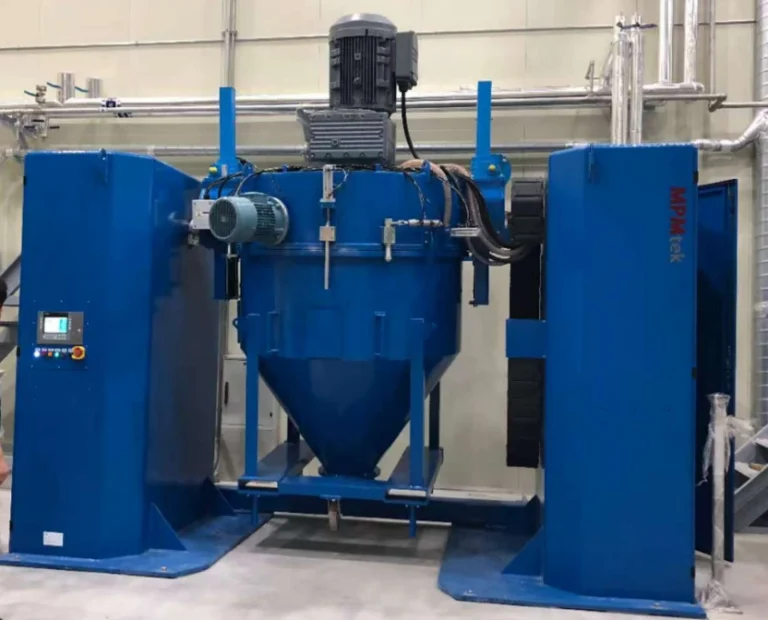
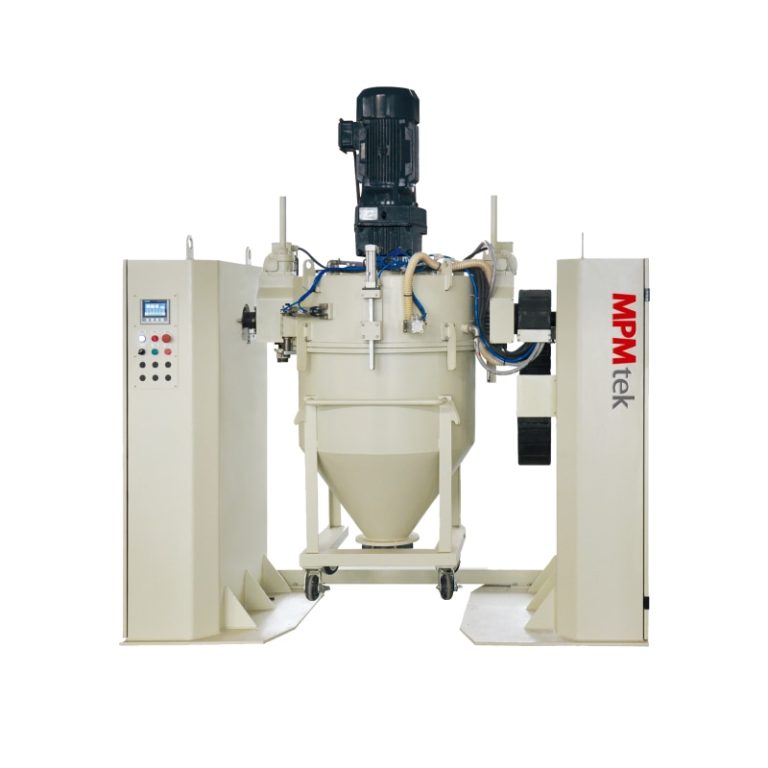
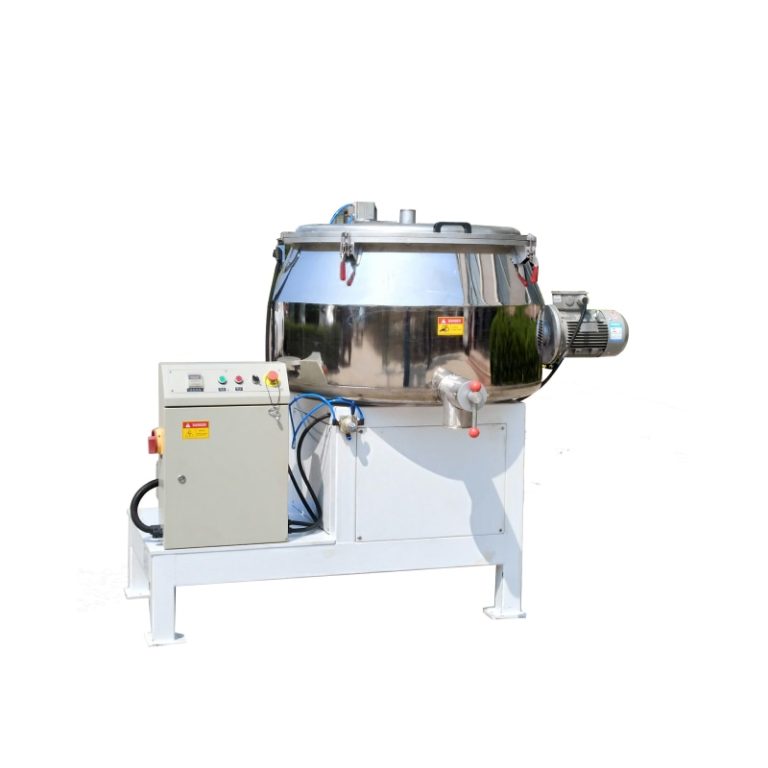
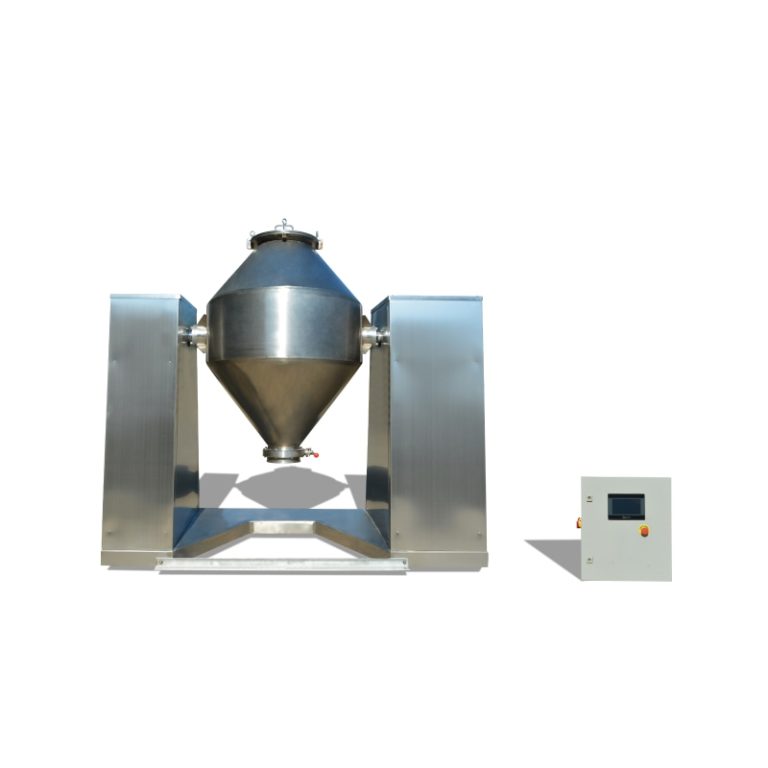
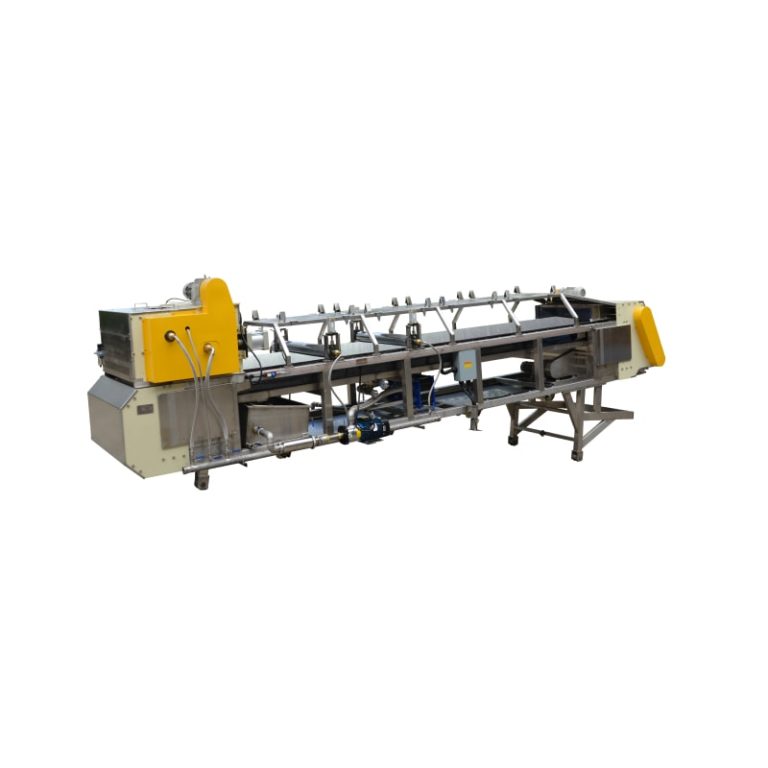
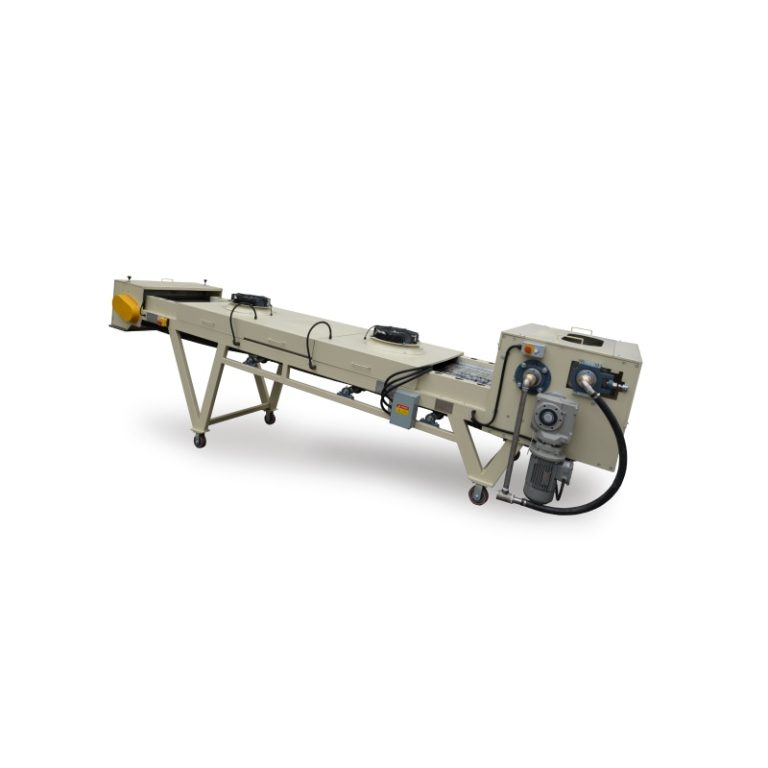
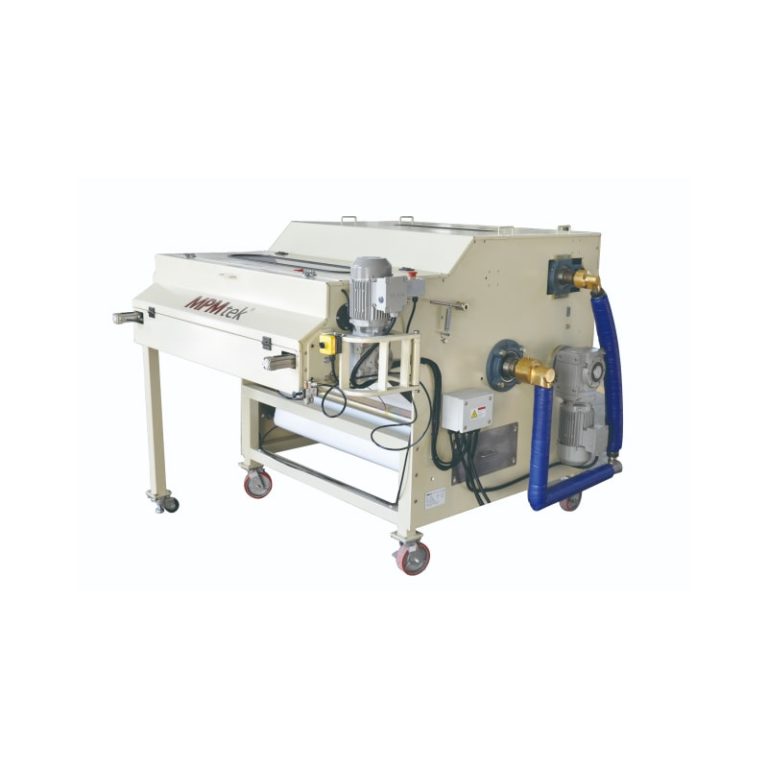
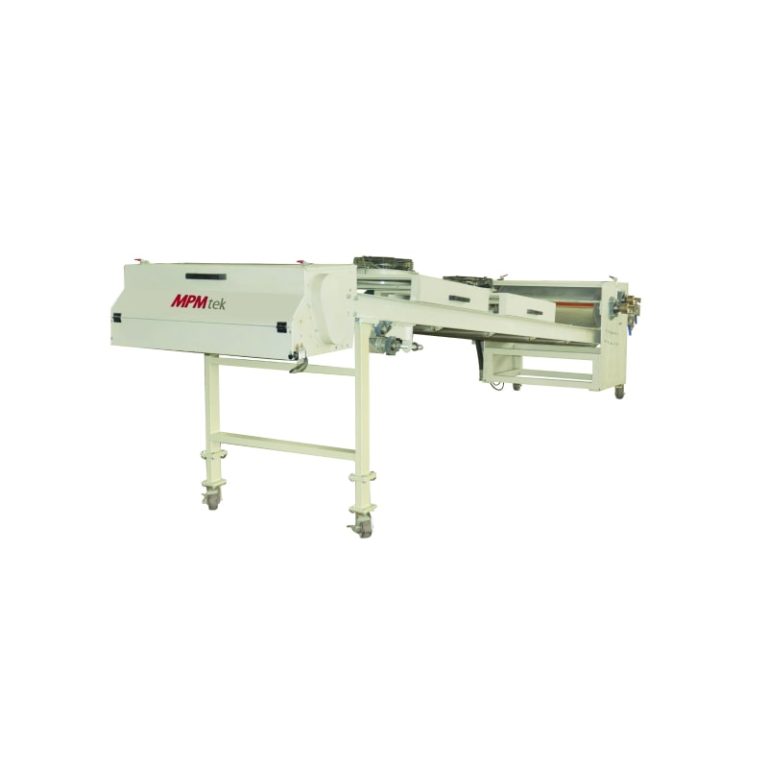
Twin Screw Extruder is very important equipment for powder coatings processing. Its advanced co-rotating design improves mixing uniformity while delivering consistent output quality across different formulations. For plants operating automated powder coating lines or finish powder coating lines requiring precise color matching and gloss levels, upgraded extruders provide seamless integration between upstream mixers and downstream cooling conveyors.
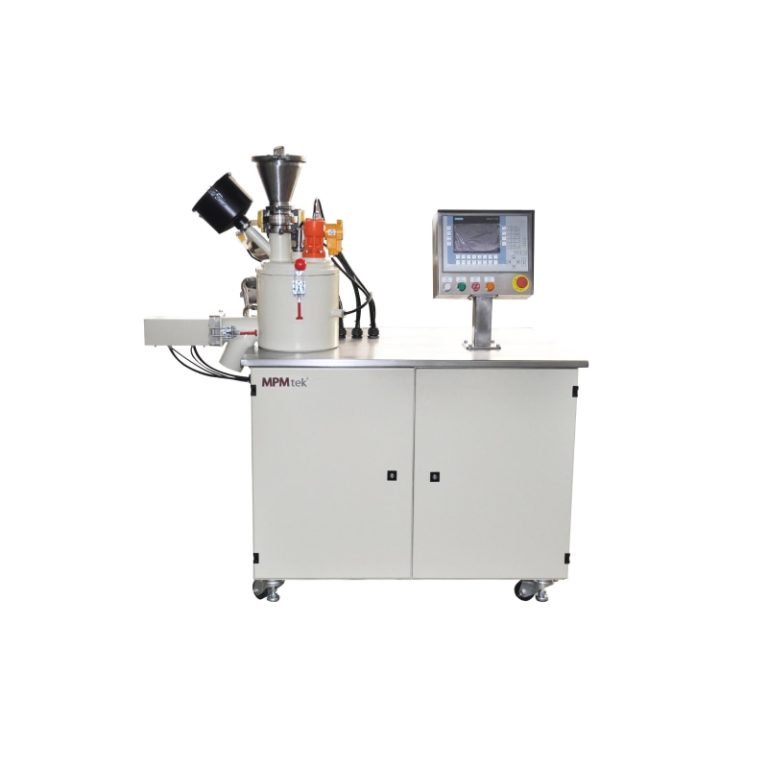
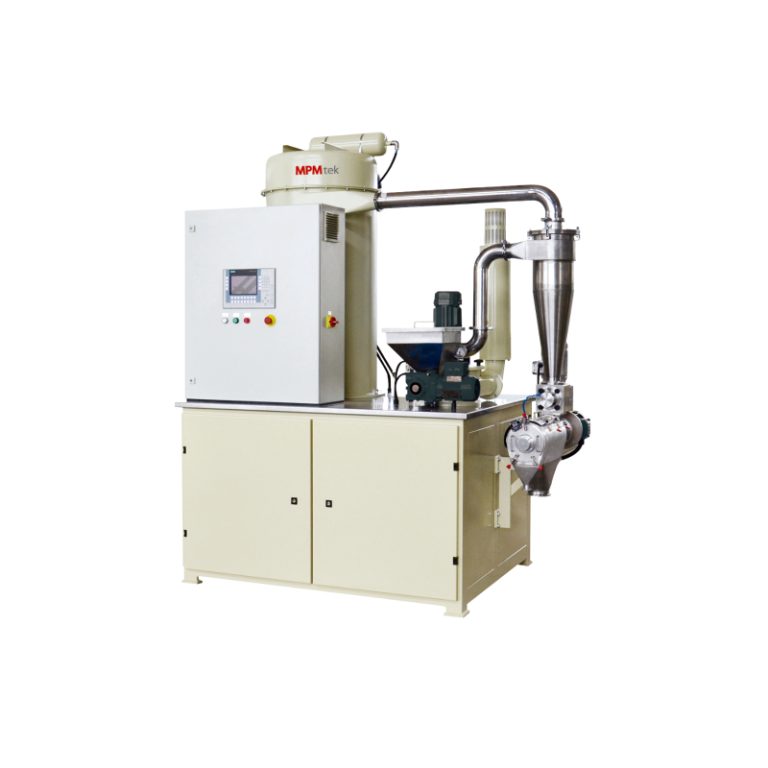
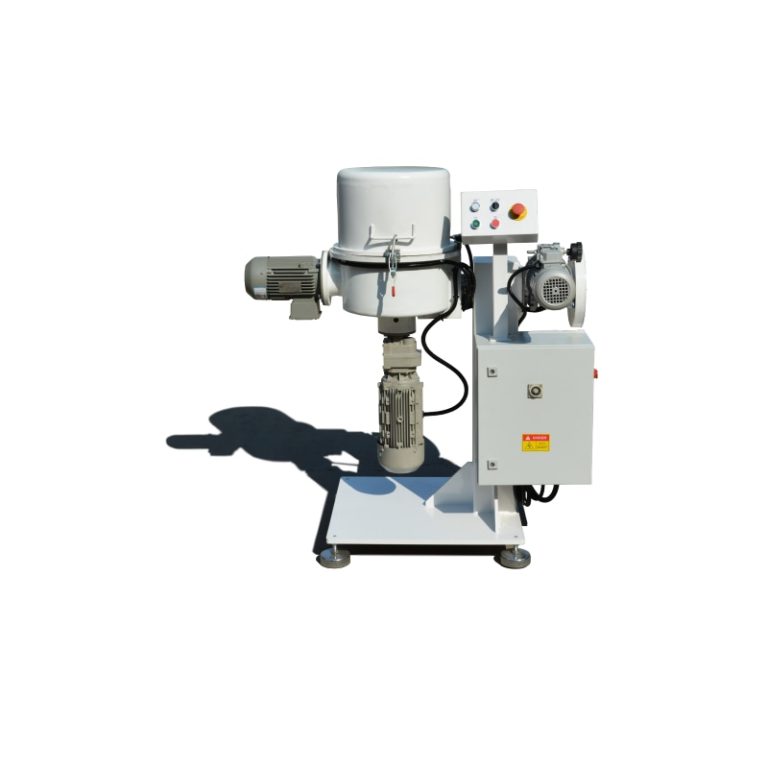
MPMtek’s engineering philosophy focuses on precision manufacturing supported by intelligent controls—ensuring operators spend less time troubleshooting mechanical issues and more time optimizing product quality. It is committed to the research and development of precise, intelligent, efficient, and human-friendly powder coating production equipment.
Call to Action
Contact our technical team today via maple@powdermachines.com.cn or call +86 15254521799 to discuss customized solutions that reduce downtime in your twin screw extruder machine setup while enhancing productivity across your entire powder coating line.
الأسئلة الشائعة
Q1: What causes frequent blockages in twin screw extruders?
They’re usually caused by poor raw material quality, moisture contamination, uneven temperature zones, or irregular feeding rates.
Q2: How often should I clean my twin screw extruder?
Cleaning frequency depends on production volume; however regular inspection after every few batches helps prevent buildup from turning into full blockage.
Q3: Can smart control systems really prevent blockages?
Yes—real-time monitoring detects early signs like rising torque or pressure fluctuations before clogging fully develops.
Q4: What’s the advantage of using segmented screws?
Segmented screws allow better self-cleaning performance while improving mixing flexibility according to different formulations.
Q5: Why is temperature uniformity so critical?
Uneven heating causes localized melting which sticks inside barrels; consistent temperature maintains smooth material flow throughout extrusion stages.