A 150 La ligne de production de revêtement en poudre kg/h pose souvent la question: est-ce suffisant pour un nouveau fabricant? Pour beaucoup de startups, la réponse est oui. Il trouve un bon équilibre entre des coûts raisonnables et des performances solides. Ce niveau de production permet aux entreprises d’expérimenter des recettes, de gérer des commandes modestes et de réaliser des contrôles de qualité rigoureux avant de grandir.
Que fait une ligne de production de revêtement en poudre
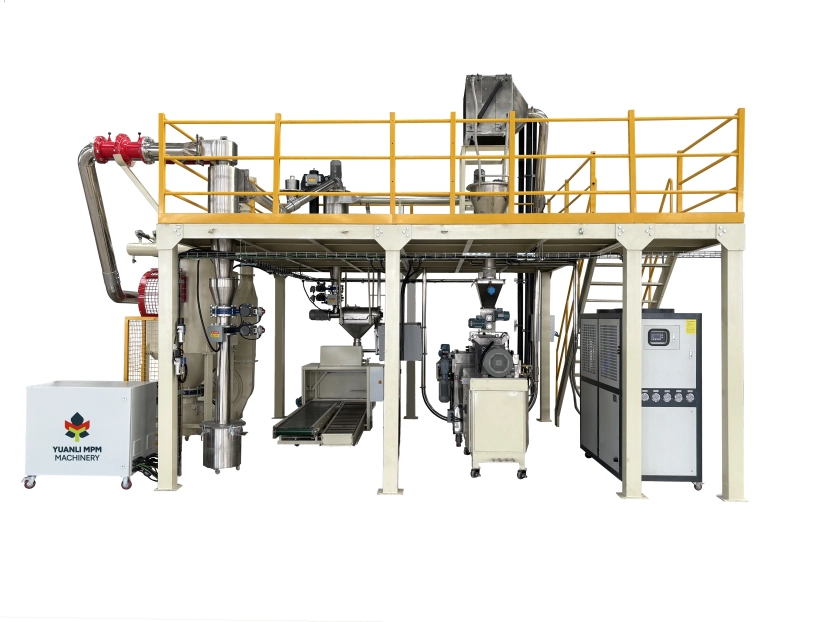
Une ligne de production de revêtement en poudre transforme les résines de base, les couleurs et les extras en poudres prêtes à l'utilisation. Ces poudres protègent et embellissent les surfaces dans des domaines tels que les voitures, les appareils électroménagers, les bâtiments et le travail du métal quotidien.
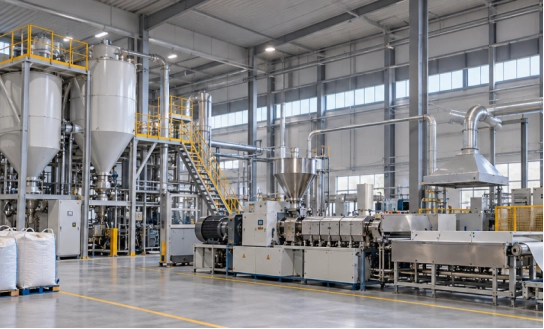
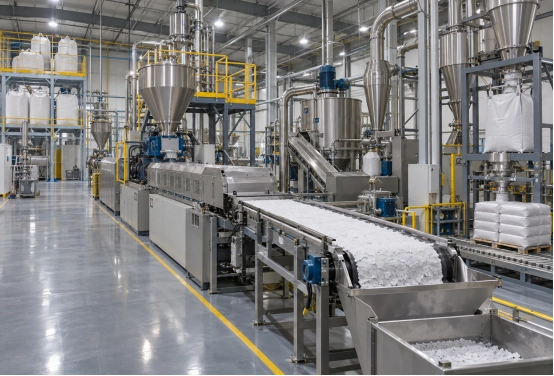
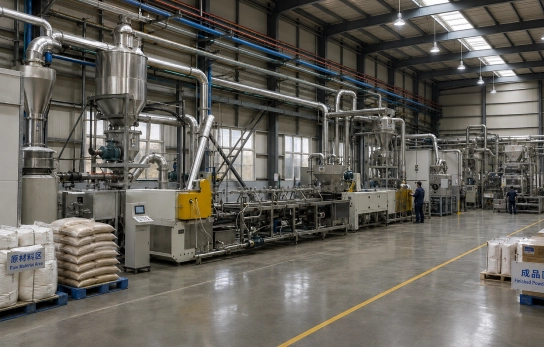
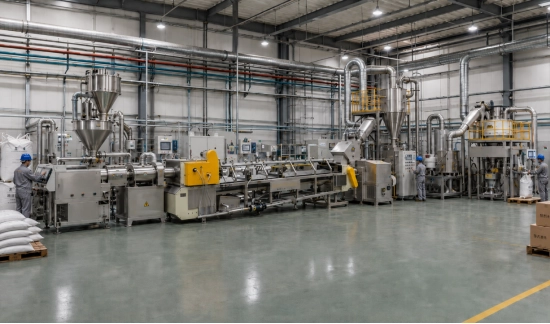
Les étapes comprennent le mélange, la fusion, le refroidissement, la fraisage et le tri. Ils créent des poudres uniformes et minuscules adaptées à la pulvérisation électrique. Les pièces clés comportent un mélangeur à conteneur, une extrudeuse à double vis, convoyeur à bande de refroidissement par air avec concasseur, moulin ACM (broyeur) et classifieur.
Le sens de 150 kg/h Capacité
Une ligne « 150 kg/h » fournit environ 150 kilogrammes de revêtement en poudre final par heure. En pratique, la quantité réelle varie selon les détails de la recette et les caractéristiques matérielles. Prenons ces exemples :
| Facteur | Influence sur la production |
| Type de résine | Epoxy vs. polyester affecte le flux de fusion |
| Rapport additif | La teneur élevée en charge peut réduire le débit |
| Compétences de l'opérateur | Impacts sur la cohérence de l'alimentation et de l'extrusion |
| Efficacité de refroidissement | Détermine la rapidité avec laquelle l'extrudat solidifie |
À cette taille, les articles courants comprennent des revêtements pour de petits morceaux de métal ou des lots d'essai dans les laboratoires de recherche. Beaucoup de fabricants commencent avec ces configurations de test avant de passer à 300-500 kg/h.
Évaluer les 150 kg/h Ligne pour les nouveaux entrants
Pour les entreprises entrant sur le terrain ou essayant des mélanges frais, les systèmes compacts apportent des avantages clairs.
Pourquoi les débutants choisissent des lignes de plus petite capacité
A 150 Le système kg/h offre ces avantages :
- Moins de dépenses initiales que les lignes moyennes ou grandes
- Des contrôles simples qui conviennent aux petites équipes
- Installation plus rapide grâce à ses besoins en espace réduit
- Des tâches d'entretien plus simples
Ces points conviennent bien aux startups ou aux ateliers d’emploi. Ils aident à prouver des idées sans attacher trop d'argent. Les écoles ou les centres de recherche les choisissent souvent pour les tests de recettes.
Limitations à considérer avant d'investir
Néanmoins, pensez à ces inconvénients:
- Il limite la croissance si les commandes augmentent rapidement
- Vous pouvez ajouter des lignes supplémentaires ou des ajustements sur la route
- Il fonctionne un peu moins efficacement sur la puissance que les grandes configurations réglées
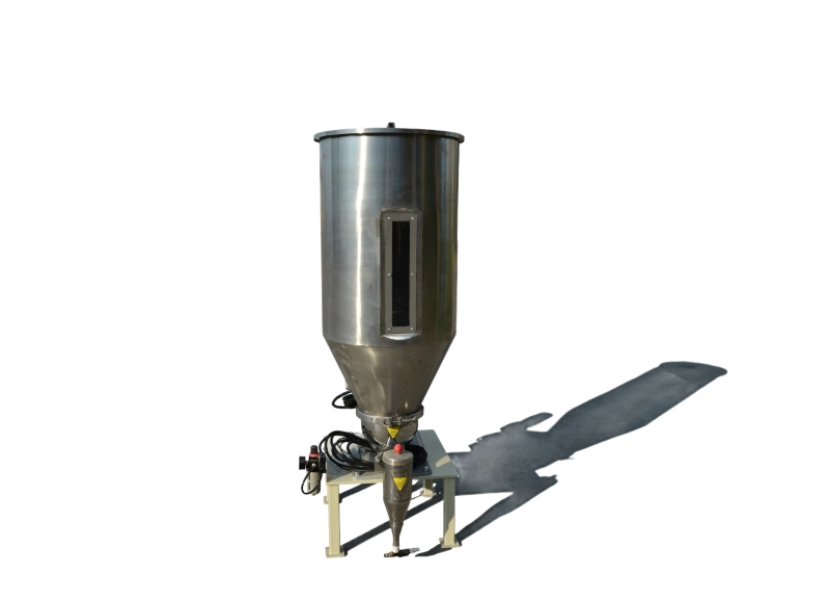
Les liens d'utilisation d'énergie à l'engrenage latéral comme les alimentateurs ou les ceintures. Le tgagner alimentateur à vis traite les entrées additives. Il est installé sur un cadre avec roues pour un nettoyage et des réparations simples. Les compléments intelligents réduisent les déchets et améliorent l'uniformité.
Composants clés dans un 150 kg/h Ligne de production de revêtement en poudre
Chaque partie de la ligne forme à quel point le produit s'avère uniforme et combien vous obtenez.
Système de mélange et d'extrusion
Le mélange étend les couleurs de manière uniforme avant de fondre. Il se mélange en douceur et complètement. Plusieurs bacs vous permettent de travailler, nettoyer et de changer de teintes facilement. Un bon mélange réduit les différences de teinte dans les étapes ultérieures.
L'extrudeuse à double vis chauffe les mélanges de résine. Il diffuse bien les couleurs dans les zones thermiques définies. Le baril a une configuration de chauffage / refroidissement forte. La chaleur dans différentes zones reste exacte à ±2 °C. Cette précision maintient l'épaisseur stable pendant le traitement. Cela est important même pour les tailles de particules à venir.
Unités de refroidissement, de broyage et de classification
Après que les feuilles chaudes sortent du baril, elles ont besoin d'un refroidissement rapide. Matériel thermo-doux de l'extrudeur roule en 1-2 feuilles mm par rouleaux de refroidissement. Il refroidit à température ambiante sur le convoyeur à chaîne à lames en acier inoxydable avec de l'air frais. Le refroidissement adéquat arrête le regroupement ou la dureté inégale avant le fraisage.
Dans des unités de fraisage comme Moulins ACMles explosions d'air font des poudres fines. Les matières premières sont broyées en minuscules poudres par des impacts rapides. Vous obtenez une taille ponctuelle pour le revêtement en poudre en ajustant les paramètres ACM. Ensuite, les classeurs retirent les gros morceaux des petits. Cela assure même la pulvérisation pendant l'utilisation.
Comparaison 150 kg/h Lignes avec systèmes de capacité supérieure
Lorsque votre entreprise reprend, vous devez peser les performances des différentes tailles.
Différences dans la production et l'échelle de l'équipement
Les installations moyennes (300 à 500 kg/h) poussent deux ou trois fois plus. Mais ils prennent plus d'espace et consomment plus d'électricité. Les travailleurs ont besoin de compétences plus profondes en raison des couches technologiques supplémentaires.
| Paramètre | 150 kg/h Ligne | 300–500 kg/h Ligne |
| Sortie par heure | ~150 kg | ~300–500 kg |
| Exigence de puissance | Faible à modéré | Haut |
| Espace nécessaire | Compact (<30) m²) | Plus grand ( > 50) m²) |
| Opérateurs requis | 1-2 personnes | 3-4 personnes |
Les systèmes plus grands augmentent le travail, mais ils coûtent plus au début et nécessitent de meilleurs paramètres d'alimentation.
Coût et rendement sur investissement
Les dépenses augmentent souvent de manière inégale. Doubler la sortie ne’ t juste doubler le prix, grâce aux économies de pièces technologiques. L'entretien diffère également: les petites lignes ont moins de pièces, mais peuvent pousser plus fort quand elles sont occupées.
L'accès aux pièces détachées compte. MPMtek est engagé à développer des équipements précis, intelligents, efficaces et faciles à utiliser pour la production de revêtements en poudre. Nous offrons des pièces standard de différentes tailles pour assurer une approvisionnement stable.
Choisir la bonne ligne de production de revêtement en poudre pour votre entreprise
Choisissez l'équipement qui correspond à vos objectifs, pas seulement des spécifications spectaculaires comme l'échelle.
Évaluer vos objectifs de production et la demande du marché
Calculez votre production nécessaire à partir de commandes fermes ou de prévisions de ventes sur un semestre. Si vous traitez de petites séries spéciales ou si vous changez souvent de couleur, une ligne compacte réduit les temps d'attente entre les tâches. Pour les grandes commandes constantes, cependant, prévoyez les add-ons tôt pour éviter les embouteillages plus tard.
Partenariat avec des fabricants d'équipement fiables comme MPMtek
Un fournisseur’ son savoir-faire façonne vos victoires en cours. MPMtek offre une manipulation facile, fiable et agréable pour les meilleurs clients du monde entier. Nos ingénieurs personnalisent les installations de la taille du laboratoire (100-200 kg/h) au niveau de l’usine (1000 kg/h).
La structure du pré-mélangeur et de l'extrudeur suit les règles de l'UE (directive électrique à basse tension 2014/35/UE). Le support après l'achat couvre l'aide à la configuration, la formation des travailleurs et les contrôles à distance via les panneaux PLC/HMI. Cela facilite le démarrage pour les nouveaux arrivants.
Conseils pratiques pour commencer avec 150 kg/h Ligne
Les bonnes habitudes maintiennent immédiatement votre production stable.
Optimiser l'efficacité de la production dès le premier jour
Se conformer à des normes stables en matière de matières premières. Les déplacements entraînent des défauts de surface dans les contrôles de guérison. Nettoyez souvent pour éviter les mélanges de couleurs, en particulier avec des échanges rapides de recettes. Vérifiez régulièrement les alimentateurs pour un dosage précis. Les petites erreurs peuvent jeter de la brillance dans les revêtements de fin.
Planification de futures expansions ou mises à niveau
Disposez de votre espace avec de la place pour plus de pièces, telles que des extrudeuses ou des moulins supplémentaires, pour passer les grands changements plus tard. Les constructions modulaires rendent la croissance simple: reliez une autre ligne correspondante à une production double sans beaucoup de recyclage.
Lorsque vous dépassez les tests et que vous visez des courses en vrac (300-400 kg/h), les compétences se transmettent facilement. Les pièces des mélangeurs à conteneurs aux moulins ACM restent les mêmes dans MPMtek’ s, tout sous des méthodes de contrôle partagé. Un smart 150 La ligne de production de revêtement en poudre kg/h sert de terrain d'entraînement et de base pour de plus grands travaux d'usine.
Questions fréquentes
Q1: Que signifie « 150 kg/h » dans une ligne de revêtement en poudre ?
Il indique que le système peut produire environ 150 kilogrammes de poudre finie par heure dans des conditions de travail normales.
Q2: C'est 150 ligne kg/h adaptée à une utilisation commerciale?
Oui, il est idéal pour les petites usines ou R & amp; D centres produisant des tirages limités ou testant de nouvelles formulations avant d'augmenter l'échelle.
Q3: Quels équipements font partie d'une telle ligne?
Il comprend généralement un mélangeur à conteneurs, une extrudeuse à double vis, un convoyeur à bande refroidi par air avec concasseur, une broyeuse ACM et une unité de classification.
Q4: Comment puis-je augmenter ma capacité plus tard ?
Choisissez des conceptions modulaires qui permettent d'ajouter des lignes parallèles ou de mettre à niveau des machines individuelles sans remplacer l'ensemble de la configuration.
Q5: Pourquoi choisir MPMtek comme fournisseur?
Nous allions notre expertise en ingénierie à des certifications internationales comme ISO9001 et CE tout en offrant un solide soutien après-vente dans le monde entier grâce à notre installation basée à Yantai.