A powder coating packing machine must establish a repeatable net weight, contain dust, recognize the package format, and release each carton at the required rate. Selection starts with target weight, tolerance, powder flow, carton sizes, and output.
Specify net weighing, automatic tare, controlled fill cut-off, and a production trial using your own powder. The guide below turns those requirements into a machine specification and commissioning check.
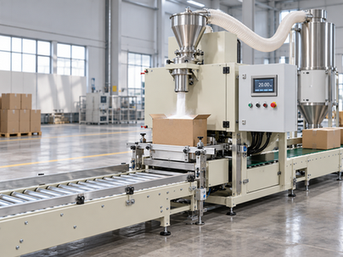
Why Accurate Weighing Matters in Powder Coating Packaging
Packing accuracy affects yield, customer confidence, and downstream handling. Underfill creates rework; persistent overfill raises material cost and distorts inventory records.
Define the tolerance before comparing machines. If the target is 20 kg and the agreed accuracy is ±0.2%, the band is:
20 kg × 0.002 = 0.04 kg = 40 g
That means a 20 kg carton is evaluated against a 19.96–20.04 kg range under the agreed test method. The calculation is simple; achieving it depends on stable powder flow, a correctly tared carton, a rigid weighing structure, and a fill cut-off that does not continue feeding after the target is reached. MPMtek’s Automatic Weighing & Packing Equipment specification includes precise weighing; define the two-sided acceptance band and verify it with production material.
How Does a Powder Coating Packing Machine Work
A useful specification follows the material path:
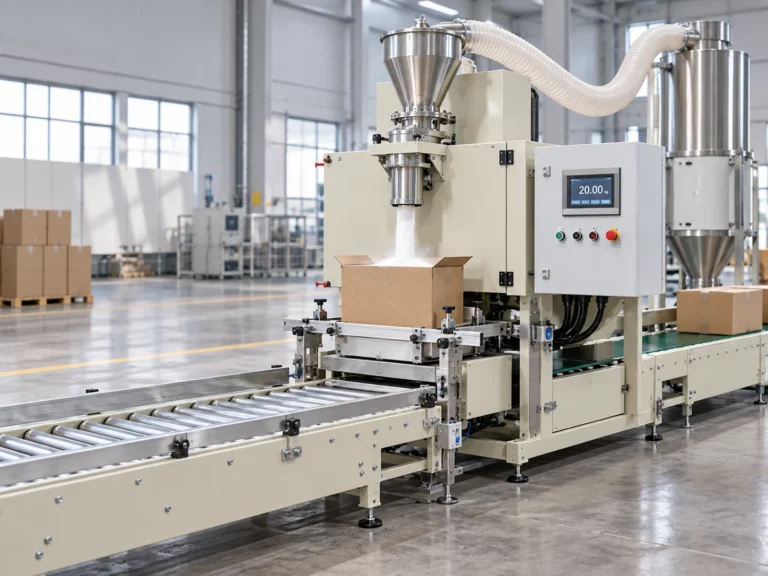
Carton Transfer: An empty carton moves into a defined filling position. Guides should hold it squarely without side contact or conveyor vibration.
Tare: The control system records empty-carton weight, preventing carton variation from becoming a product-weight error.
Filling: Powder enters through the filling head. Fast-to-slow or pulse filling reduces overshoot near the target.
Weight Confirmation: The system checks net weight against the preset value and shows the result to the operator.
Dust Extraction: Local vacuum keeps leakage away from the carton rim, sensors, and conveyor surfaces.
Discharge: The filled carton leaves the work position for closing, labeling, or palletizing.
Upstream consistency matters. A raw material dumper or other controlled feed arrangement can reduce surges that make fine powders bridge, rat-hole, or flood the filling head. Net weighing is different from filling by volume: the machine measures mass, so it remains the better fit when bulk density changes between formulas or lots.
Which Features Improve Powder Weighing Accuracy
Use the following checklist when comparing an automatic weighing packing equipment specification:
Stable load-cell frame: Isolate the scale from conveyor shock, floor vibration, and rubbing guides.
Automatic tare: Tare must run at the correct point and repeat after a carton change.
Controlled fill cut-off: Ask how final feed is slowed or pulsed to reduce overshoot.
Carton-size recognition: Recognition should select the correct recipe and reduce entry errors.
Preset recipes: Record target weight, carton format, and timing values for repeatable changeovers.
Dust control: Cover the fill zone without pulling powder from the carton or disturbing the signal.
Calibration access: Confirm test-weight application, zero checks, and record retention.
Repeatability test: Agree the carton count, material lot, target, and acceptance calculation.
Misalnya, MPMtek automatic weighing and packing equipment specification includes automatic taring, preset-weight filling based on carton size, dust vacuum, and precise weighing. Use those as baseline requirements, then specify powder flow, allowable drift, sample size, and the response to an out-of-band carton.
How Should You Choose Capacity and Container Handling
Start with the package you actually ship, then work backward to machine capacity. Record:
| Requirement | What to Confirm |
|---|---|
| Target net weight | Minimum, nominal, and maximum pack weights |
| Carton dimensions | Length, height, opening, and guide clearance |
| Throughput | Cartons per hour at the heaviest target weight |
| Powder behavior | Bulk density, flowability, cohesion, and dustiness |
| Changeovers | Number of carton formats and recipe-change time |
| Utilities | Electrical load, compressed air, and dust-extraction connection |
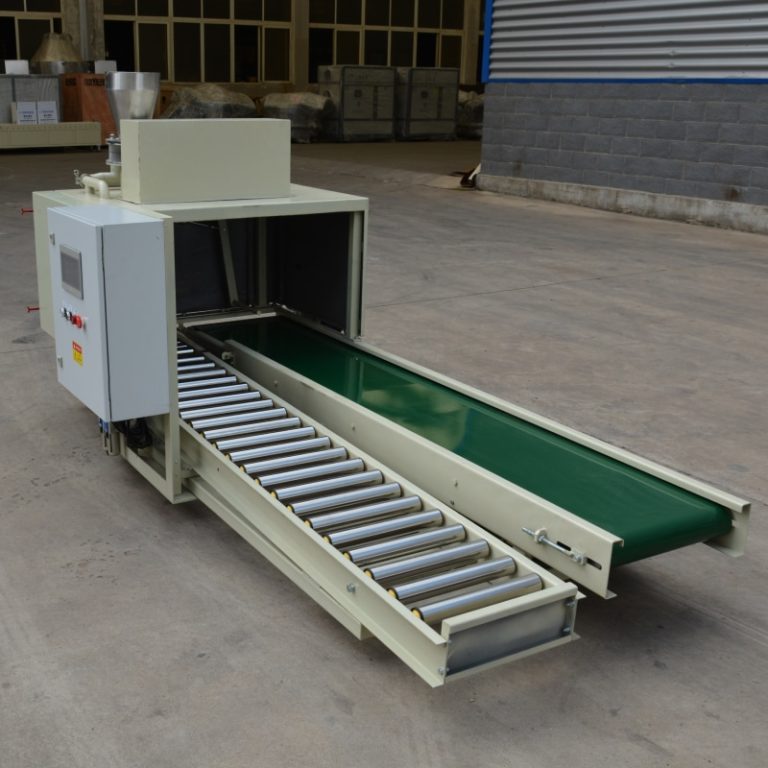
MPMtek’s AWP-30 reference model is specified for 10–30 kg cartons, maximum carton length of 400 mm and height of 500 mm, 0.37 kW transfer power, and a unit size of 2730 × 1470 × 1760 mm. Use these values as a layout starting point, then check your own carton and access clearances.
Plan space for carton loading, a short buffer before the filling position, safe operator access, and the next operation. A lini produksi lapisan bubuk may also need to coordinate packing with cooling, milling, conveying, or pallet handling. The official equipment image below shows why conveyor height, discharge direction, and control-panel access belong in the same review as weighing accuracy.
What Should You Verify Before Commissioning
Treat commissioning as a measurement exercise. Prepare a representative powder lot and run the target carton size through the complete sequence.
Check these points:
Confirm zero and tare with an empty carton, then repeat after several cycles.
Run a defined sample, such as 10 cartons, and compare each net weight with the tolerance.
Record average, minimum, maximum, and range; investigate a trend even when the average passes.
Inspect powder around the fill head, carton rim, load cell, and conveyor.
Change carton size or recipe and confirm recognition and preset updates.
Test an out-of-range carton or simulated fault so operators know the hold procedure.
Verify calibration records, cleaning access, spare sensors, and operator training.
Common mistakes include specifying only nominal weight, ignoring bulk-density changes, and accepting an accuracy number without a test method. Tie the acceptance record to powder coating process optimization so upstream changes do not create unexpected packing behavior.
FAQ (Pertanyaan umum)
What Does ±0.2% Weighing Accuracy Mean for a 20 Kg Pack?
At 20 kg, ±0.2% equals ±0.04 kg, or ±40 g. Confirm the actual repeatability with your powder, carton, sample size, and agreed test method.
Is Net Weighing Better Than Filling by Volume?
Net weighing controls the mass delivered into each carton. Volume changes when bulk density changes, so net weighing is usually the stronger choice when shipped weight and batch consistency matter.
How Does Dust Control Affect Weighing Performance?
Controlled extraction limits leakage and buildup around sensors, carton rims, and conveyors. A cleaner weighing zone is easier to inspect and less likely to create unstable readings.
Can One Machine Handle Different Carton Sizes?
It can when the frame, guides, recognition logic, and recipes cover the required dimensions. Confirm the complete size range and the changeover method before ordering.
How Often Should the Weighing System Be Calibrated?
Set checks around operating hours, product changeovers, and your quality system. Recheck after maintenance or any abnormal result, and keep the records with the machine’s acceptance data.
Plan Your Powder Coating Packing Line
Include target net weights, carton dimensions, powder flow, hourly output, dust extraction, utilities, changeovers, and upstream/downstream connections. You can send your packaging requirements for an arrangement review against your real constraints.