
Choose a powder coating crusher by the chips it produces under your actual process conditions, not by motor power or rated throughput alone. Define an acceptable chip-size range, then test representative formulations at the intended feed rate. The cooling stage must deliver a consistently solid sheet; the crusher must break and discharge it without excessive oversize, fines, buildup, or interruptions. Ask for repeatable sample results before deciding that a machine fits your line.
Chips are the intermediate material between cooled extrudate and the grinding mill. Their size and condition affect how evenly the mill is fed, but they are not the final powder particle-size distribution. That distinction should shape both your specification and your supplier trial.
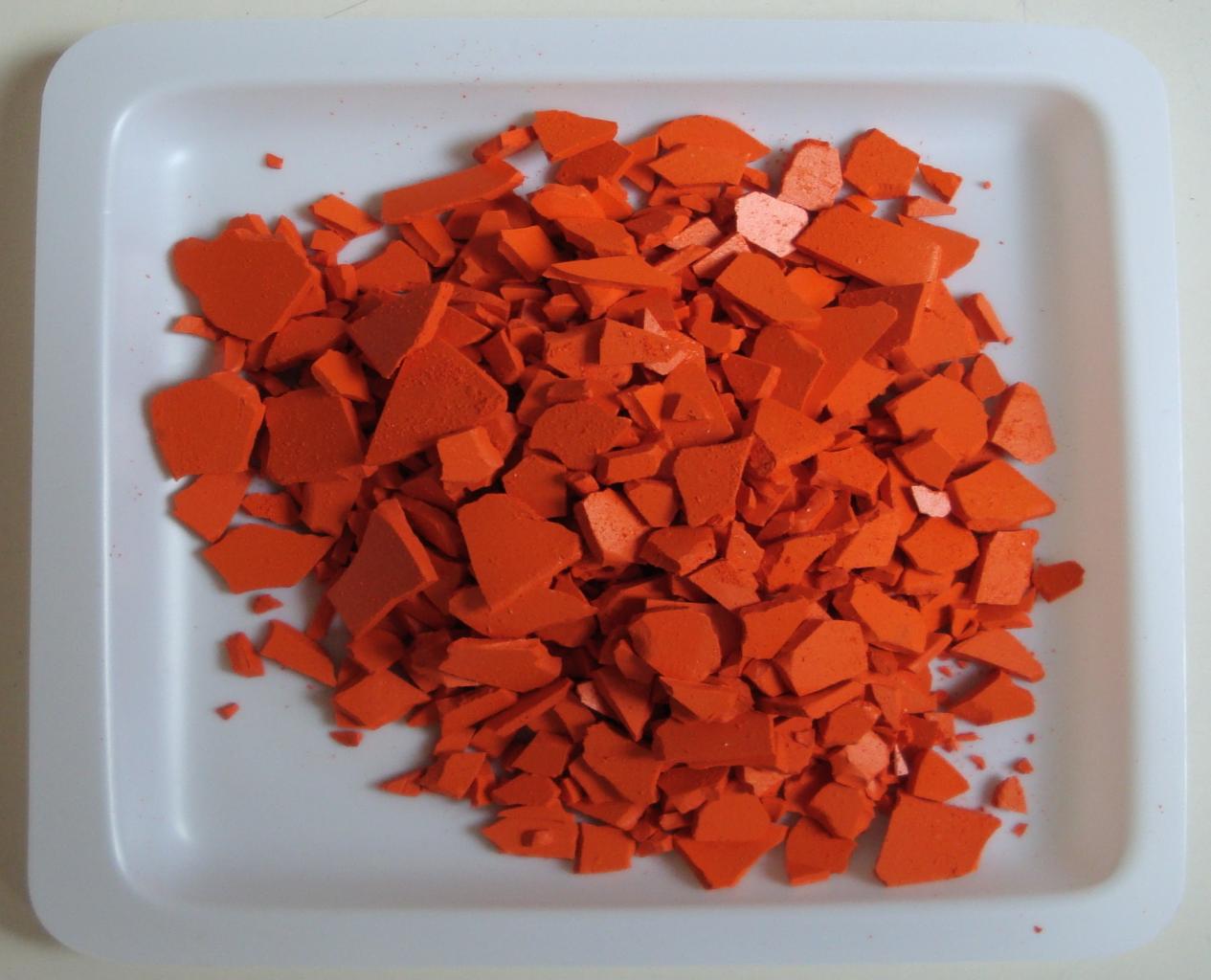
What Does Consistent Chip Size Mean for a Powder Coating Crusher?
Start with a measurable acceptance window rather than a description such as "uniform chips." Agree on a sampling method, sieve openings, and the maximum share permitted above and below the useful range. The appropriate limits depend on your formula and the mill that follows; a universal chip dimension would be misleading.
|
Specify |
왜 중요하다 |
How to Check |
|---|---|---|
|
Main chip-size band |
Supports stable feeding to the mill |
Sieve a defined sample mass |
|
Oversize fraction |
Flags long strips or pieces that may bridge |
Weigh material retained above the upper sieve |
|
Fines fraction |
Reveals unnecessary breakage and dust |
Weigh material passing the lower sieve |
|
Chip condition |
Identifies tacky, fused, or warm material |
Inspect and record outlet condition |
|
Repeatability |
Finds drift as the line warms or feed changes |
Compare timed samples at the same settings |
Record the sample mass and measurement method with each result. A single average chip size can hide both a large oversize tail and excessive fines. If appearance or flow is critical, also photograph the samples against a scale for a consistent visual record.
How Do Cooling and Feed Affect Powder Coating Chip Size?
The crusher cannot correct an unstable incoming sheet. Check its thickness, condition after cooling, and continuity of feed before attributing chip variation to the machine.
Control Sheet Thickness
Uneven sheet thickness changes how the material fractures: thick areas may produce large pieces while thin edges break into fines. Track the roller setting and sheet-width profile during trials, especially when the extrusion rate changes.
Verify Cooling Before Crushing
Cooling matters just as much. Material that remains soft or tacky can bend, smear, or build up rather than fracture cleanly. A sheet that arrives in a predictable condition gives the crusher a fair test. Compare cooling belt selection with your formula, available cooling distance, and target line rate before treating all chip variation as a crusher fault.
Keep Feed Continuous
Finally, check feed continuity. Surges, folded sheet, or an off-center entry can load one side of the chamber and change the output. During a trial, log extruder output, sheet thickness, belt or drum settings, and any manual feed intervention. If chip size changes, those records show whether the cause began upstream.
Which Powder Coating Crusher Features Matter Most?
Compare the cooling-to-crushing arrangement first, then inspect the settings and access needed to reproduce its chip output.
Compare Cooling-to-Crushing Configurations
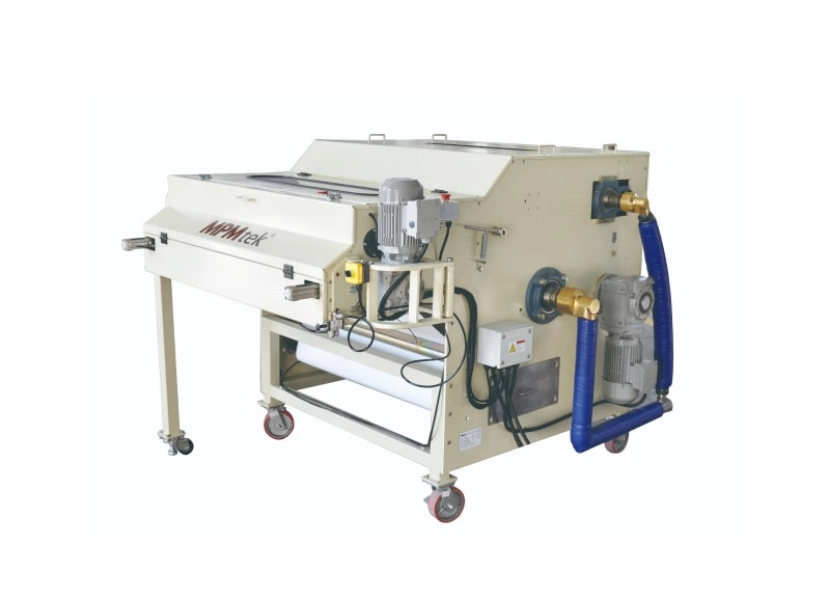
An integrated 컴팩트 냉각 Crusher combines cooling roller, drum, conveyor, and crusher; its listed sheet thickness is adjustable. That arrangement is relevant when you want to evaluate sheet formation and chip breaking as one process. A separate crusher may suit a different layout, but the handoff from cooling still needs controlled feed.
Check Adjustment, Access, and Repeatability
Ask the supplier to demonstrate how the cutting or breaking setting is adjusted and recorded. Inspect the usable feed width, discharge opening, and access to areas where material can collect. Confirm how wear parts are inspected and replaced, because a setting that works with new parts may not hold its result indefinitely. Request the guarding and isolation procedure needed for sampling, cleaning, and maintenance.
Crushing chamber design influences material flow, but a drawing cannot prove chip consistency. Compare actual output samples from the same input sheet, rate, and formulation. Favor the configuration whose settings and cleaning points your operators can reproduce across batches.
How Should You Test Chip Size at Production Rate?
Separate trial conditions, sample measurement, and the pass/fail decision so results remain comparable.
Choose Representative Trial Conditions
Use a trial plan that represents routine production and the hardest material you expect to run. Include a formula that becomes brittle after cooling and one that is more difficult to fracture, if both are in your product mix. Set the intended extruder rate and sheet thickness before sampling. Testing a reduced rate may conceal a cooling or feed bottleneck.
Sample and Measure Chips Consistently
Collect equal-mass samples after startup has stabilized, during steady operation, and after a planned rate change. For each sample, use the same sieve stack, shaking method, and weighing procedure. Record the percentage in the target band, above it, and below it. Log outlet condition, crusher setting, throughput, temperature at the agreed measurement point, and any stoppage or buildup.
Apply a Production-Rate Acceptance Rule
Agree on the acceptance rule before the demonstration: which samples must pass, what variation is allowed between them, and whether the mill can process the resulting chips without bridging or surging. A chip distribution that looks acceptable in isolation may still feed the downstream mill poorly. When comparing compact cooling crusher capacity, use the rate sustained while these quality conditions are met, not a brief peak output. Repeat the trial after adjustment so the final settings have their own evidence.
What Mistakes Distort a Powder Coating Crusher Comparison?
Do not use finished powder particle size as a substitute for chip measurement: milling and classification can mask upstream inconsistency until feeding becomes unstable. Do not accept only an average chip dimension, because it hides the tails of the distribution. Avoid trials with only the easiest formula, a cold machine, or a reduced feed rate.
Rated kg/h and chip quality must be demonstrated together. A faster run that produces long strips, dust, or repeated clearing stops does not meet the same requirement. Also ask how operators restore the accepted setting after cleaning or wear-part replacement. A useful specification is one that can be maintained, not merely achieved once during a demonstration.
FAQ는
Is Chip Size the Same As Finished Powder Particle Size?
No. The crusher produces chips for the mill. Grinding and classification determine the final powder distribution. Specify chip quality to protect stable mill feeding, then verify finished powder separately.
Can a Smaller Crusher Gap Always Reduce Oversize?
No. A tighter setting may reduce some large pieces but increase fines, heat, wear, or blockage. Change one setting at a time and compare the complete sieve distribution and sustained output.
Should Every Powder Coating Formula Use One Chip-Size Target?
Only if representative formulas pass the same feeding and quality checks. Where materials fracture differently, group formulas by behavior and define an accepted range and settings for each group.
What Should Be Recorded During a Supplier Trial?
Record formula, input sheet thickness and condition, line rate, cooling and crusher settings, sample times, sieve fractions, outlet condition, and interruptions. Keep the accepted settings with the samples for later comparison.
What Should You Send for a Powder Coating Crusher Recommendation?
Prepare a short specification with your representative formulas, normal and peak extruder rates, sheet width and thickness, current cooling method, target chip-size band, permitted oversize and fines, and the mill’s feed requirements. Add available floor space, utilities, cleaning needs, and any trial samples or sieve results you already have.
You can send your requirements for a configuration discussion. The clearest comparison will come from testing the proposed cooling and crushing arrangement against the same written acceptance criteria you use to evaluate your own production.