Particle size distribution in powder coating refers to the spread of particle sizes in a batch of powder. Some particles are tiny, others bigger. This distribution shapes how the powder behaves during application and curing.
It directly ties to product quality, efficiency, and costs. Poor distribution leads to uneven coatings or wasted material.
What Is Particle Size Distribution in Powder Coatings?
PSD shows the range and frequency of particle sizes in a sample. Imagine sorting sand on a beach. Some grains are fine like dust, others coarse like pebbles. In powder coating, PSD tells that story for the powder particles.
Why Particle Size Distribution Matters for Powder Coating Quality
Impact on Powder Flowability and Transfer Efficiency
Powder coating flowability hinges on particle size. Finer particles might clump or flow too freely, causing issues in hoppers or guns. Larger ones drag and resist movement.
Impact on Surface Finish, Coverage, and Defects
Fine particles in powder coating can create orange peel effects, pinholes, or rough textures. They melt unevenly, leaving bumps. Oversize chunks don’t fuse well, leading to weak spots. Both spark defects that show up after curing.
Impact on Recoatability, Film Thickness, and Color Consistency
Film thickness varies if sizes aren’t controlled. That throws off color consistency across batches. Equipment that maintains steady PSD helps keep colors uniform, a big win for quality control.
Typical Particle Size Range and PSD Targets in Powder Coatings
Common Particle Size Range for General Powder Coatings
Powder coating particle size range typically spans 12 to 80 microns. Ideal particle size for powder coating hovers around that, ensuring good flow and finish.
For most uses, aim for D50 at 32-45 microns and D90 under 70-80 microns. This balance avoids extremes.
Different PSD Targets for Different Applications
Corrosion-resistant types target finer sizes for denser films. Metallic powders demand precision to keep shimmer even. Super-durable options benefit from narrow particle size distribution in powder coating, especially for high-end jobs.
How Grinding Systems Affect Particle Size Distribution in Powder Coating
Overview of Powder Coating Grinding Equipment
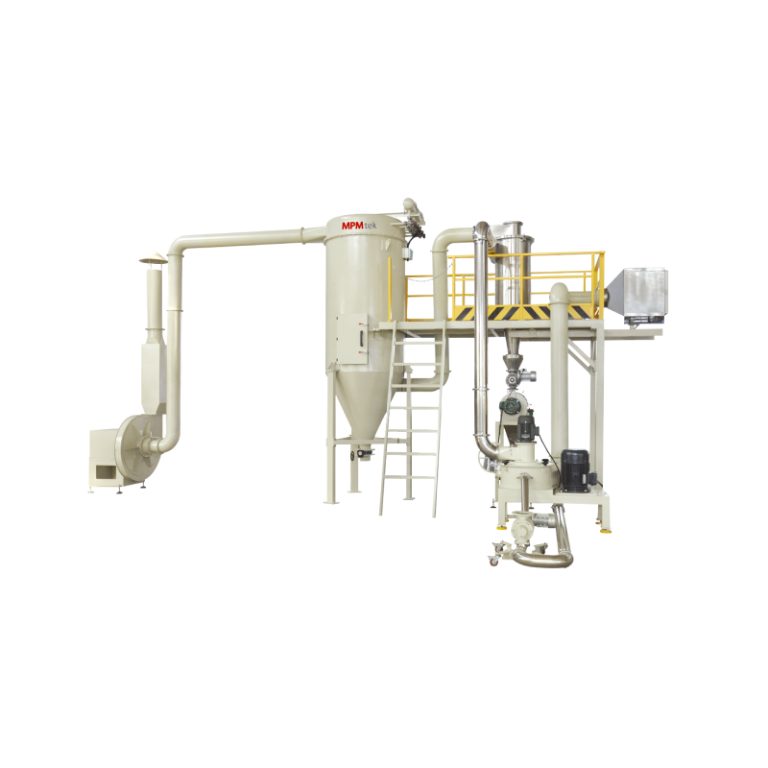
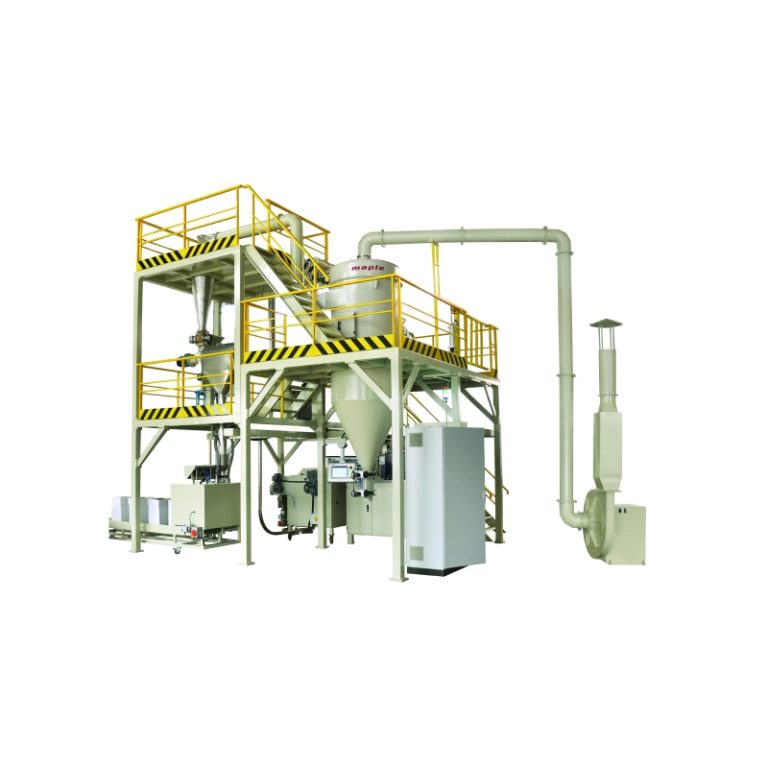
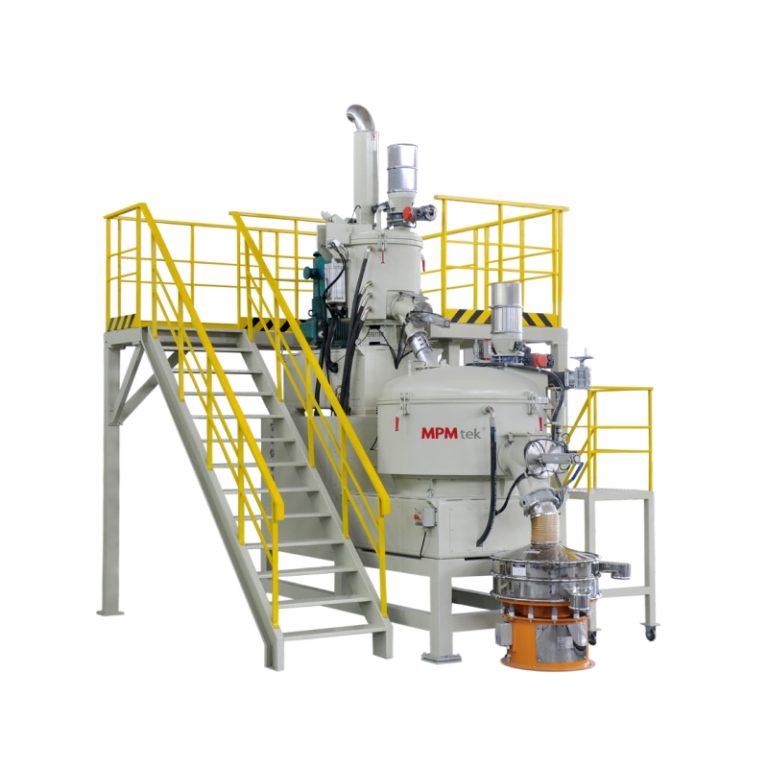
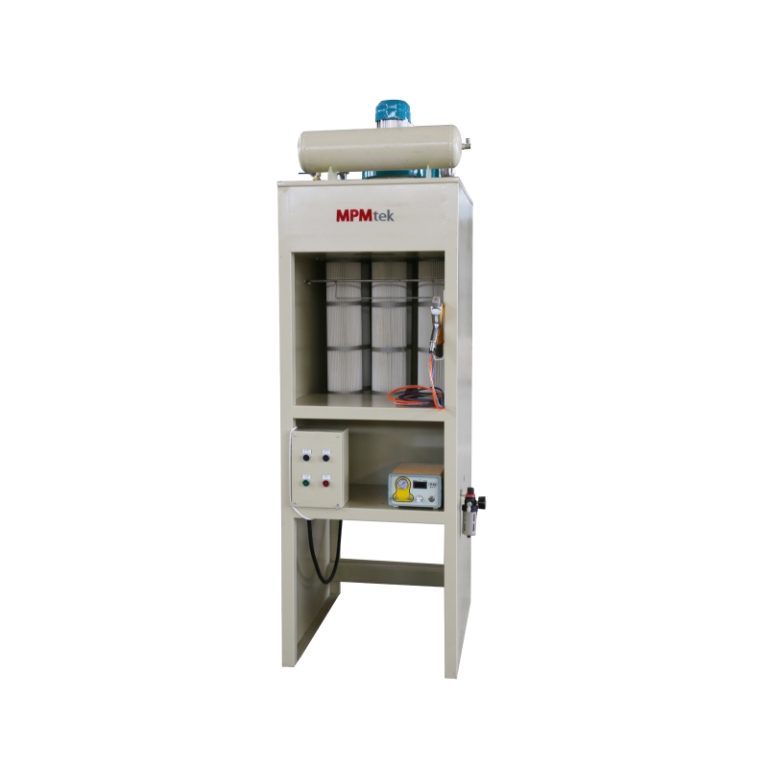
Powder coating grinding equipment crushes extruded material into fine powder. Systems vary, but all aim for controlled sizes.
Common setups include mills that grind and classify in one go. They shape PSD right from the start.
Grinding and Classification System for Powder Coatings
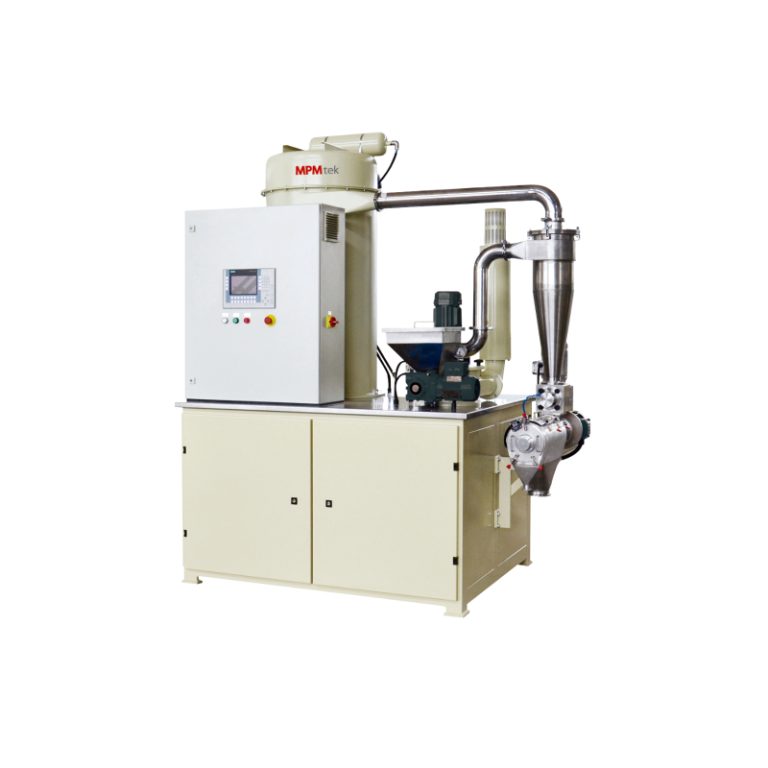
A grinding and classification system for powder coatings pairs a mill with a classifier wheel and recirculation loop. Material grinds, then classifies—fines pass, coarses loop back.
This setup dictates how grinding affects particle size distribution. Tight classification yields narrower spreads.
ACM Mill vs Pin Mill: Choosing the Best Grinding Technology
ACM mill vs pin mill: ACM uses air classification for precise control, ideal for most coatings. It handles volume well but might need more energy.
Pin mills excel in high-shear grinding for tougher materials. They’re simpler, yet less flexible on PSD tweaks. Go ACM for better particle size control in standard runs.
Air Classifier Mill for Powder Coating
Air classifier mill for powder coating dominates the industry. It integrates grinding and sorting seamlessly.
Why so popular? Offers fine tuning and high throughput. Sets up nicely for the next step: eyeing key specs when buying.
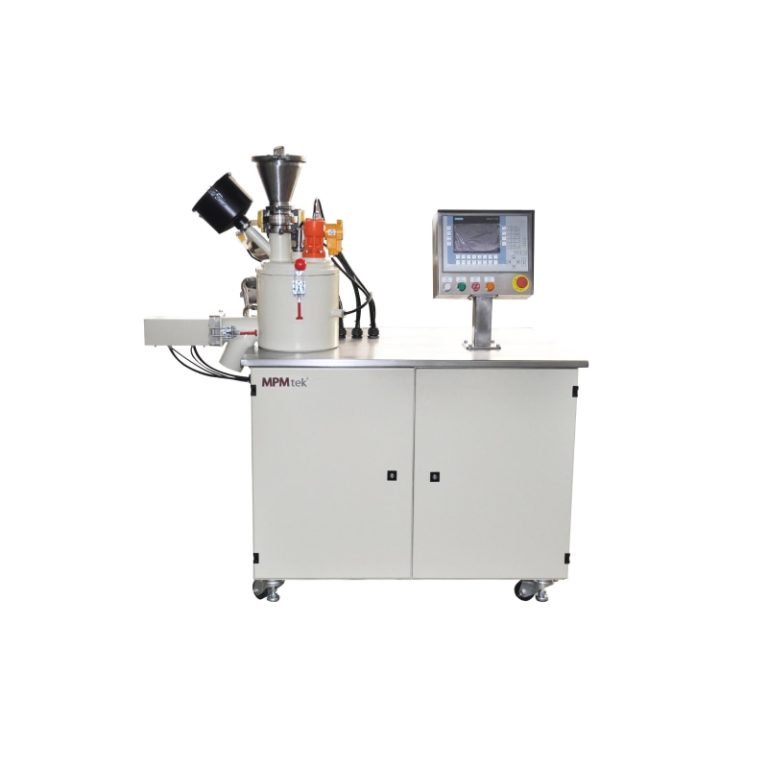
For example, in several ACM mill installations supplied by MPMtek, customers reported reduced fines and a noticeably narrower PSD compared with their previous pin mill setups.
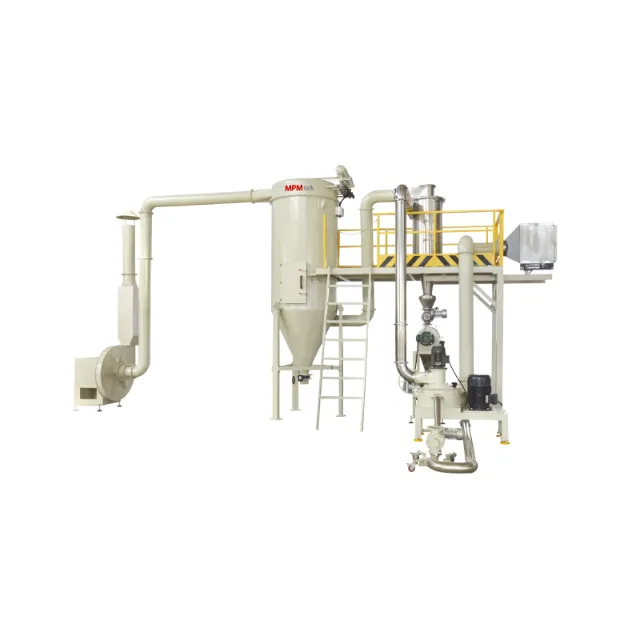
How to Control Particle Size Distribution in Powder Coating Grinding
Key Grinding Parameters that Affect PSD
How grinding parameters affect powder coating particle size: Rotor speed cranks up fineness but risks over-grinding. Air flow adjusts classification sharpness.
Feed rate matters—too fast overloads, widening PSD. Classifier wheel speed fine-tunes cut points. Balance these for steady output.
How to Control Particle Size Distribution in Powder Coating Grinding
Start with consistent feed material. Monitor parameters real-time. Tweak air volume for better separation. Slow feeds prevent clumps. Regular checks keep PSD on target. Small adjustments pay off big.
Adjustable Particle Size Distribution in Modern Grinding Systems
Adjustable particle size distribution powder coating grinding system uses inverters, auto controls, and online sensors.
These let operators shift PSD on the fly. Modern setups cut downtime, boost flexibility for varied recipes.
What Buyers Should Look for in Powder Coating Grinding Equipment
What Buyers Should Check in Powder Coating Grinding Equipment
What buyers should check in powder coating grinding equipment: PSD control range first—can it hit your targets?
Stability over long runs. Ease of cleaning to switch colors fast. Spare parts availability, solid after-sales support. Don’t skip throughput specs.
Best Grinding System for Stable Powder Coating Particle Size
Best grinding system for stable powder coating particle size: ACM edges out others with built-in classification.
Compare to basic hammer mills—they fluctuate more. Stable systems recycle less, hold PSD tight.
Yield, Oversize Control, and Powder Coating Yield Improvement
Powder coating yield improvement comes from cutting oversize and fines. Good systems recapture usable powder. Oversize clogs, fines waste away. Aim for 98% yield—boosts bottom line.
Energy Efficiency and Running Cost
Energy efficiency powder coating equipment saves on power, air consumption.
Calculate total ownership cost: Initial price plus ongoing bills. Efficient mills run cooler, last longer. Worth the upfront spend sometimes.
Common Problems Caused by Wrong Particle Size – and How Equipment Solves Them
Problems Caused by Wrong Particle Size in Powder Coatings
Problems caused by wrong particle size in powder coatings: Gun blockages from clumps. Low transfer rates eat profits. Bad appearance like craters or uneven gloss. Recycled powder turns unusable fast.
Oversize and Fines in Powder Coating Grinding
Oversize and fines in powder coating grinding: Oversize leaves rough finishes, poor melt. Fines cause spitting guns, orange peel. Both hike defects, slow production.
Process Bottlenecks in Powder Coating Production
Powder coating production bottlenecks often hit at grinding. Inconsistent PSD halts lines. Better powder coating grinding system smooths flow, ups capacity. No more waiting on regrinds.
Example: Upgrading to an Air Classifier Mill for Better Particle Size Distribution
Before and After: PSD and Yield Changes
Switching from old mill to ACM tightens PSD. Before: Wide spreads, high fines. After: Narrower, with ACM mill particle size control shining.
Yield jumps 20% as classification improves. Air classifier mill for powder coating cuts waste.
ROI for Buyers: Quality, Yield, and Energy Consumption
ROI shines through powder coating yield improvement and energy efficiency powder coating equipment. Payback in 12-18 months common. Higher quality means fewer rejects, steady runs.
Conclusion
Particle size distribution in powder coating stands as a top metric when buying gear. It drives quality from start to finish.
Picking the right powder coating grinding equipment or system fixes root issues. No shortcuts there.
If you are evaluating grinding equipment or need guidance on optimizing PSD, the engineering team at MPMtek can provide tailored recommendations based on your production requirements.
FAQs
Q: How Can I Control Particle Size Distribution in a Powder Coating Grinding System?
Adjust rotor speed, air flow, and feed rate. Use online monitoring for tweaks. Modern systems automate this.
Q: What Is the Ideal Particle Size Range for Most Powder Coating Applications?
Ideal particle size for powder coating: 12-80 microns. D50 around 32-45 microns suits general use.
Q: Which Is Better for Powder Coatings: ACM Mill or Pin Mill?
ACM mill vs pin mill: ACM better for precise PSD control in most cases. Pin mill suits high-shear needs.
Q: What Should Buyers Look for When Choosing Powder Coating Grinding Equipment?
What buyers should check in powder coating grinding equipment: PSD stability, energy use, easy maintenance, and support.