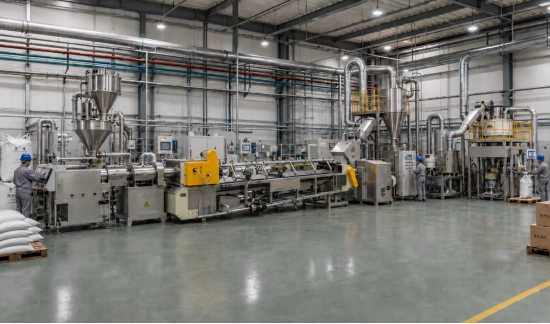
Un fabricante de pinturas líquidas comprende los pigmentos, las resinas y las especificaciones del cliente. El recubrimiento en polvo requiere una disciplina diferente. No existe una fase solvente que oculte una mezcla deficiente. El historial térmico y el tamaño de las partículas son importantes.
Defina el producto, dimensione el proceso y seleccione una línea de producción conectada. Esa es la ruta práctica para la producción de recubrimientos en polvo.
¿Por qué debería un fabricante de pinturas añadir la producción de recubrimientos en polvo?
Los recubrimientos en polvo se utilizan en los sectores de electrodomésticos, muebles, componentes automotrices, arquitectura e industria. Los clientes valoran la durabilidad de las películas y una aplicación más limpia. Una planta de recubrimiento en polvo reduce el manejo de disolventes.
El laboratorio, el almacén, los procedimientos de control de calidad y los canales de venta pueden seguir siendo útiles. Los tanques de mezcla, los molinos de perlas y las máquinas de llenado de líquidos no son sustitutos. Base el análisis de viabilidad en pedidos reales. Una gama decorativa con cambios de color frecuentes requiere una línea diferente a la de una imprimación negra.
Paso 1: Defina su producto de recubrimiento en polvo y su objetivo de producción.
Las decisiones sobre el equipo tienen sentido una vez que el producto está definido. Seleccione la familia de resinas: epoxi, poliéster, híbrida o especial. Defina la temperatura de curado, el brillo, la textura, la resistencia a la intemperie y el espesor de la película.
La distribución del tamaño de partícula depende de la aplicación. Un taller de pulverización manual puede requerir un rango diferente al de una línea automática. Configure los colores, las formulaciones, el tamaño del lote y el tiempo de limpieza.
La capacidad debe ajustarse a la demanda. Una línea de laboratorio puede validar una fórmula, y luego se puede adaptar una configuración industrial a 100-200 kg/h, 500-600 kg/h o 1000 kg/h. Pruebe la resina real antes de aprobar una línea sobredimensionada.
Paso 2: Mapear el proceso completo de producción de recubrimiento en polvo
- Recepción y almacenamiento de materia prima: Inspeccione la resina, los pigmentos, las cargas y los aditivos por lotes. Protéjalos de la humedad y de posibles confusiones.
- Pesaje y dosificación: Una dosificación precisa protege el color y la uniformidad del curado.
- Premezcla en seco: Los ingredientes sólidos se distribuyen antes de entrar en la extrusora.
- Extrusión por fusión: El calor y el cizallamiento controlado homogeneizan la formulación.
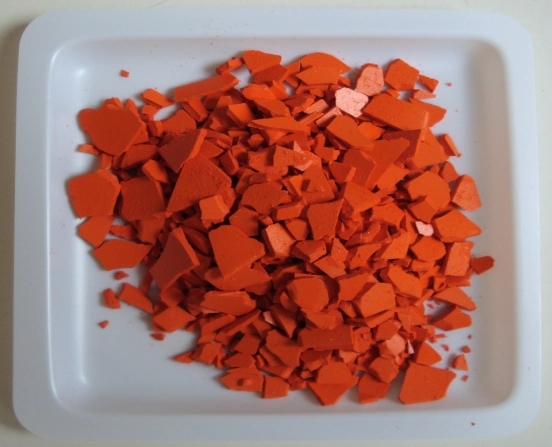
- Enfriamiento y formación de escamas: El material termofusible se convierte en una lámina, viruta o escama.
- Pulverización y clasificación: El material enfriado se muele y se separa por tamaño.
- Tamizado y mezcla final: Se eliminan los aglomerados no deseados y se ajusta el producto si es necesario.
- Pesaje y envasado: El polvo terminado se envasa, etiqueta y distribuye.
Con un polvo de poliéster azul, una premezcla deficiente puede provocar variaciones de color durante la extrusión. Una lámina de enfriamiento en caliente puede generar partículas finas inestables. La línea debe diseñarse como un proceso único.
Paso 3: Seleccione el equipo principal para la fabricación de recubrimientos en polvo.
El rendimiento, la formulación y los requisitos de limpieza deben considerarse en la misma discusión sobre el equipo.
3.1 Premezclador y alimentador de aditivos
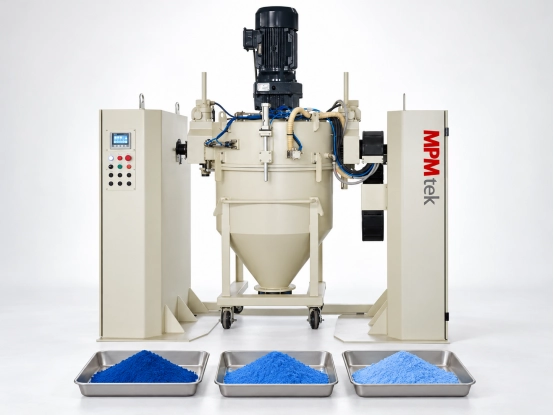
Las premezcladoras crean la distribución en seco de la que depende la extrusión. La elección de la mezcladora y el alimentador sigue esta fórmula. Una alimentación deficiente puede desplazar el agente de curado de un lote a otro. Los aditivos pesados pueden formar puentes en la tolva, por lo que la geometría y la agitación son importantes.
3.2 Extrusora de doble husillo
La extrusora es el principal dispositivo térmico y de mezcla. La configuración del husillo, el par de apriete, el tiempo de residencia y las zonas de calentamiento deben coincidir con la composición química. El material de alto brillo puede dañarse con el calor. La imprimación con carga mineral puede requerir mayor par de apriete y resistencia al desgaste.
Durante la puesta en marcha, observe la presión de fusión y el par a medida que cambia la velocidad de alimentación. Una especificación adecuada extrusora de doble husillo Esto le da al operador margen para ajustar la fuerza de corte sin perder estabilidad.
3.3 Cinta de refrigeración y trituradora
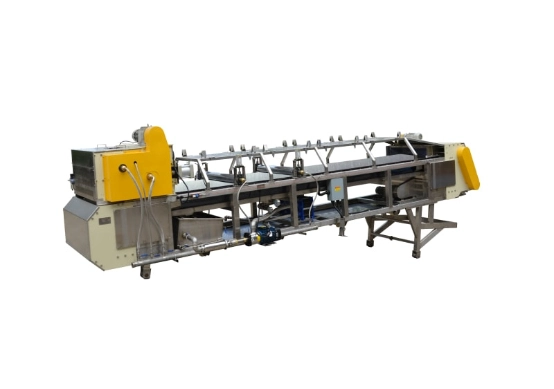
El sistema de enfriamiento congela la masa fundida mezclada, dejándola en una forma utilizable. Unos rodillos extienden una lámina y el enfriamiento por aire reduce su temperatura antes de la trituración. Una lámina irregular puede sobrecargar la trituradora o enviar trozos calientes al molino.
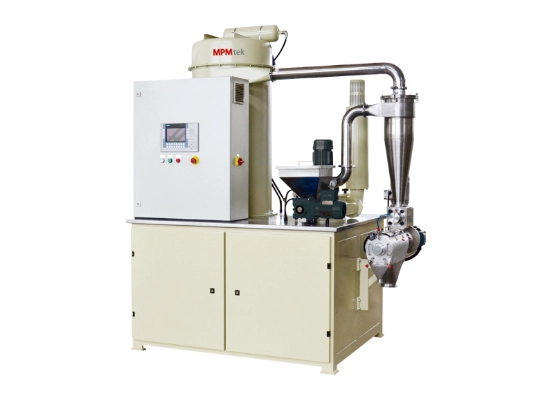
3.4 Molino y clasificador ACM
La molienda determina las propiedades físicas del polvo final. La velocidad del clasificador modifica el punto de corte y el equilibrio entre el producto útil y las partículas finas. Las partículas de tamaño excesivo pueden dejar una película rugosa o no fundirse.
Evaluar un sistema integrado Molino ACM para recubrimiento en polvo con la resina objetivo. El flujo de aire, el aumento de temperatura y la gestión del retorno se hacen evidentes durante un largo turno de verano.
3.5 Pesaje, envasado y automatización
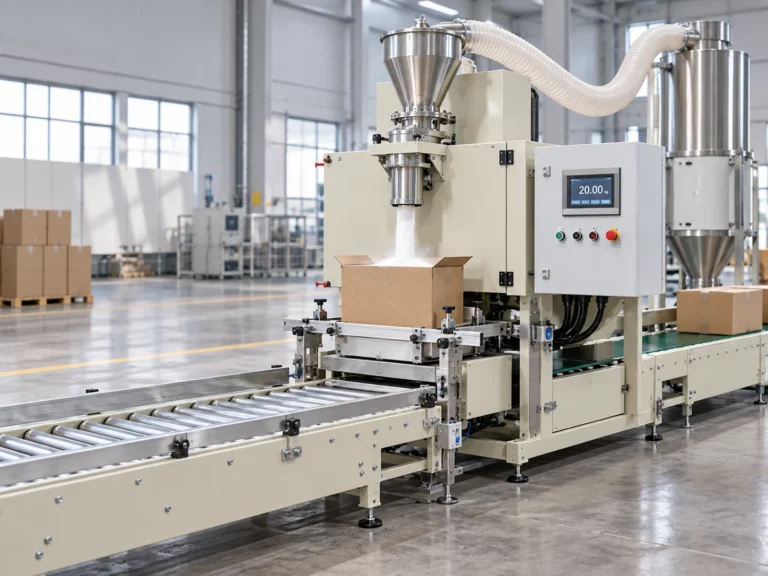
El pesaje y envasado automáticos reducen los errores repetitivos. El transporte puede ser mecánico o neumático. El almacenamiento y registro de recetas facilita la repetición de un lote exitoso. La automatización debería eliminar la incertidumbre.
Paso 4: Planificar la distribución de la fábrica, los servicios públicos y los controles de seguridad, salud y medio ambiente.
Utilice un sistema de flujo unidireccional desde el almacén hasta el producto terminado y deje acceso alrededor de la extrusora, la sección de enfriamiento y el molino. Confirme la carga eléctrica, el agua de refrigeración, el aire comprimido, la ventilación y el sistema de recolección de polvo antes de la entrega.
El polvo en polvo requiere un control riguroso. Es fundamental identificar puntos de transferencia de polvo en el suelo, sellar fugas y seleccionar la filtración adecuada. El control del polvo combustible debe incluirse en la revisión del diseño. MPMtek puede ayudar a planificar un edificio antiguo de pintura líquida con columnas irregulares o pasillos de servicio estrechos.
Paso 5: Establecer el control de calidad antes de la producción a gran escala.
Los laboratorios de análisis de polvos necesitan más que simples comprobaciones de color y densidad. Deben analizar el tamaño de partícula, el tiempo de gelificación, la fluidez, la nivelación, el brillo, la respuesta al curado, la adhesión y la resistencia al impacto.
Conserve las muestras y los registros de lotes. Registre la temperatura de extrusión, la velocidad del tornillo, la velocidad de alimentación y la configuración del clasificador. Cuando un cliente reporta poros posteriormente, la trazabilidad es más importante que la memoria. Envíe la formulación real para que el proveedor la pruebe.
Paso 6: Instalar, poner en marcha y escalar la línea de producción.
La puesta en marcha es más que una simple entrega. Verifique los servicios públicos y las protecciones, haga funcionar el sistema en vacío y luego introduzca una formulación conocida a un ritmo conservador. Ajuste la configuración mientras mide el polvo.
Operadores de trenes en limpieza y cambio de formato. Rendimiento de la vía, polvo utilizable, tiempo de inactividad y duración del cambio. Una línea a la velocidad nominal que genera retrabajo no es capacidad útil. Aumente el rendimiento en pequeños pasos.
Paso 7: Cómo elegir el proveedor adecuado de equipos de recubrimiento en polvo.
El proveedor debe explicar su formulación en términos técnicos. Solicite evidencia de ensayos y datos claros sobre su utilidad.
- ¿Puede el proveedor probar la formulación real y el tamaño de partícula deseado?
- ¿La extrusora, la sección de enfriamiento y el sistema ACM son compatibles con la capacidad propuesta?
- ¿La propuesta incluirá un diagrama de flujo del proceso y un plano del taller?
- ¿Se incluyen las instrucciones de instalación, las piezas de repuesto y la formación del operador?
- ¿Se puede ampliar la línea sin sustituir sus controles principales?
- ¿Están disponibles los certificados CE, ATEX u otros documentos requeridos para el mercado de destino?
MPMtek desarrolla equipos y líneas completas de recubrimiento en polvo, incluyendo equipos de laboratorio para la ampliación de escala. Su trayectoria incluye las certificaciones ISO 9001, CE y ATEX. Para ellos, lo más importante es que la documentación, las pruebas y el servicio se ajusten a las necesidades de la planta en construcción.
Preguntas frecuentes
P: ¿Es posible convertir una fábrica de pintura líquida existente para la producción de recubrimientos en polvo?
A menudo, sí. El laboratorio, el almacén y el equipo de control de calidad pueden reutilizarse. Sin embargo, se sigue necesitando equipo específico para la premezcla, la extrusión, el enfriamiento, la molienda y el envasado. Los servicios públicos y el control del polvo requieren una revisión exhaustiva.
P: ¿Cuál es la máquina más importante en una línea de recubrimiento en polvo?
La extrusora de doble husillo es fundamental para la mezcla en estado fundido, pero no puede compensar una dosificación deficiente ni un enfriamiento inestable. La calidad depende de toda la línea de producción.
P: ¿Debo empezar con una línea de laboratorio o con una línea de producción completa?
Comience con ensayos de laboratorio cuando la formulación o el mercado no estén probados. línea de recubrimiento en polvo de laboratorio Se pueden establecer los parámetros antes de una inversión mayor. Una gama completa de productos se ajusta cuando se define la demanda.
Conclusión
Para iniciar la producción de recubrimientos en polvo, lo ideal es que los requisitos del producto guíen la decisión sobre el equipo. Defina la formulación y la capacidad, y luego integre cada etapa en un flujo controlable.
MPMtek puede revisar la formulación, la capacidad y las condiciones del sitio antes de especificar una línea. Envíe esos detalles a través de línea de producción de recubrimiento en polvo Ruta de consulta para una configuración práctica. El siguiente paso es una prueba y una revisión del sitio.
Contacto con MPMtek con el producto objetivo, la capacidad y los servicios públicos.