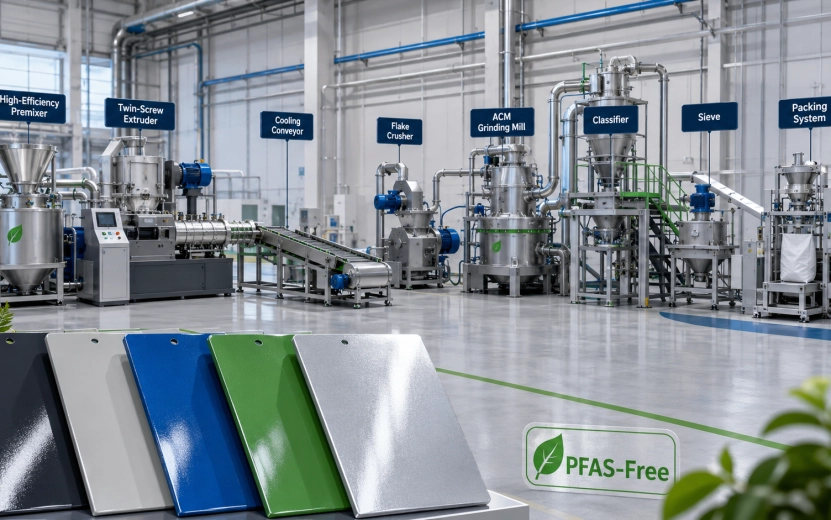
Les revêtements en poudre sans PFAS représentent un défi de production, et non une simple mise à jour de la formulation. Un panneau impeccable en laboratoire peut néanmoins présenter des défauts tels que l'effet peau d'orange, une altération de la brillance ou un polissage insuffisant lors de la production en série.
Pourquoi les fabricants se tournent-ils vers les revêtements en poudre sans PFAS ?
Le principal facteur est le risque. De plus en plus d'acheteurs s'informent sur la teneur en PFAS avant que la réglementation n'impose des exigences précises.
Pour une plante, les questions sont directes :
- Est-il possible d'éliminer les additifs fluorés sans altérer les performances de surface ?
- La poudre peut-elle encore être pulvérisée, durcie et récupérée de manière uniforme ?
- Est-il possible de séparer clairement les anciennes et les nouvelles formules ?
Ce dernier point est important. Un produit sans PFAS n'est pas convaincant si des résidus d'une ancienne formule persistent dans l'organisme.
Pourquoi est-il difficile de fabriquer des revêtements en poudre sans PFAS ?
Supprimer les PFAS semble simple : il suffit de remplacer l’additif et de rééquilibrer la formule. En réalité, les additifs fluorés contribuent souvent discrètement à améliorer le glissement, la résistance aux taches, le démoulage, la fluidité, la résistance aux rayures et le toucher. Une fois éliminés, de petits défauts deviennent visibles.
Défis liés à la performance de la formulation
Les alternatives sans PFAS peuvent résoudre un problème et en créer un autre. Une cire peut améliorer le glissement, mais affecter le revêtement. Un additif à base de silicone peut améliorer le toucher de la surface, mais augmenter le risque de formation de cratères si la dispersion est mauvaise.
Les problèmes typiques incluent :
- Brillance ou texture instable
- Plus de zestes d'orange après séchage
- résistance aux taches ou aux produits chimiques réduite
- Piqûres, cratères ou défauts d'écoulement
Ces propriétés sont liées. Une meilleure fluidité peut atténuer la texture. Un glissement accru peut affecter l'adhérence.
Défis liés à la stabilité du traitement
Une même formule peut se comporter différemment à l'intérieur de l'équipement. Certains substituts se dispersent moins facilement. Certains nécessitent un cisaillement plus important. Certains supportent mal une longue exposition à la chaleur.
La plage de tolérance à l'extrusion peut se réduire. Un lot peut paraître correct à une certaine vitesse de vis, puis s'assombrir après une légère augmentation de température. Lors du broyage, il peut générer davantage de fines ou de particules surdimensionnées. Les notes de procédé doivent comporter des valeurs numériques précises : débit d'alimentation, vitesse de la vis, température de la zone, couple, débit d'air du broyeur et vitesse du classificateur.
Quelles sont les étapes de production les plus sensibles dans la fabrication de revêtements en poudre sans PFAS ?
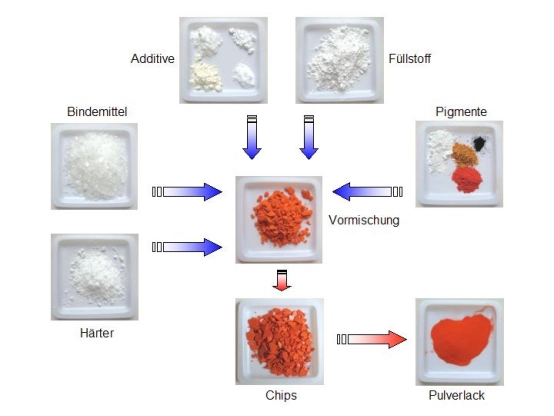
Les étapes critiques sont bien connues : prémélange, extrusion, refroidissement, broyage, classification et conditionnement. La différence réside dans la tolérance. Les formules sans PFAS laissent souvent moins de marge de manœuvre en matière de traitement.
Prémélange : La répartition des matières premières est-elle uniforme ?
Le prémélange est une étape cruciale où de petites erreurs se transforment en défauts ultérieurs. De nombreux additifs fonctionnels sont utilisés à faible dose, ce qui peut entraîner une mauvaise répartition qui ne se manifeste qu'après pulvérisation ou séchage.
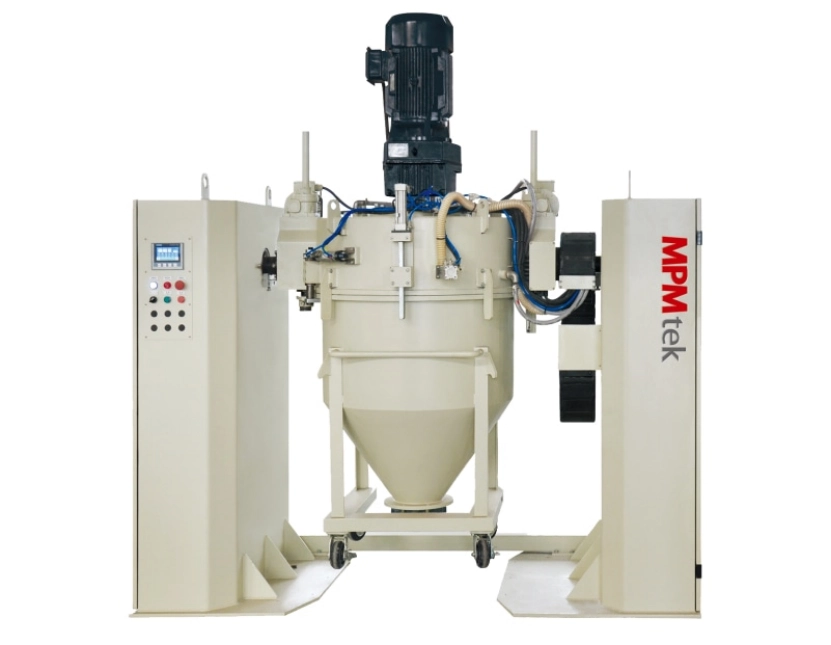
Une forte mélangeur Il convient de répartir les matières premières uniformément sans surchauffer les composants sensibles. Un dosage précis est essentiel. La facilité de nettoyage l'est tout autant, surtout lorsqu'une usine fabrique à la fois des produits traditionnels et des produits sans PFAS.
Extrusion : La ligne peut-elle contrôler précisément la chaleur et le cisaillement ?
L'extrusion est l'étape clé de la chaîne de production. C'est également à ce stade que les formules sans PFAS de faible qualité se révèlent généralement.
L'extrudeuse doit fondre, disperser et homogénéiser la formule sans endommager la résine ni les additifs. Les zones de chauffe, la conception de la vis, sa vitesse de rotation, le couple et le temps de séjour influent tous sur le résultat. Un couple instable lors d'un essai est un signe d'alerte. Le panneau l'indiquera ultérieurement.
Refroidissement et broyage : le flocon est-il stable avant le broyage ?
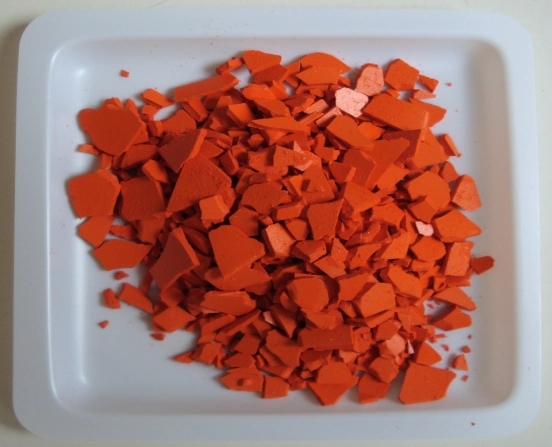
Après extrusion, le matériau fondu nécessite un refroidissement contrôlé. Un refroidissement irrégulier engendre des paillettes de fragilité variable, rendant le broyage imprévisible.
Trop chaud, et la matière s'étale ou colle. Trop cassante, et le moulin produit trop de fines. Une étable convoyeur de refroidissement ou concasseur de refroidissement compact permet de produire des flocons qui se comportent de manière constante lors du broyage.
Broyage et classification : la distribution granulométrique peut-elle rester constante ?
La distribution granulométrique influe sur la pulvérisabilité, l'efficacité du transfert, la fluidisation, la formation du film, la finition de surface et le comportement de récupération.
Les poudres sans PFAS peuvent se broyer différemment car leur dureté, leur viscosité à l'état fondu et leur comportement à la rupture ont changé. Moulin ACM La classification ajustable permet un meilleur contrôle des particules fines et grossières. Les particules surdimensionnées créent des défauts de texture. Un excès de fines nuit à la fluidisation et à la récupération.
Quelles caractéristiques des équipements contribuent à améliorer la production de revêtements en poudre sans PFAS ?
La meilleure gamme permet un contrôle précis là où la formule est sensible. Ses caractéristiques utiles incluent :
- Prémélangeur haute efficacité pour la distribution d'additifs à faible dose
- Doubleextrudeuse à vis avec une température et un contrôle de couple stables
- Configuration de vis flexible pour différents systèmes de résine
- Refroidissement uniforme et broyage des flocons avant mouture
- Système de broyage ACM avec vitesse de classification réglable
- Agencement modulaire et facile à nettoyer pour faciliter les changements et les futures formules
Une ligne de production rigide peut devenir coûteuse en cas d'évolution du marché. Une ligne modulaire est généralement plus sûre.
Comment les fabricants doivent-ils tester les formulations sans PFAS avant leur commercialisation à grande échelle ? Production à grande échelle ?
Les essais à petite échelle doivent ressembler à une préparation de production, et non à une décoration de laboratoire.
Un parcours de test utile comprend :
- Vérifier que les panneaux présentent une bonne fluidité, une brillance, une texture, un temps de séchage rapide, une adhérence et une résistance aux taches.
- Effectuer une extrusion pilote en enregistrant la température, la vitesse de la vis, le débit d'alimentation et le couple.
- Refroidir, broyer et mesurer la distribution granulométrique.
- Panneaux de pulvérisation en utilisant les paramètres clients normaux.
- Comparez la poudre recyclée, et pas seulement la poudre vierge.
L'objectif n'est pas d'obtenir un premier lot parfait. L'objectif est de définir la plage de fonctionnement.
Quelles questions les acheteurs doivent-ils poser lorsqu'ils choisissent un équipement pour les revêtements en poudre sans PFAS ?
Le choix des équipements doit commencer par les revêtements que l'usine souhaite fabriquer, et non par une page de catalogue.
Les acheteurs devraient demander :
- Le fournisseur peut-il concevoir des revêtements pour polyester, époxy, hybrides et fonctionnels ?
- L'extrudeuse peut-elle maintenir une température stable et un contrôle précis du cisaillement ?
- Le broyeur est-il réglable pour différents niveaux de fragilité et de granulométrie cibles ?
- Le nettoyage est-il facile lors du changement de formule ?
- Est-il possible de soutenir des tests pilotes avant un investissement complet ?
Ces réponses révèlent bien plus que la simple liste des machines. Elles indiquent si le fournisseur maîtrise le revêtement en poudre en tant que procédé.
Comment MPMtek peut-il soutenir les lignes de production de revêtement en poudre sans PFAS ?
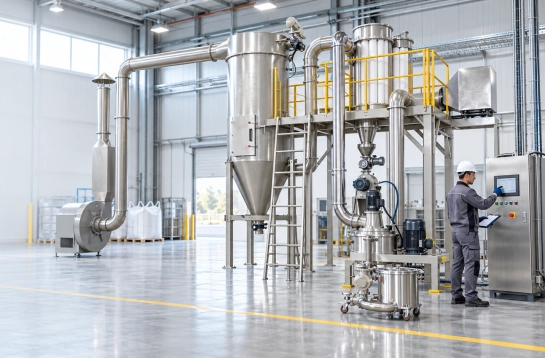
La technologie MPMtek est particulièrement utile à l'interface entre la formulation et l'équipement. Un projet sans PFAS peut nécessiter un mélangeur, une extrudeuse, un système de refroidissement, un broyeur ACM, un classificateur, un tamis et un système d'emballage fonctionnant comme un seul et même processus.
Pour une usine existante, l'intérêt réside dans la modernisation des points faibles. Pour une nouvelle usine, il s'agit d'éviter les choix qui limitent les formulations futures. MPMtek peut accompagner la planification personnalisée des lignes de production pour les tests, la montée en puissance ou l'optimisation des capacités.
Conclusion : Quel est le secret d’une fabrication réussie de revêtements en poudre sans PFAS ?
La clé réside dans la maîtrise du processus. Les revêtements en poudre sans PFAS donnent de bons résultats lorsque le mélange, l'extrusion, le refroidissement et le broyage sont contrôlés.
La formulation retient l'attention. L'équipement détermine si la formulation résiste à la production. Contactez MPMtek pour discuter de votre projet de revêtement en poudre sans PFAS et trouver la solution d'équipement adaptée à votre usine.
FAQ (questions fréquentes)
Question : Les revêtements en poudre sans PFAS sont-ils plus difficiles à fabriquer ?
Souvent, oui. Les additifs de remplacement peuvent modifier la fluidité, la stabilité de l'extrusion et le comportement au broyage.
Question : Quel est l'équipement le plus important pour les revêtements en poudre sans PFAS ?
Le mélangeur, l'extrudeuse, le système de refroidissement, le broyeur ACM, le classificateur, le tamis et le système d'emballage.
Question : Les lignes de revêtement en poudre existantes peuvent-elles produire des formulations sans PFAS ?
Certaines le permettent. Cela dépend du contrôle de la température, de la conception de la vis, de l'accessibilité pour le nettoyage et du contrôle de la granulométrie.
Question : Pourquoi la taille des particules est-elle importante dans les revêtements en poudre sans PFAS ?
Cela influe sur la fluidisation, la pulvérisabilité, l'efficacité du transfert, l'aspect et le comportement de récupération.