Air Conveyor Fundamentals in Cooling Conveyor Systems
Airflow Dynamics and Heat Transfer Principles
In air conveyor based cooling systems, the main way to remove heat relies on forced convection. Aimed airflow pulls heat from newly extruded materials. This leads to a quick temperature drop. The effect relies on three key factors:
- Air velocity: Faster airspeed boosts heat exchange efficiency.
- Turbulence: Turbulent airflow raises the rate of convective heat transfer. It does this by mixing up the thermal boundary layer around the material.
- Flow uniformity: Even spread of air over the product surface makes sure cooling stays consistent. This matters a lot for heat sensitive compounds like powder coatings.
Another important point is the time the product spends in contact with the cooling air. More time lets extra thermal energy escape. But too much time might slow down throughput. So, finding the right balance within work limits is key. It helps match productivity with cooling results.
Key Design Parameters for Efficient Cooling
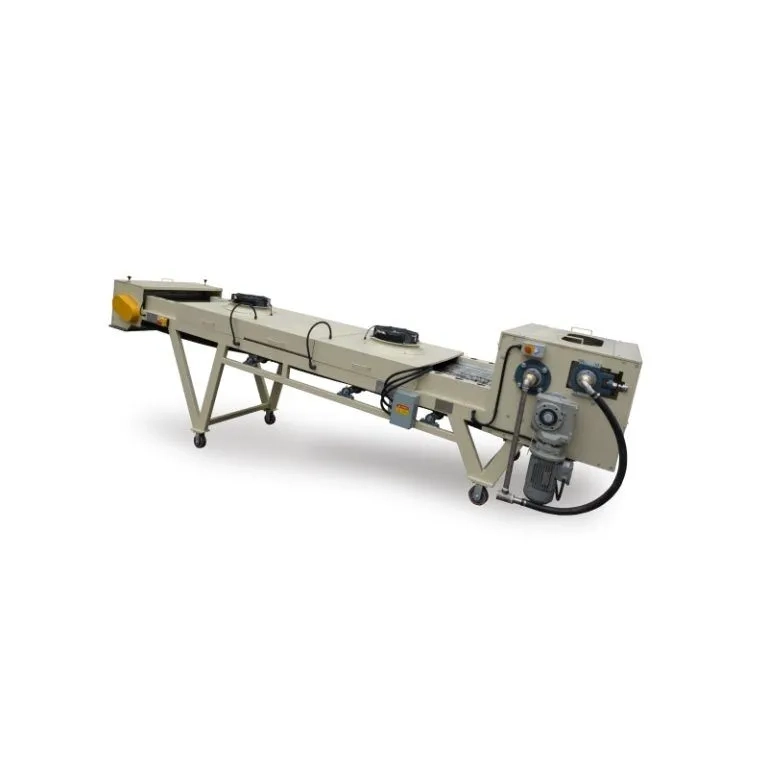
Cooling conveyor design affects how well thermal energy leaves the material. Changes in speed, belt length, and width can greatly change cooling speeds:
| Model | Output (kg/h) | Belt Length (mm) | Belt Width (mm) |
| CCB-400 | 400 | 4000 | 800 |
| CCB-1000 | 1000 | 8000 | 1200 |
| CCB-2000 | 2000 | 11000 | 15000 |
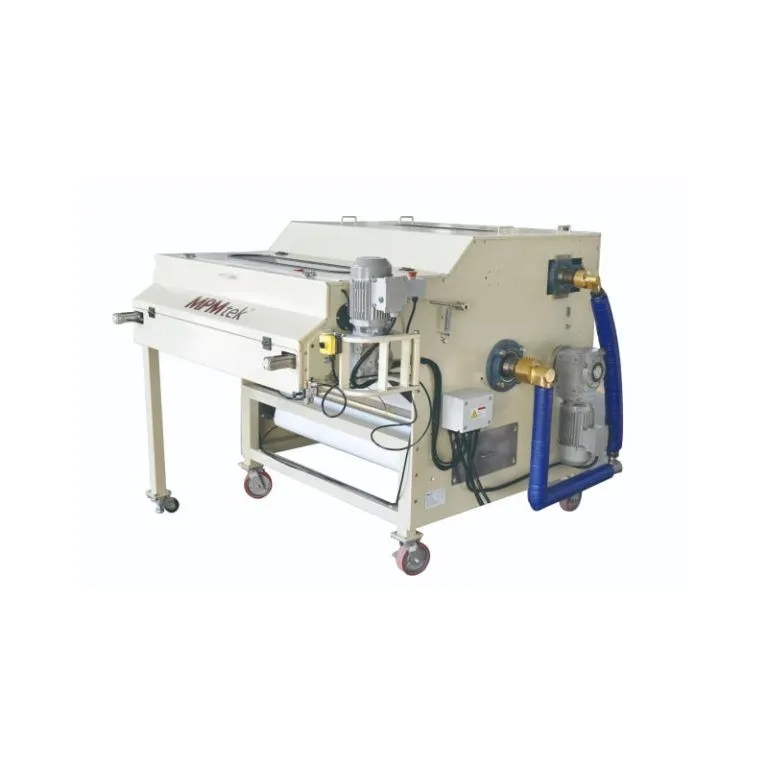
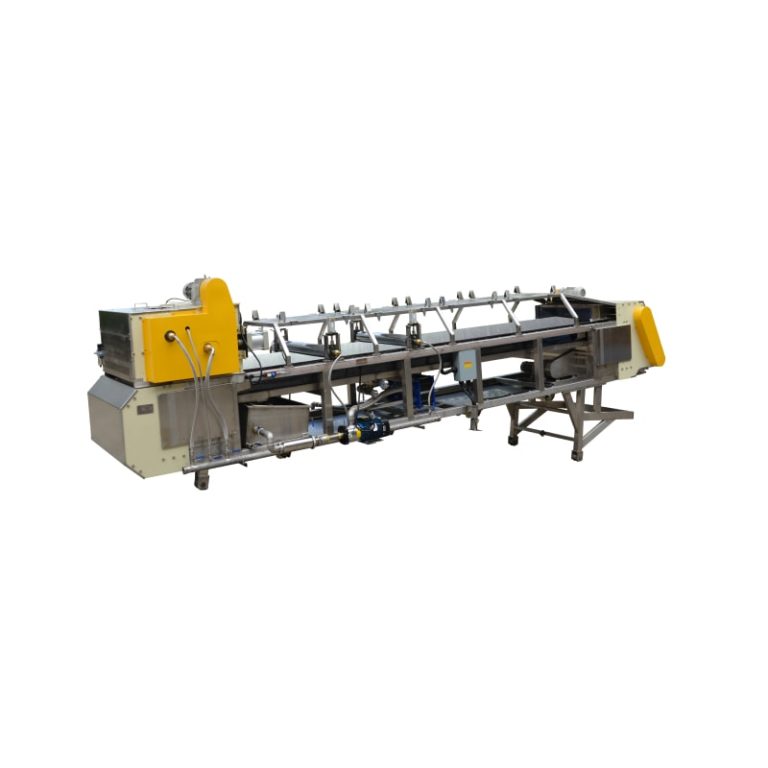
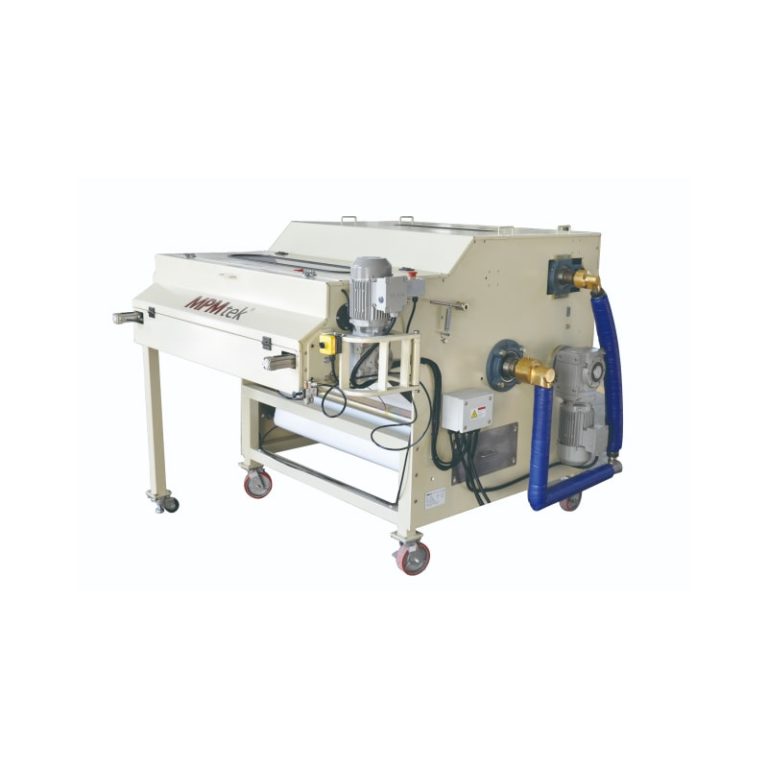
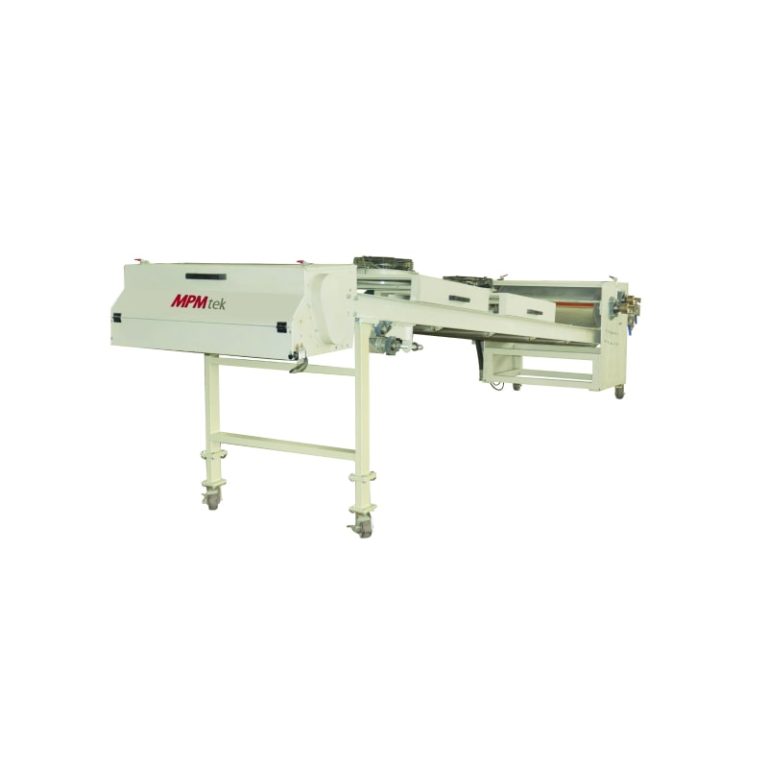
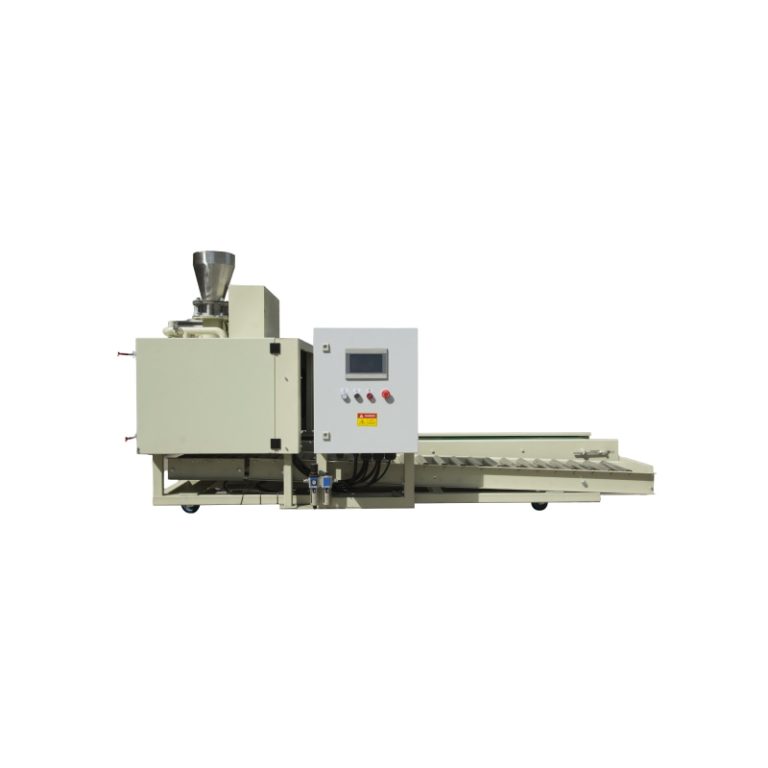
Thermo melting material from extruder is rolled to be sheet for 1 2mm by cooling rollers, and being cooled down on the stainless steel conveyor to ambient temperature, then being crushed into chips and discharged.
Also, the belt material has a big role in how it works with airflow and heat. For example:
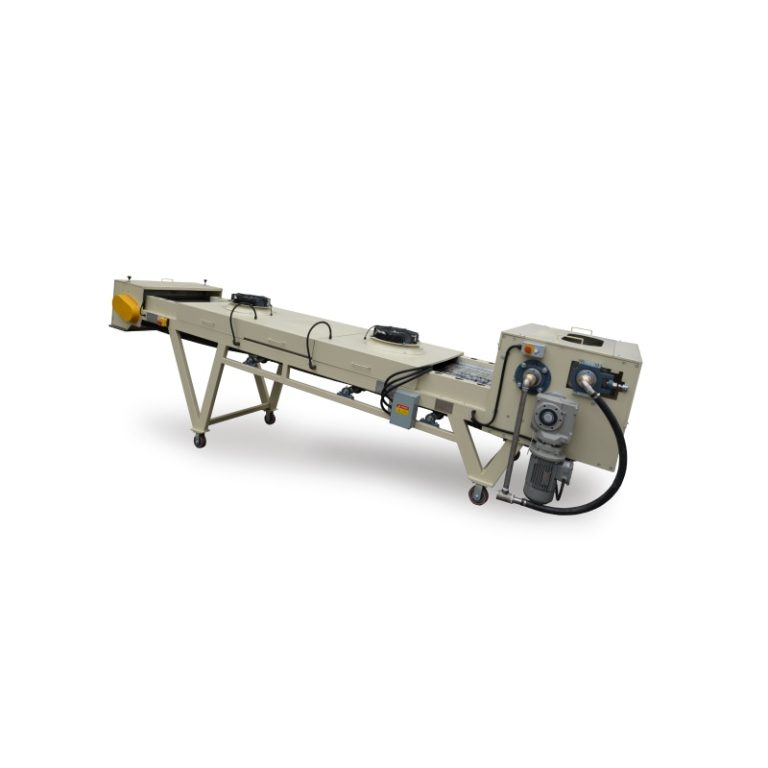
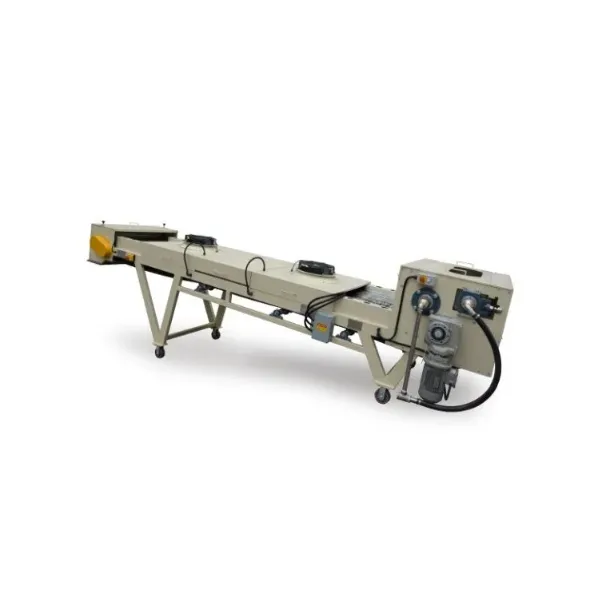
- The Air Cooling Belt (Rubber) uses anti static, heatproof and flame resistant artificial rubber, which offers excellent surface grip and thermal resistance.
- The Air Cooling Belt (Slat) uses a stainless steel slat chain, enhancing durability and airflow exposure.
Integration of Air Conveyors into Industrial Cooling Processes
Compatibility with Downstream Equipment and Process Flow
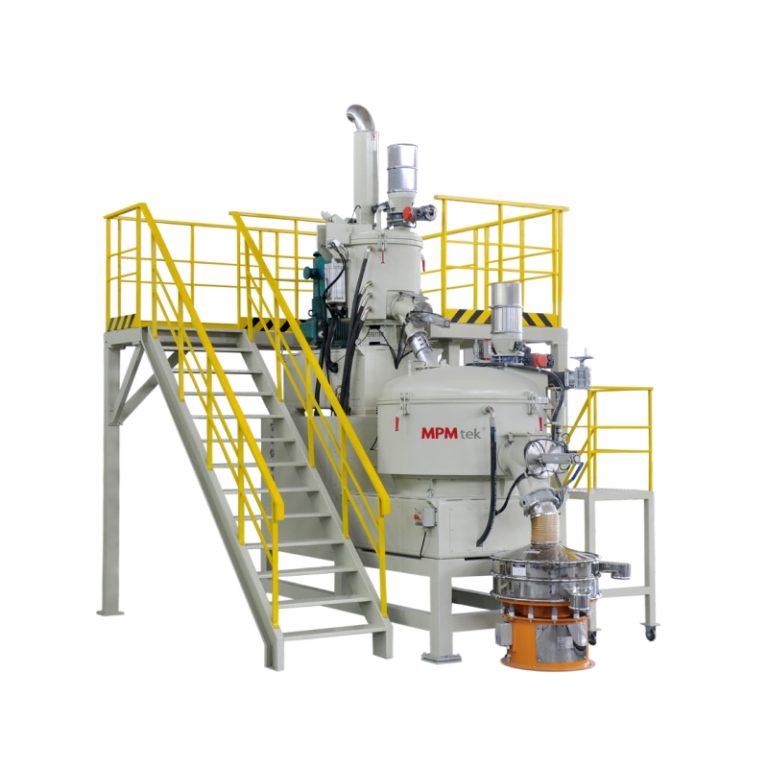
Good fit with milling, packaging, or inspection equipment is vital. It cuts down on hand work and makes shifts smooth. When automation lines up across systems, air conveyors cut delays. They also raise overall plant efficiency. This shows up clearly in powder coating lines. There, steady chip size and managed temperature are needed before micronization.
Modular Construction and Scalability Considerations
Modular systems are getting more popular because of their ease. Benefits cover:
- Easier maintenance access
- Faster installation and upgrades
- Adaptability to layout changes or capacity expansion
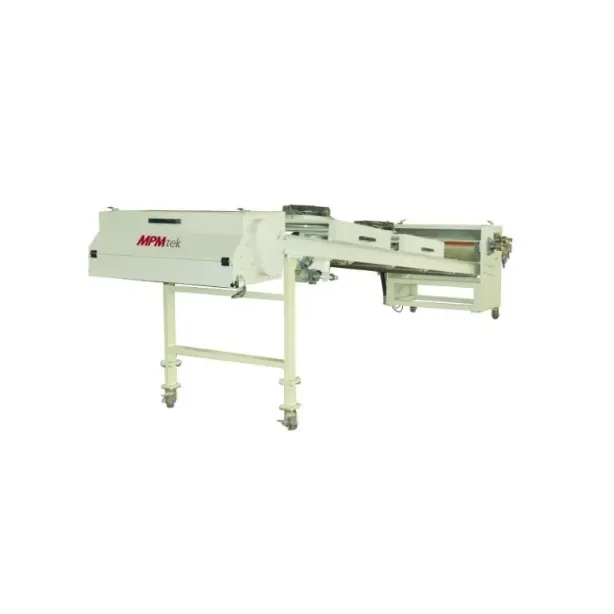
MPMtek provides customization options based on throughput capacity and plant layout. Their diverse product line spans outputs from 100kg/h to over 2000kg/h, supporting various production scales.
Material Specific Cooling Challenges and Solutions
Thermal Characteristics of Powder Coatings During Cooling
Powder coatings bring special problems because they stick when hot. Uneven cooling can cause clumping, uneven chip sizes, or surface flaws. Chip thickness is adjustable and size is uniform—a feature that stabilizes product quality post extrusion and prepares it effectively for grinding.
Handling Lightweight or Fragile Materials with Air Based Systems
For delicate products, airflow needs careful adjustment. This stops it from lifting or harming the material. You achieve this through:
- Controlled air velocities
- Strategically placed air knives
- Belt textures that provide grip without marking
The Air Cooling Belt (Rubber) offers high reliability and low power consumption, making it suitable for applications requiring gentle handling.
Enhancing Performance Through Engineering Innovation
Hybrid Cooling Systems Combining Air and Water Techniques
Sometimes air cooling by itself isn’t enough. This happens in high volume lines or with materials that hold a lot of heat. Hybrid systems help then. Water parts give fast temperature drops. Air parts steady the product. These mixes work well in extrusion cooling grinding workflows. There, throughput can’t slow down.
Durability Under Thermal Stress and Chemical Exposure
Long term reliability needs strong parts. Top quality stainless steel band is adopted to bear dynamic tension force and temperature variation for long working time. Additionally, corrosion resistant housings and flame resistant belts enhance safety and operational lifespan, even under aggressive conditions.
Operational Efficiency in Continuous Production Environments
Maintaining Quality Between Processing Stages
Air conveyors keep even temperature patterns across batches. This cuts down inside heat differences that might change material sameness or strength. Steadying during this step makes sure later processes like packaging or micronization get evenly cooled material.
Cleaning Protocols to Prevent Contamination Build Up
Hygiene is very important, especially in food grade or chemical sensitive places. Easy clean and maintenance features—like smooth surfaces, detachable components, and accessible layouts—support quick sanitation with minimal downtime.
Industry Applications Benefiting from Air Conveyor Technology
Powder Coating Production Lines with High Thermal Loads
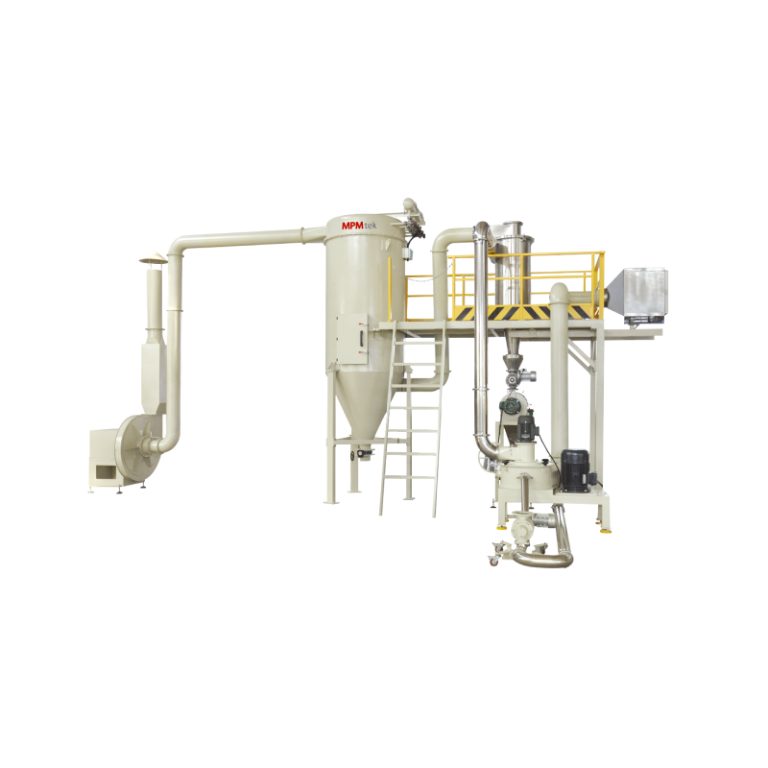
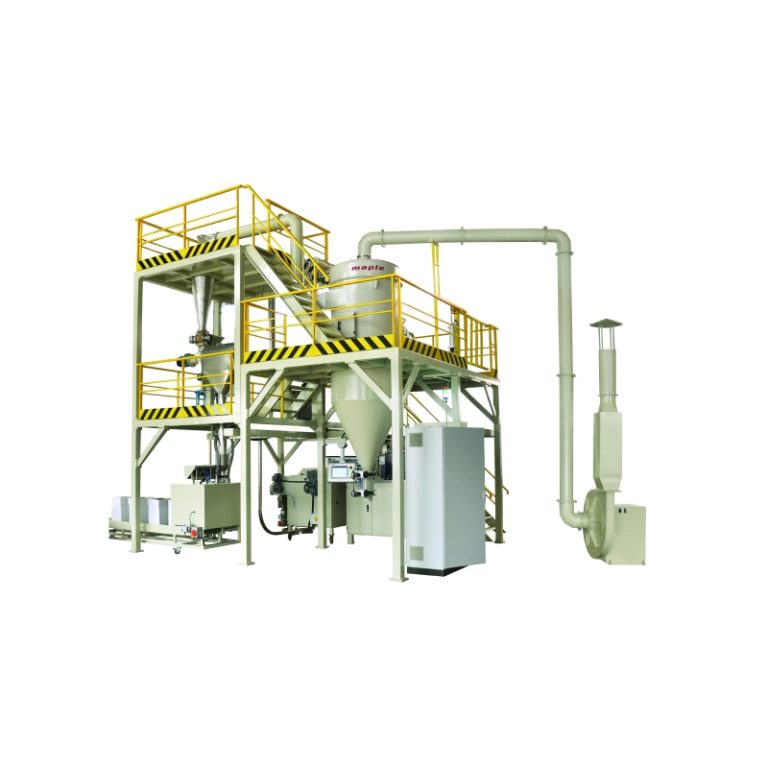
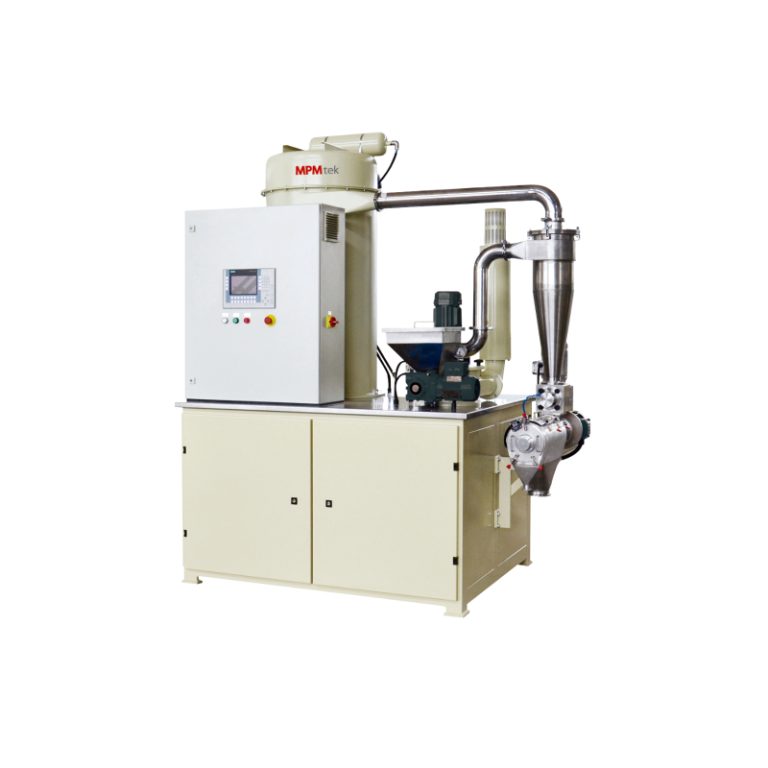
This area sees some of the best uses of air conveyor systems. MPMtek’s ACM PSR series PSR11 explosion resistant micro powder pulverizing system is designed and manufactured according to relevant standards of China (GB) and the EU (EN), and meets the relevant standards of PSR11 pressure shock resistance design strength. These systems are tightly integrated with extruders and grinders for optimized powder quality.
Chemical Manufacturing Requiring Controlled Thermal Profiles
Volatile compounds often need slow, managed cooling. This stops phase changes or reactions. Adjustable airflow settings and belt speeds let you control temperature changes just right.
Performance Optimization Through Engineering Innovation
Engineering Expertise Tailored to Industry Needs
MPMtek was founded in 2006. It is committed to the research and development of precise, intelligent, efficient, and human friendly powder coating production equipment. The company offers expert collaboration during design phases to match material behavior, floor space limitations, or regulatory requirements.
Spare Parts Availability and Lifecycle Support Services
Operational continuity depends on accessible maintenance solutions. Safety, automation, efficiency and environmental protection are the tenets of MPMtek’s product development, production and sales, and are also our commitment to our customers. Technical teams assist with troubleshooting thermal issues and ensuring equipment longevity.
FAQs
Q: What industries benefit most from air conveyor cooling solutions?
Powder coating, food processing, and chemical manufacturing frequently use these systems due to their efficient non contact cooling properties.
Q: How do I select between stainless steel, slat chain, or rubber belt types?
Material properties like heat resistance, product fragility, and contamination sensitivity guide this choice.
Q: Can MPMtek customize conveyor dimensions for my facility?
Yes, MPMtek offers customized solutions based on plant layout and capacity needs.
Q: Are hybrid air water cooling systems difficult to maintain?
Not necessarily; modular designs make both components accessible for cleaning and maintenance.
Q: How does air conveyor cooling impact final product quality?
It reduces thermal stress, supports uniform chip formation, and stabilizes materials before grinding or packaging.