Sabuk conveyor pendinginan stainless steel efisiensi tinggi mengubah bagaimana jalur produksi lapisan bubuk mengelola pendinginan setelah ekstrusi. Akurasi, ketangguhan, dan penghematan daya mereka menyebabkan stabilitas output yang lebih baik dan biaya berjalan yang lebih kecil. Bagi bisnis yang mencari hasil yang lebih baik pada tahun 2026, belajar bagaimana pengaturan ini bekerja sangat penting untuk tetap kompetitif dalam perlakuan panas.
Apa itu sabuk conveyor pendingin?
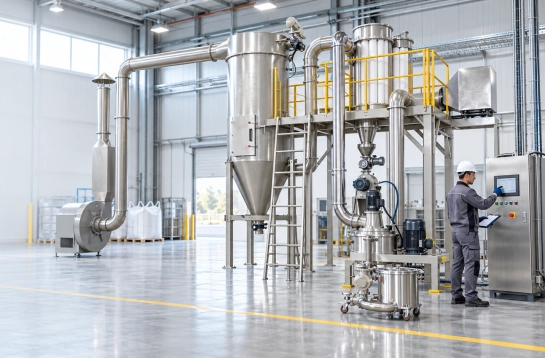
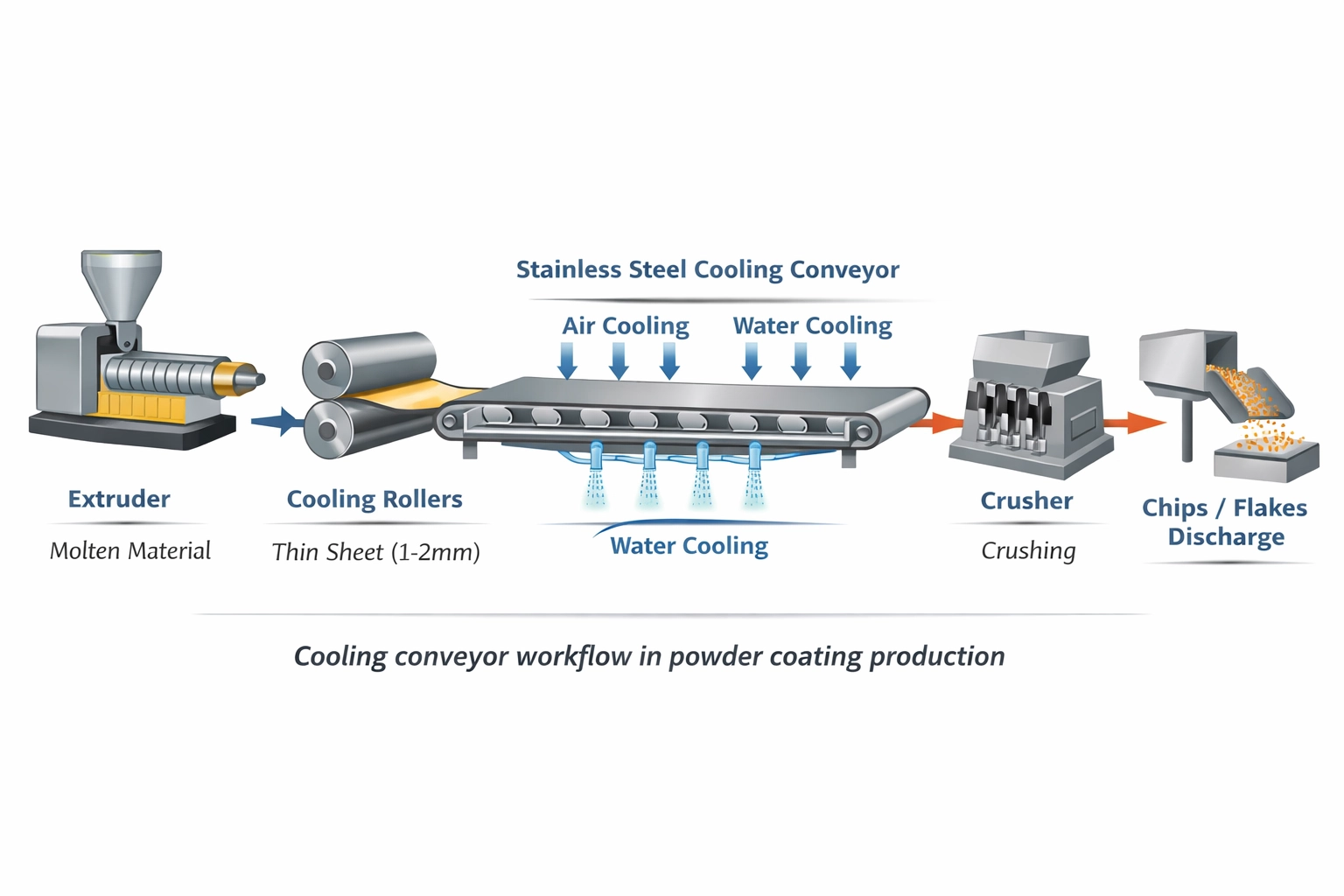
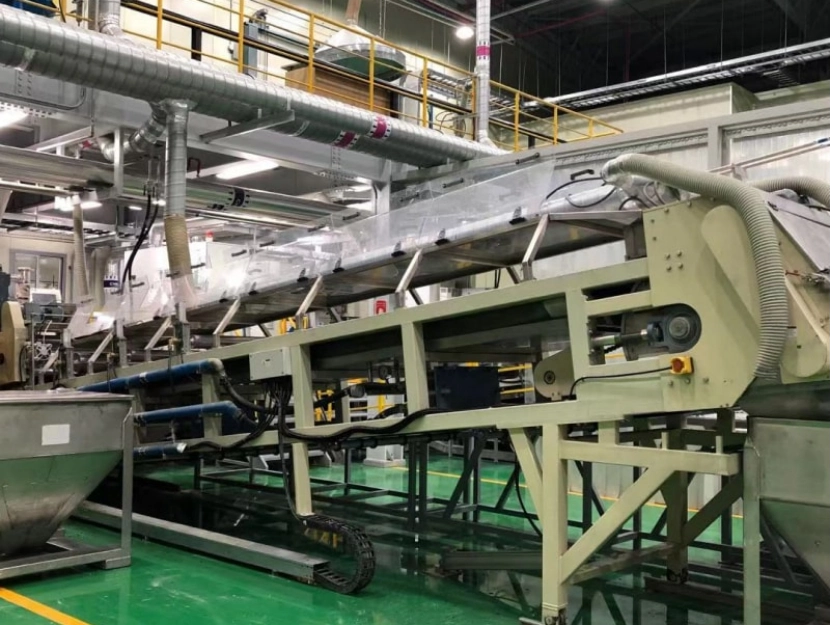
Sebuah pendinginan conveyor belt memainkan peran utama dalam proses panas pabrik. Ini membutuhkan penurunan suhu setelah ekstrusi atau leleh. Ini memindahkan bahan panas di atas area yang dikelola. Panas melarikan diri melalui pengaturan udara atau air. Sabuk pendingin stainless steel termasuk rol pendingin, konveyor stainless steel, crusher dan sistem penyemprotan air pendingin. Ini mendinginkan band stainless steel.
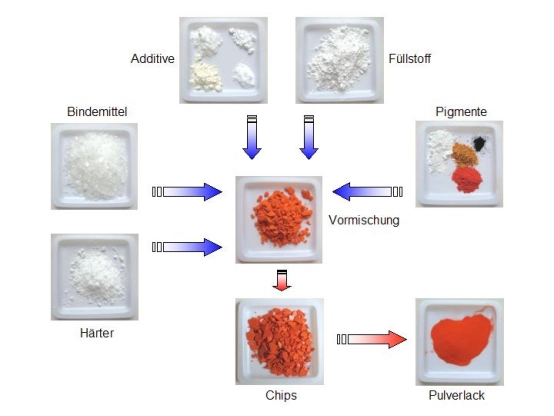
Dalam produksi lapisan bubuk, bahan leleh dari extruder berubah menjadi lapisan tipis. Dingin perlahan-lahan di sabuk. Kemudian dipecah menjadi potongan atau serpihan. Desain standar berbeda dari yang efisien tinggi. Yang terakhir menawarkan daya penghapusan panas yang lebih baik. Mereka memiliki bagian kontrol yang tepat. Selain itu, mereka menggunakan energi dengan cara yang lebih cerdas.
Mengapa Stainless Steel Adalah Bahan yang Dipilih
Stainless steel menonjol untuk hari ini’ s conveyor pendinginan. Ini menggabungkan kekuatan yang besar dengan ketahanan karat. Bahan ini menangani paparan panas tinggi yang terus menerus. Ini menghindari membungkuk atau pecah. Banda stainless steel berkualitas tinggi diadopsi untuk menanggung kekuatan ketegangan dinamis dan variasi suhu untuk waktu kerja yang panjang.
Pembersihan sederhana. Permukaan bahkan melawan penumpukan kotoran. Anda dapat membersihkannya dengan mudah. Ini cocok dengan ruang kerja yang rapi seperti lapisan bubuk atau penggunaan aman makanan. Juga, umurnya yang panjang mengurangi pertukaran bagian dan penghentian.
Peran Sabuk Konveyor Pendinginan dalam Produksi Lapisan Bubuk
Sebelum kita melihat rincian desain, itu’ Bagus untuk melihat bagaimana sabuk ini cocok dengan pengaturan lapisan bubuk penuh.
Proses Pendinginan dalam Garis Lapisan Bubuk
Setelah ekstrusi, bubuk lebur membutuhkan pendinginan cepat. Ini menetapkan makeup kimianya dan bentuk partikelnya. Hal ini membuat extruder sangat panas. Ini menyebar secara merata di sabuk melalui roller. Saat bepergian, pergeseran dari cairan ke padat.
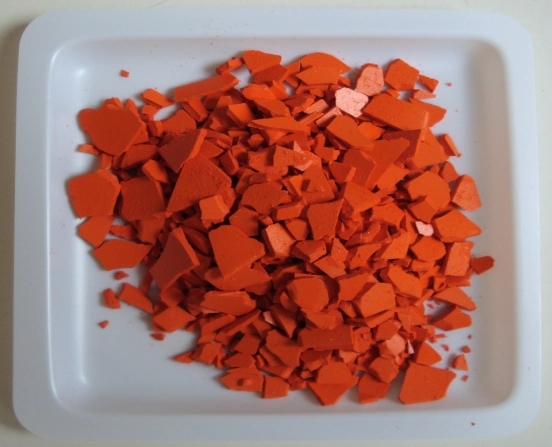
Bahan meleleh termal dari ekstruder digulung menjadi lembaran selama 1-2mm dengan mendinginkan rol, dan didinginkan pada conveyor baja tahan karat ke suhu sekitar, kemudian dihancurkan menjadi chip dan dibuang. Penanganan suhu yang stabil memastikan partikel berakhir dengan ukuran yang sama. Hal ini terjadi setelah dihancurkan oleh penghancur kemudian atau menyortir dengan saringan.
Manfaat Menggunakan Sabuk Pendinginan Efisiensi Tinggi dalam Lapisan Bubuk
Sabuk efisiensi tinggi membawa keuntungan yang jelas:
- Kecepatan pendinginan yang lebih cepat dengan panas permukaan yang stabil.
- Penggunaan listrik yang lebih sedikit dari aliran udara / air yang lebih baik.
- Meningkatkan kualitas item. Tidak ada kotoran atau memutar terjadi selama gerakan.
Tidak ada kontaminasi pada chip. Satu titik ini meningkatkan kebersihan bubuk akhir. Ini juga mengurangi limbah dalam produksi.
Fitur Desain Utama Konveyor Pendinginan Stainless Steel Modern
Sistem saat ini mencampurkan perawatan mekanis dengan penanganan digital untuk output teratas.
Struktur Sabuk dan Desain Permukaan
Sabuk dapat memiliki bagian atas biasa atau diisi lubang berdasarkan apa yang dibutuhkan pekerjaan. Yang biasa bekerja dengan baik untuk bubuk kecil yang membutuhkan rasa halus. Desain lubang mempercepat aliran udara untuk pendinginan cepat. Ketebalan dan lebar berubah berdasarkan ukuran model. Mereka berkisar dari 400 kg/jam hingga 2000 kg / jam sesuai dengan MPMtekRangkaian produk.
| Model | Output (kg / jam) | Panjang Sabuk (mm) | Lebar Sabuk (mm) | Daya Drive (kW) |
| CCB-400 | 400 | 4000 | 800 | 0.75 |
| CCB-600 | 600 | 6000 | 1000 | 0.75 |
| CCB-1000 | 1000 | 8000 | 1200 | 1.5 |
| CCB-1500 | 1500 | 9000 | 15000 | 1.5 |
| CCB-2000 | 2000 | 11000 | 15000 | 1.5 |
Polish permukaan sangat penting untuk penyebaran panas. Stainless steel berkilau meningkatkan kesetaraan sentuhan antara item dan sabuk.
Konfigurasi Sistem Pendinginan
- Sistem Pendinginan Udara: Udara ruangan atau udara didorong memberikan pendinginan yang baik. It’ s baik untuk garis kecil di mana kemudahan mengalahkan kecepatan.
- Sistem Pendinginan Air: Loop air di bawah sabuk menarik panas dengan cepat. Ini cocok dengan pekerjaan output besar yang membutuhkan pengerasan cepat.
- Solusi Pendinginan HybridBeberapa jalur baru mencampur udara dan air. Mereka menyeimbangkan output dengan penghematan daya. Hal ini tergantung pada cuaca atau jenis bahan.
Mekanisme Drive dan Kontrol
Motor kecepatan yang dapat disesuaikan memungkinkan pekerja mengubah aliran untuk cocok dengan kecepatan ekstruder atau ukuran chip yang diinginkan. Sensor bawaan mengawasi panas sabuk sepanjang waktu. Kontrol otomatis tweak kecepatan kipas atau tingkat air untuk pekerjaan yang tepat. Ini lebih umum dalam gear siap untuk Industri 4.0.
Faktor-faktor yang perlu dipertimbangkan saat memilih sabuk conveyor pendinginan untuk kebutuhan produksi 2026
Memilih sistem terbaik berarti menimbang output terhadap penggunaan nyata.
Kapasitas Produksi dan Layout Line
Conveyor harus sesuai dengan ukuran extruder saat ini. Ini juga harus sesuai dengan batas ruang dalam pengaturan pabrik. Pilihan frame add-on membuat bergabung mudah. Hal ini membantu bahkan ketika memperbarui garis lama.
Kompatibilitas Bahan dan Jenis Produk
Berbagai lapisan bubuk seperti epoksi, poliester, hibrida bertindak berbeda di bawah pertukaran panas. Memilih jenis sabuk yang tepat menghentikan reaksi buruk atau kotoran saat bekerja.
Biaya pemeliharaan, pembersihan, dan operasional
Sederhana mengambil-apart memotong waktu pembersihan banyak. Mudah dibersihkan dan pemeliharaan. Dalam jangka panjang, ini berarti biaya yang lebih rendah. Lebih sedikit istirahat terjadi untuk pekerjaan perbaikan.
Kemajuan dalam Teknologi Konveyor Efisiensi Tinggi pada tahun 2026
Ide-ide baru terus datang di sisi mesin dan digital di pabrik-pabrik dunia.
Inovasi Hemat Energi dalam Desain Konveyor
Bahan bungkus segar dipotong di luar pelarian panas. Mereka tetap dalam stabilitas. Kontrol cerdas menyesuaikan kecepatan kipas atau aliran cairan pendingin di tempat. Mereka menggunakan pemeriksaan panas nyata. Hal ini menghindari limbah daya ekstra. Namun ia terus bekerja dengan baik.
Integrasi dengan Industri 4.0 Sistem
Sensor IoT mengirim informasi langsung ke layar utama sekarang. Tebak-di depan titik matematika memperbaiki kebutuhan sebelum istirahat. Tebak ini membantu kerja non-stop berjalan di pabrik sepanjang jam untuk output lapisan bubuk besar.
Bagaimana MPMtek Mendukung Garis Produksi Lapisan Bubuk yang Efisien
MPMtek link ke gear yang dibuat dengan baik cocok untuk hari ini’ kebutuhan pabrik. MPMtek berfokus pada studi dan membangun yang tepat, cerdas, mampu, dan jenis pengguna peralatan produksi lapisan bubuk. Pemikiran produk kami menekankan keselamatan, kerja otomatis, output, dan perawatan hijau. Semua ini membentuk dasar yang kuat untuk mesin pabrik yang dapat dipercaya saat ini.
Pilihan Kustomisasi Tersedia dari MPMtek
- Dimensi dan Bahan Sabuk yang DisesuaikanPembeli dapat meminta ukuran atau jenis sabuk yang ditetapkan berdasarkan output tujuan. Ini mulai dari skala laboratorium (100-200 kg / jam) hingga tingkat pabrik lebih dari satu ton setiap jam.
- Integrasi Sistem Modular: Setiap potongan bergabung dengan lancar dengan extruder depan atau penghancur belakang. Ini menggunakan add-on match. Titik kunci ini membantu ketika tumbuh garis lama tanpa pembelian baru penuh.
Bantuan teknis selama pengaturan memastikan bagian-bagian seperti chiller atau crusher berjalan dengan benar. Dukungan perbaikan jangka panjang menjaga output stabil. Kami menawarkan bantuan tuning-up yang stabil di seluruh dunia.
Outlook Masa Depan: Produksi Berkelanjutan dengan Konveyor Pendinginan Stainless Steel Efisiensi Tinggi
Gelombang conveyor pendinginan yang akan datang tidak hanya menargetkan kecepatan tetapi juga cara hijau. Penggunaan daya yang lebih kecil mengurangi output karbon per batch. Bagian stainless steel yang dapat didaur ulang kembali aturan pembuatan loop. Pembeli global menginginkan ini untuk jalur pasokan yang lebih bersih semakin banyak.
By 2026 Dan kemudian, AI tweaks akan menyesuaikan setiap langkah. Ini mencakup push ekstrusi untuk conveyor bergerak pertandingan. Ini mengarah ke pabrik yang bijak. Mereka memeriksa sendiri dan mengubah aliran output tanpa kerja tangan.
Pertanyaan FAQ
Q1: Industri apa yang biasanya menggunakan konveyor pendingin stainless steel?
Mereka terutama digunakan dalam produksi lapisan bubuk tetapi juga muncul dalam proses penggabungan plastik dan granulasi kimia yang membutuhkan tahap pendinginan yang dikendalikan.
Q2: Seberapa sering sabuk pendingin stainless steel harus dibersihkan?
Frekuensi tergantung pada jenis produk; Namun, sebagian besar operator melakukan penghapusan harian cepat dengan pembersihan dalam mingguan untuk menjaga standar kebersihan.
Q3: Dapatkah sistem pendinginan udara cocok dengan efisiensi pendinginan air?
Tidak sepenuhnya - sistem udara sesuai dengan operasi output rendah sementara versi yang didinginkan air mencapai transfer termal yang lebih cepat yang diperlukan untuk jalur manufaktur skala besar.
Q4: Faktor apa yang mempengaruhi keseragaman chip setelah pendinginan?
Konsistensi tekanan roller, stabilitas kecepatan sabuk, dan bahkan distribusi suhu semuanya menentukan keseragaman ketebalan chip akhir di berbagai batch.
Q5: Apakah konveyor pendinginan hibrida layak investasi?
Ya, mereka memberikan fleksibilitas di berbagai bahan atau iklim dengan menggabungkan sirkuit udara dan air untuk kinerja optimal sepanjang tahun.