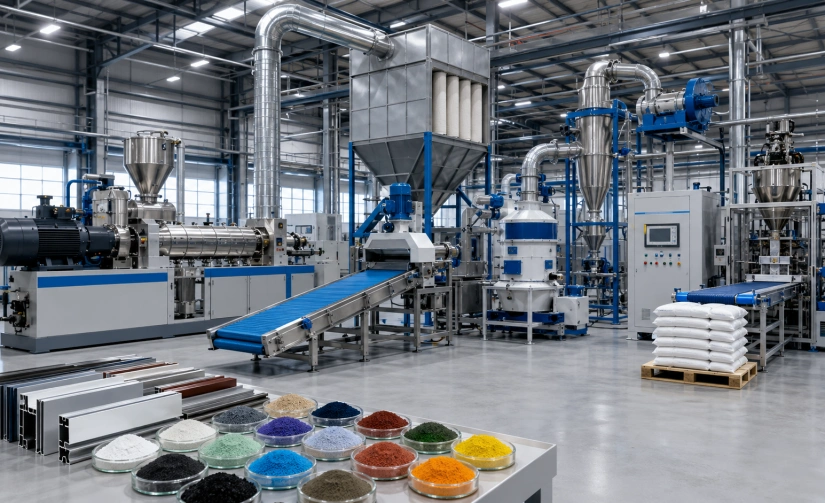
Bubuk poliester super tahan lama bukanlah produk yang mentolerir kontrol proses yang lemah. Formula yang baik pun masih dapat menghasilkan bubuk yang tidak stabil jika peralatan yang digunakan tidak sesuai.
Masalah yang biasa terjadi bukanlah satu mesin yang rusak, melainkan reaksi berantai. Mixer meninggalkan kantong pigmen kecil. Ekstruder menjadi sedikit panas. Sabuk pendingin tidak dapat menghilangkan panas dengan cukup cepat. Mesin penggiling menghasilkan terlalu banyak serbuk halus. Pada panel yang dilapisi, masalah-masalah kecil ini menjadi pergeseran warna, variasi kilap, aliran yang buruk, atau kinerja luar ruangan yang lemah.
Untuk jenis bubuk ini, pemilihan peralatan harus dimulai dengan stabilitas, bukan hanya kapasitas produksi.
Apa yang Membuat Pelapis Serbuk Poliester Super Tahan Lama Lebih Sulit Diproduksi?
Bubuk poliester super tahan lama digunakan pada profil aluminium, fasad, furnitur luar ruangan, kusen jendela, dan bagian lain yang terpapar sinar matahari dan cuaca. Lapisan ini membutuhkan ketahanan UV yang lebih baik, retensi kilap, stabilitas warna, dan konsistensi permukaan yang lebih baik daripada bubuk standar untuk penggunaan di dalam ruangan.
Hal itu membuat proses produksi menjadi kurang toleran.
Peralatan tersebut harus mendukung:
- Distribusi bahan baku yang seragam
- Peleburan dan dispersi terkontrol
- Risiko panas berlebih rendah
- Pendinginan chip yang stabil
- Distribusi ukuran partikel yang dapat diulang
- Perubahan warna pembersih
Bubuk poliester standar mungkin dapat menyembunyikan beberapa variasi proses. Bubuk luar ruangan yang sangat tahan lama biasanya tidak. Uji pelapukan, pengukur kilap, atau bahkan operator penyemprot yang teliti akan menemukan kelemahannya.
Tahapan Produksi Mana yang Memiliki Dampak Terbesar pada Kualitas Pelapisan Akhir?
Sebagian besar masalah kualitas sudah ada dalam bubuk sebelum mencapai ruang semprot. Pencampuran, ekstrusi, pendinginan, dan penggilingan memikul tanggung jawab terbesar.
Pemberian Bahan Baku dan Pencampuran Awal
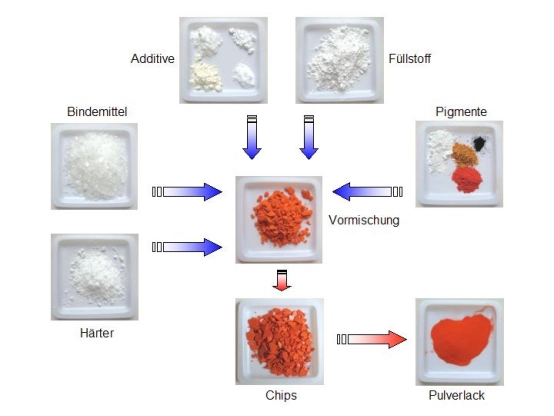
Pencampuran awal tampak sederhana, tetapi hal ini menentukan apakah ekstruder menerima campuran yang stabil atau justru bermasalah. Resin, pigmen, pengisi, aditif, dan zat pengeras harus didistribusikan secara merata.
Salah satu masalah umum di bengkel adalah variasi warna pada warna arsitektur gelap. Operator seringkali memeriksa ekstruder terlebih dahulu. Dalam banyak kasus, penyebab sebenarnya adalah distribusi aditif atau pigmen yang buruk sebelum ekstrusi.
Ekstrusi dan Dispersi Lelehan
yang ekstruder adalah mesin inti. Mesin ini mengontrol peleburan, pembasahan pigmen, geser, riwayat suhu, dan stabilitas batch.
Untuk bubuk poliester super tahan lama, ekstruder harus mendispersikan formula dengan baik tanpa merusak resin atau pigmen yang sensitif. Gaya geser yang kuat bermanfaat. Panas yang berlebihan tidak.
Ekstrusi yang baik biasanya terlihat membosankan dengan cara terbaik. Beban motor stabil. Lembaran rata. Tidak ada perubahan tekanan yang tiba-tiba. Tidak ada pergeseran warna yang aneh antar batch.
Pendinginan, Penghancuran, Penggilingan, dan Klasifikasi
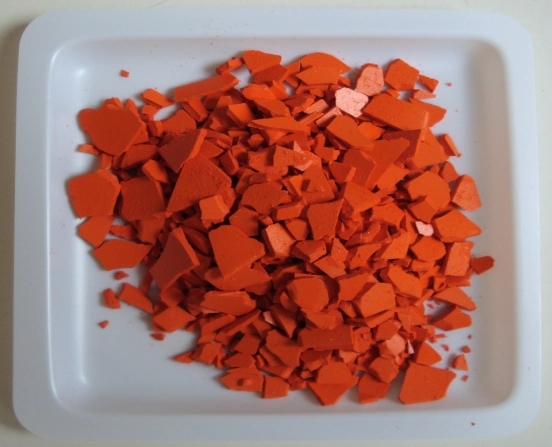
Setelah ekstrusi, material masih perlu dikendalikan. Pendinginan yang tidak merata menghasilkan serpihan dengan kekerasan yang berbeda. Hal itu membuat penggilingan menjadi tidak stabil dan memperlebar distribusi ukuran partikel.
Kemudian, mesin penggiling dan pengklasifikasi menentukan apakah bubuk akhir dapat disemprotkan dengan lancar atau menimbulkan masalah saat diaplikasikan.
Bagaimana Cara Memilih Mixer yang Tepat untuk Formula Poliester Super Tahan Lama?
Pencampur yang tepat bergantung pada ukuran batch, kompleksitas formula, dan frekuensi perubahan warna.
Untuk bubuk arsitektur dalam jumlah kecil, pembersihan cepat mungkin lebih penting daripada volume pencampuran maksimum. Untuk produksi dalam jumlah besar, otomatisasi dan pengulangan menjadi lebih berharga.
Sebuah praktik pencampur Daftar periksa meliputi:
- Apakah ruangannya mudah dibersihkan?
- Apakah aditif berukuran kecil dapat tersebar merata?
- Apakah mixer tersebut meninggalkan sudut-sudut yang tidak dapat disentuh?
- Apakah penyegelan debu dapat diandalkan?
- Apakah bisa terhubung dengan sistem pemberian makan otomatis?
- Apakah ukuran batch sesuai dengan kapasitas ekstruder?
Mixer yang tidak konsisten akan membuang resin, pigmen, waktu, dan pekerjaan pengujian yang mahal.
Fitur Ekstruder Apa yang Penting untuk Bubuk Poliester Tahan Cuaca?
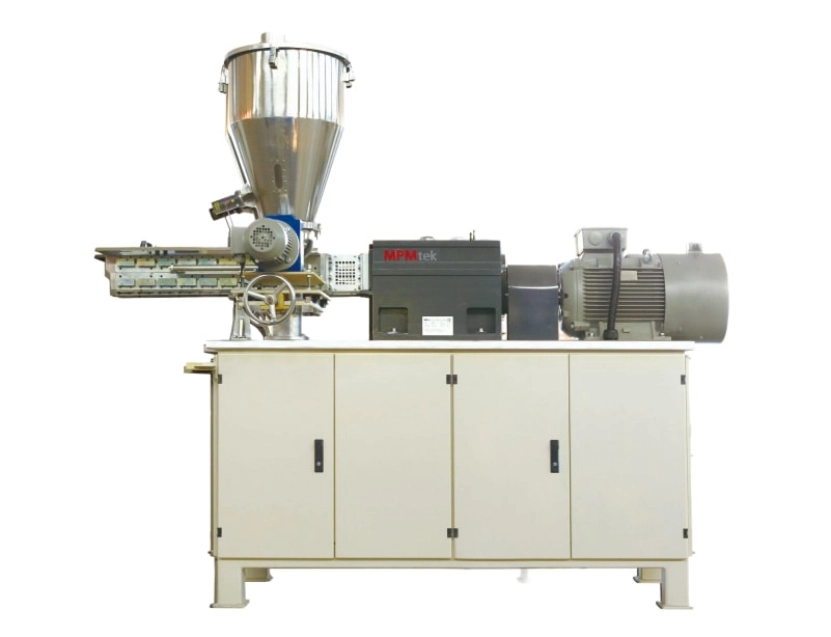
Pemilihan ekstruder membutuhkan perhatian lebih dari sekadar perbandingan kapasitas sederhana. Output penting, tetapi kontrol proses jauh lebih penting.
Kontrol suhu
Perubahan suhu yang tiba-tiba dapat dengan cepat merusak kualitas. Jika terlalu rendah, dispersi akan terganggu. Jika terlalu tinggi, sistem resin, zat pengeras, atau pigmen dapat kehilangan stabilitasnya.
Ekstruder tersebut harus menawarkan:
- Kontrol suhu zona yang akurat
- Pendinginan barel yang efektif
- Umpan balik suhu yang jelas
- Perlindungan terhadap panas berlebih
- Kondisi startup yang dapat diulang
Selisih beberapa derajat bisa sangat berarti, terutama untuk warna-warna yang sensitif.
Konfigurasi dan Torsi Sekrup
Sekrup harus sesuai dengan formulanya. Beberapa bahan membutuhkan pengadukan yang lebih kuat. Yang lain membutuhkan pemrosesan yang lebih lembut.
Poin-poin pentingnya meliputi:
- Kecepatan sekrup yang stabil
- Gearbox yang kuat
- Perilaku makan yang baik
- Cadangan torsi yang cukup
- Desain sekrup yang cocok untuk bubuk poliester
Cadangan torsi bukanlah kemewahan. Ini adalah perlindungan terhadap perubahan formula dan jam produksi yang panjang.
Pencocokan Kapasitas Produksi
Ekstruder tidak boleh dipilih secara terpisah. Ekstruder 500 kg/jam tidak berguna jika sabuk pendingin atau Pabrik ACM tidak dapat mengimbangi. Jalur yang seimbang berjalan lebih bersih, lebih tenang, dan dengan lebih sedikit pemberhentian darurat.
Bagaimana Sistem Pendinginan dan Penggilingan Mempengaruhi Stabilitas Penggilingan?
Pendinginan adalah titik di mana banyak lini produksi kehilangan kendali. Jika lembaran hasil ekstrusi memasuki mesin penghancur dalam keadaan terlalu panas, serpihan akan menjadi lengket. Jika kekerasan serpihan tidak merata, mesin penggiling akan bekerja lebih keras dan menghasilkan kehalusan yang tidak stabil.
Yang baik sistem pendinginan dan pengelupasan Seharusnya:
- Durasi pendinginan yang cukup
- Pendinginan udara atau air yang stabil
- Ketebalan lembaran seragam
- Penghancuran yang andal
- Akses pembersihan yang mudah.
- Transfer yang lancar ke pabrik
Serpihan yang lengket adalah tanda peringatan. Jalur produksi mungkin masih berjalan, tetapi tidak lagi berjalan dengan baik.
Jenis penggiling dan pengklasifikasi apa yang sebaiknya digunakan untuk mendapatkan ukuran partikel yang stabil?
Ukuran partikel memengaruhi penyemprotan, kehalusan lapisan film, efisiensi transfer, perilaku penyimpanan, dan kinerja daur ulang. Untuk bubuk poliester super tahan lama, ukuran partikel yang stabil merupakan bagian dari kualitas produk.
Terlalu banyak partikel kasar dapat memengaruhi tampilan permukaan dan stabilitas semprotan. Terlalu banyak partikel halus dapat menyebabkan debu, aliran yang buruk, dan masalah penanganan.
Distribusi yang sempit dan dapat diulang biasanya lebih baik daripada mengejar hasil penggilingan tertinggi. Mesin penggiling ACM dengan pengklasifikasi yang efisien adalah pilihan umum untuk produksi pelapis bubuk industri. Fokusnya harus pada pengendalian.
| Peralatan | Fungsi Utama | Kriteria Seleksi Utama |
| Pengcampur | Pencampuran awal bahan baku | Keseragaman, pembersihan, penyegelan debu |
| Ekstruder sekrup kembar | Peleburan dan dispersi | Kontrol suhu, torsi, desain sekrup |
| Sabuk pendingin/penghancur | Mengeras dan mengelupas | Area pendinginan, konsistensi serpihan |
| Penggiling ACM + pengklasifikasi | Penggilingan dan penentuan ukuran partikel | Kontrol PSD, aliran udara, keamanan |
| Sistem ayakan/pengemasan | Kualitas dan pengemasan akhir | Pengendalian kontaminasi, otomatisasi |
Kapan Lini Produksi Pelapisan Serbuk Otomatis Menjadi Pilihan yang Lebih Baik?
Lini produksi otomatis masuk akal ketika pengulangan menjadi lebih berharga daripada fleksibilitas manual.
Untuk pekerjaan laboratorium atau batch kecil yang fleksibel, peralatan semi-otomatis mungkin sudah cukup. Untuk bubuk arsitektur kelas ekspor, pesanan besar, dan catatan kualitas yang ketat, otomatisasi biasanya merupakan arah yang lebih baik. Otomatisasi tidak menyelamatkan proses yang buruk. Otomatisasi membantu proses yang baik tetap terkendali.
Fitur Keamanan dan Kepatuhan Apa yang Harus Diperiksa Pembeli?
Produksi pelapisan bubuk melibatkan debu, panas, peralatan berputar, aliran udara, dan kontrol listrik. Keselamatan harus diintegrasikan ke dalam lini produksi sejak awal.
Pembeli harus memeriksa:
- Desain pengumpulan debu
- Konfigurasi pabrik tahan ledakan
- Pengardean dan tindakan anti-statis
- Posisi berhenti darurat
- Pemantauan suhu
- Kabinet listrik tertutup
- Akses perawatan yang aman
Area penggilingan membutuhkan perhatian khusus. Bubuk organik halus, aliran udara, dan energi mekanik bukanlah kombinasi yang tidak berbahaya.
Bagaimana Pembeli Dapat Menyesuaikan Konfigurasi Peralatan dengan Tujuan Produksi Mereka?
Konfigurasi peralatan terbaik bergantung pada rencana produk pabrik, bukan pada mesin terbesar dalam katalog.
Sebelum memilih baris, tentukan terlebih dahulu:
- Target output per jam
- Jenis produk
- Jumlah warna per hari
- Rentang ukuran partikel yang dibutuhkan
- Tata letak bengkel
Jalur produksi laboratorium, jalur produksi percontohan 100 kg/jam, dan jalur produksi otomatis 1000 kg/jam memecahkan masalah yang berbeda. Untuk bubuk poliester super tahan lama, jalur produksi yang tepat biasanya adalah konfigurasi paling stabil yang memungkinkan sesuai anggaran.
Kesimpulan: Apa Strategi Peralatan Terbaik untuk Bubuk Poliester Super Tahan Lama?
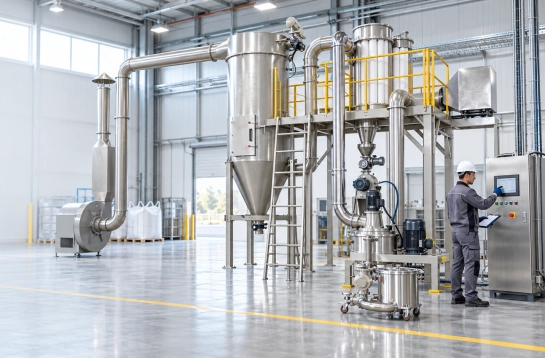
Strategi terbaik adalah memperlakukan lini produksi sebagai satu sistem yang terhubung. Mixer, ekstruder, sabuk pendingin, penghancur, penggiling ACM, pengklasifikasi, saringan, pengumpul debu, dan sistem pengemasan harus bekerja dengan ritme yang sama. Ketidakseimbangan yang murah akan cepat terlihat pada bubuk berkualitas luar ruangan. Pabrik mungkin masih menghasilkan material, tetapi kontrol kualitas akan menghabiskan terlalu banyak waktu untuk menjelaskan cacat.
Saluran yang terkoordinasi dengan baik mengurangi kejutan bagi operator. Itu sangat berharga.
Hubungi MPMtek untuk mendiskusikan proyek produksi pelapisan bubuk Anda dan membangun lini produksi yang lebih stabil, efisien, dan andal.
FAQ (Pertanyaan umum)
T: Peralatan apa yang dibutuhkan untuk memproduksi pelapis bubuk poliester super tahan lama?
Lini produksi lengkap biasanya mencakup mixer, ekstruder ulir ganda, sabuk pendingin, penghancur, penggiling ACM, pengklasifikasi, ayakan, pengumpul debu, dan sistem pengemasan.
T: Mengapa ekstruder penting dalam produksi pelapis bubuk poliester?
Ekstruder mengontrol peleburan, dispersi, pembasahan pigmen, dan riwayat termal. Ekstrusi yang buruk dapat menyebabkan variasi warna, aliran yang lemah, dan kualitas batch yang tidak stabil.
T: Bagaimana ukuran partikel memengaruhi kualitas pelapisan bubuk?
Ukuran partikel memengaruhi perilaku penyemprotan, kehalusan lapisan film, efisiensi transfer, stabilitas penyimpanan, dan kinerja daur ulang.
T: Haruskah saya memilih lini pelapisan bubuk semi-otomatis atau otomatis?
Lini semi-otomatis cocok untuk batch yang lebih kecil dan produksi yang fleksibel. Lini otomatis lebih baik untuk output yang lebih tinggi, pengulangan yang lebih baik, dan risiko pengoperasian manual yang lebih rendah.