In powder coating production, achieving consistent cooling after extrusion is crucial. The choice of a cooling belt directly affects chip uniformity, material cleanliness, and long term stability of the entire line. The right stainless steel cooling belt ensures stable cooling, clean processing, and reliable operation — all key to high quality powder output.
What Does a Cooling Belt Do in a Powder Coating Line?
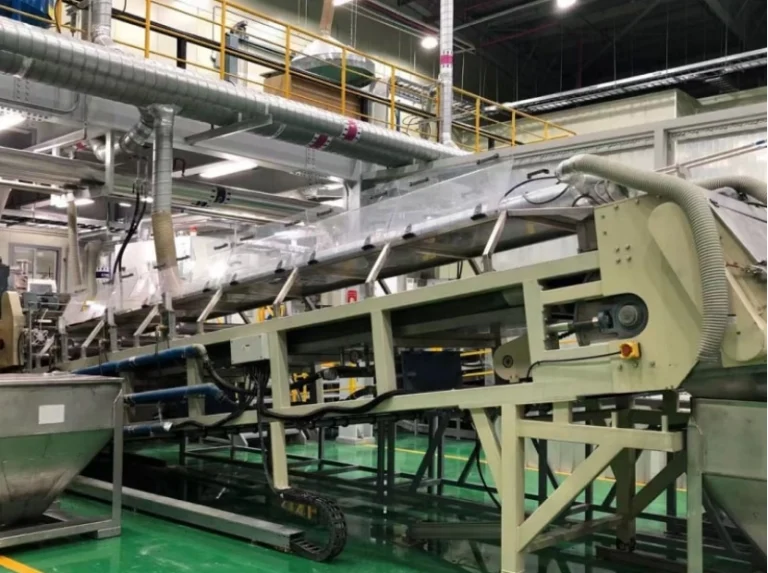
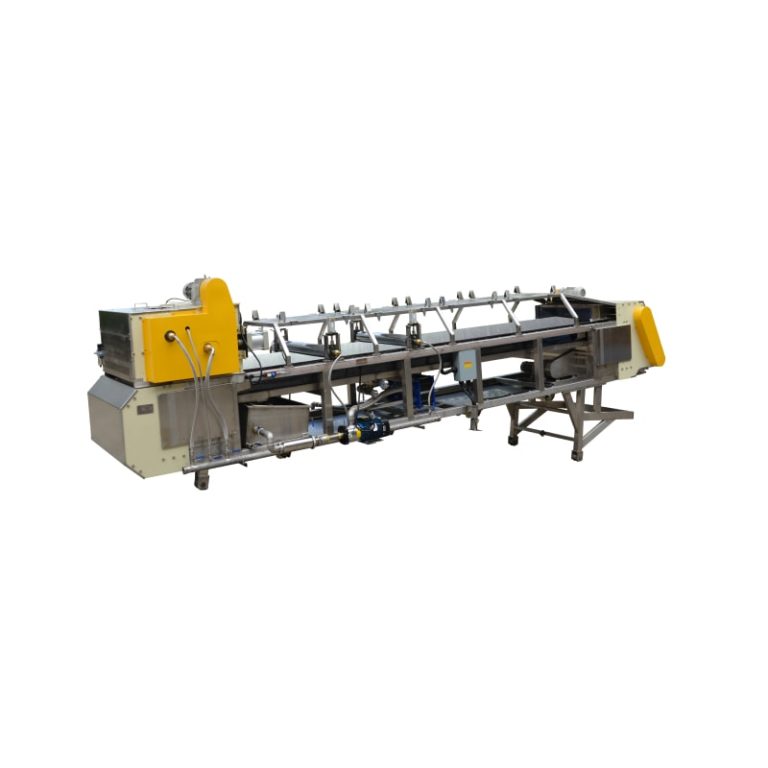
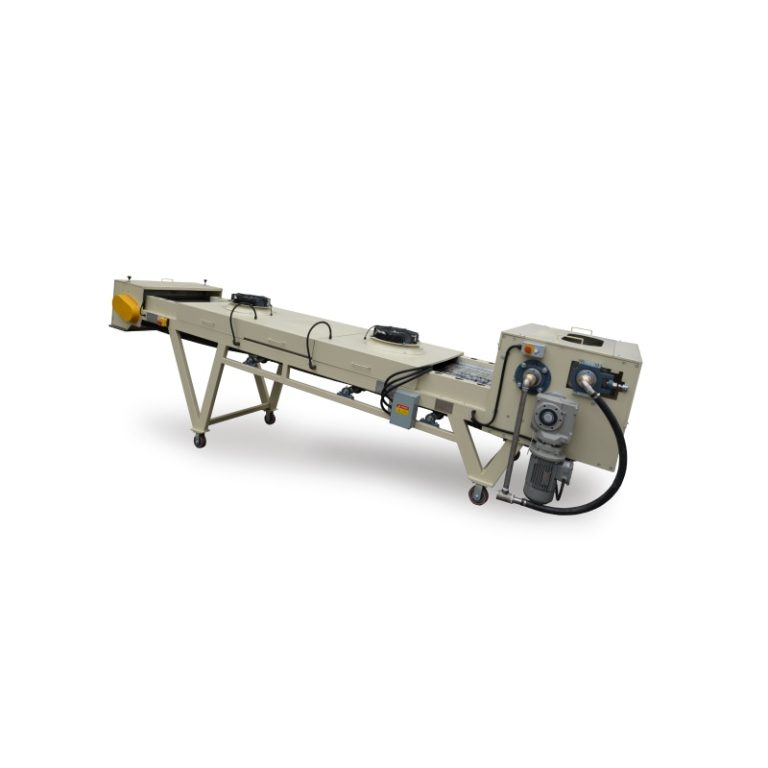
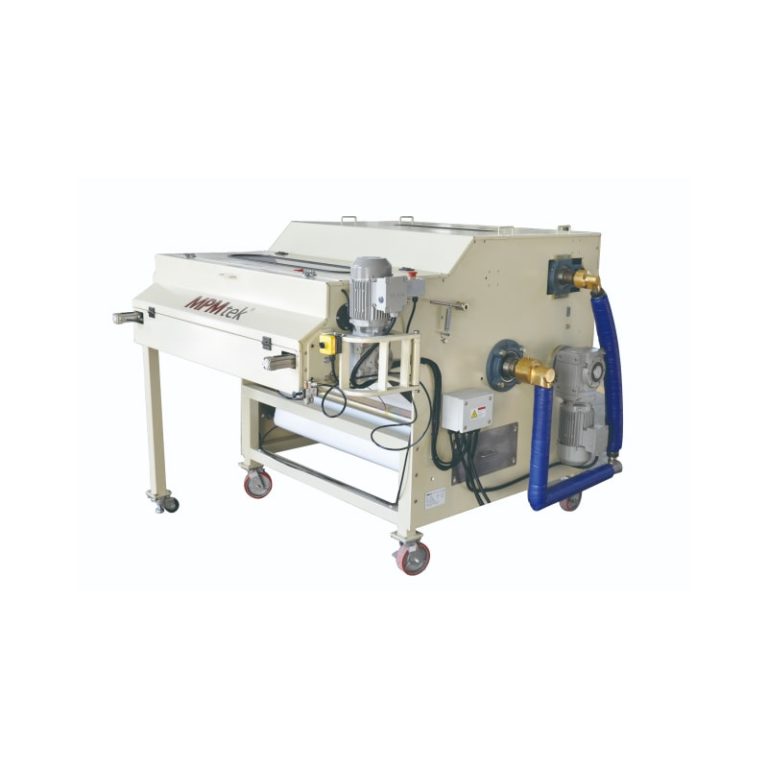
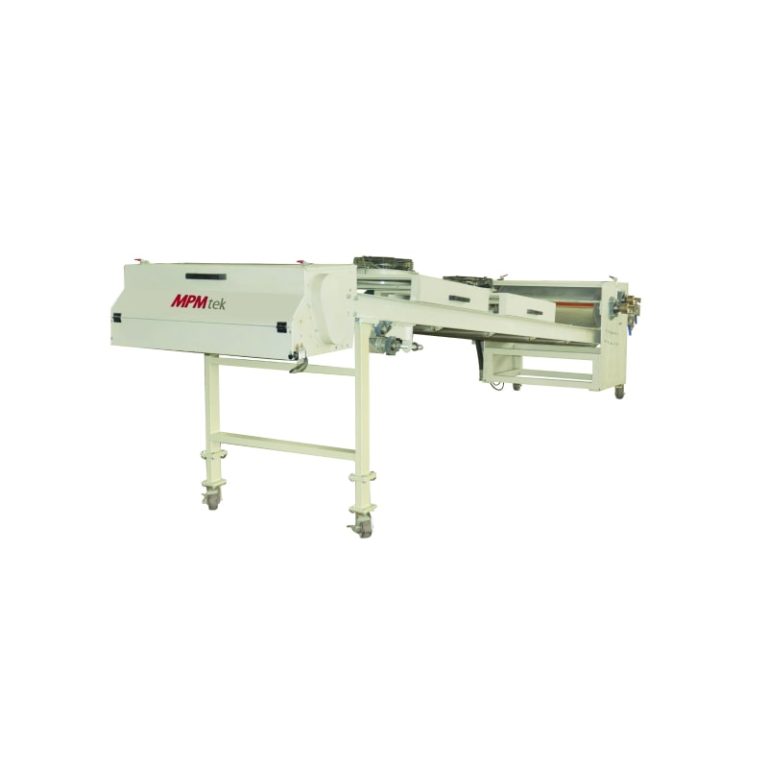
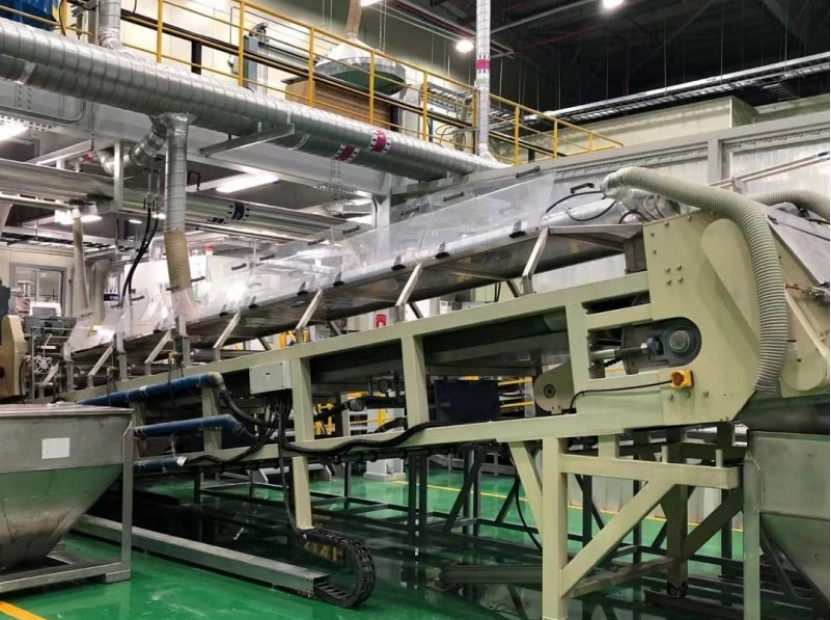
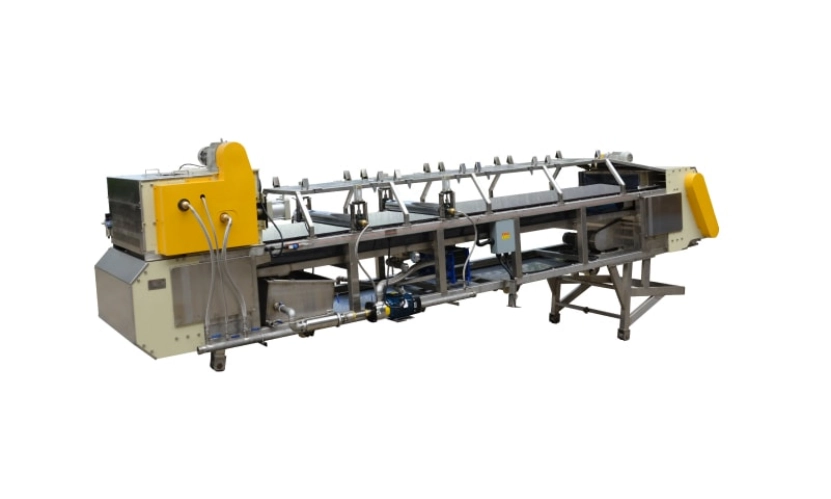
Sebuah sabuk pendingin is an integral part of the downstream process in powder coating lines. It takes hot extruded material and cools it down before crushing and classification. Stainless steel ckulit belt is composed of cooling rollers, stainless steel conveyor, crusher and cooling water spraying system which is used to cool down stainless steel band.
During operation, the thermo-melted material from the extruder passes through the cooling rollers where it’s flattened into thin sheets — typically 1–2 mm thick — before being transferred onto the moving belt. Thermo-melting material from extruder is rolled to be sheet for 1-2mm by cooling rollers, and being cooled down on the stainless steel conveyor to ambient temperature, then being crushed into chips and discharged. The goal is simple: bring the material to room temperature efficiently while maintaining uniform chip size for consistent downstream performance.
Why Stainless Steel Cooling Belts Are Preferred in Powder Coating
Before diving into design factors or problems, it’s important to understand why stainless steel dominates this segment of powder coating equipment.
Better Temperature Stability
Powder coating lines operate continuously under fluctuating thermal conditions. Stainless steel belts are favored because they resist deformation under heat stress. Top quality stainless steel band is adopted to bear dynamic tension force and temperature variation for long working time. This means fewer shutdowns due to warping or misalignment — a big plus for high output systems.
Cleaner Material Handling
Cleanliness is non-negotiable in powder manufacturing. Any contamination can compromise color consistency or curing performance later in the process. According to MPMtek’s product information, No contamination on chips. This property ensures that only pure resin reaches the grinder stage, improving final powder quality without introducing impurities from belt wear or residue buildup.
Longer Service Life Under Continuous Operation
Continuous production demands durability. Stainless steel belts offer superior fatigue resistance under repeated cycles of heating and cooling. Their smooth surface also minimizes frictional wear on both sides — extending service life compared with polymer or rubber based alternatives.
5 Key Factors to Consider When Choosing a Cooling Belt
Selecting a suitable pendinginan conveyor involves balancing output goals with physical constraints and maintenance expectations.
- Kapasitas output:Match machine throughput (100–2000 kg/h) with your production volume requirements.
- Belt Width danLength: Affects sheet area and residence time; larger belts handle higher output efficiently.
- Chip Thickness Control: Adjustable roller spacing ensures uniform particle size before grinding.
- Cleaning danPemeliharaan: Easy to clean surfaces reduce downtime between batches.
- Drive Power dan Roller Power: Ensure sufficient torque for continuous stable operation under load.
For example, MPMtek offers models ranging from 400 kg/h up to 2000 kg/h capacity with belt widths between 800 mm and 1500 mm, suitable for both lab scale setups and industrial scale lines.
Common Problems Caused by the Wrong Cooling Belt
If you choose an unsuitable belt design or material, several issues can appear almost immediately:
Uneven Chips
When chip thickness control isn’t precise, some areas cool faster than others, leading to irregular fragmentation during crushing.
Poor Cooling Before Crushing
Insufficient heat dissipation leaves chips soft or tacky, clogging crushers or sticking inside conveyors.
Material Contamination
Low grade materials can flake or oxidize over time, contaminating resin surfaces and affecting color tone in finished powders.
Wrinkling and Belt Instability
Mechanical instability leads to wrinkles across the belt surface; this not only distorts sheet thickness but may also cause mechanical wear on rollers. To address this issue effectively, MPMtek integrates a Design of eliminating wrinkle into its stainless steel cooling systems.
How Cooling Belt Design Affects Final Powder Quality
The link between mechanical design and product quality cannot be overstated:
- Insufficient cooling,chips soft/sticky: When temperature control fails, melted resin doesn’t solidify properly.
- Unstable sheet thickness,inconsistent subsequent breakage: Uneven sheets yield variable particle sizes after grinding.
- Material contamination,finished product quality risk: Even microscopic residues can alter curing behavior or gloss level in coatings.
Thus, precision engineered belts ensure stable thermal transfer across their entire surface area — directly influencing how evenly powders perform in electrostatic application later on.
What Buyers Should Ask a Cooling Belt Manufacturer
Before purchasing any cooling conveyor system for powder coating production, ask these practical questions:
- What output range can the machine handle?
Verify that rated capacity aligns with your extrusion throughput.
- How is chip thickness controlled?
Confirm whether roller gap adjustment allows fine tuning during operation.
- How is belt wrinkling prevented?
Look for anti-wrinkle design features built into frame alignment systems.
- How easy is it to clean and maintain?
Systems like MPMtek’s emphasize Easy clean and maintenance, reducing downtime.
- Can it integrate with my existing powder coating line?
Integration compatibility ensures seamless automation between extrusion, cooling, crushing, and sieving stages.
These questions not only reveal technical specifications but also reflect how well your chosen equipment fits your operational philosophy — continuous versus batch production setups differ significantly in requirements.
Choosing a Cooling Belt for Stable Powder Coating Output
A well selected cooling belt should deliver:
- Stable cooling performance across full width
- Uniform chip formation without sticking
- Clean handling without crosscontamination
- Reliable longterm operation under industrial duty cycles
When evaluating suppliers like MPMtek — known for developing complete powder coating production lines — look beyond basic specs. Their stainless steel designs combine structural rigidity with smart engineering touches such as comprehensive safety protection systems and high reliability ratings suitable for demanding environments.
MPMtek’s expertise covers every stage of powder coating manufacturing: from extrusion through classification to packaging. For buyers seeking consistent results and minimal maintenance headaches, their stainless steel cooling belts offer an efficient path toward cleaner production and more stable output quality across extended operating hours.
Pertanyaan FAQ
Q1: What materials are used in high quality cooling belts?
Top grade stainless steel bands are preferred due to their strength under heat and corrosion resistance.
Q2: How do I know if my current belt is too small for my output?
If chips remain warm after discharge or crushing speed lags behind extrusion rate, your belt length or width may be insufficient.
Q3: Can I retrofit a new stainless steel belt onto an older conveyor frame?
Yes, but confirm alignment tolerances and drive power compatibility first.
Q4: How often should I clean my cooling conveyor?
After each production batch or color change to prevent cross contamination between formulations.
Q5: What’s the typical lifespan of a stainless steel cooling belt?
With proper maintenance and correct tensioning, service life often exceeds several years even under continuous use conditions.