Fundamentals of Screw Speed Ratio in Twin Screw Extrusion
Role of Screw Speed Ratio in the Extrusion Process
The screw speed ratio in a twin screw extruder directly governs key process dynamics such as shear rate, residence time, and mixing intensity. A higher screw speed increases shear forces, promoting faster melting and dispersion but also reducing the residence time. This is particularly relevant in powder coating applications where pigment dispersion must be uniform, yet thermal degradation needs to be avoided.
As the screw speed rises, frictional heat and mechanical energy input also increase, affecting temperature distribution along the barrel. This can lead to uneven product quality if not properly controlled. On the upside, higher speeds usually allow greater throughput, improving productivity—though often at the cost of higher energy consumption.
Key Parameters Influencing Screw Speed Ratio Selection
Selecting the appropriate screw speed ratio is a balance of mechanical limits and process goals. Key influencing factors include:
- The torque capacity and gearbox design. The gear box is designed with high-torque, low-noise, with torque limiter(optional), which sets the safe operational envelope.
- Desired output rate and viscosity behavior of materials. High-viscosity formulations may require slower speeds for proper melting.
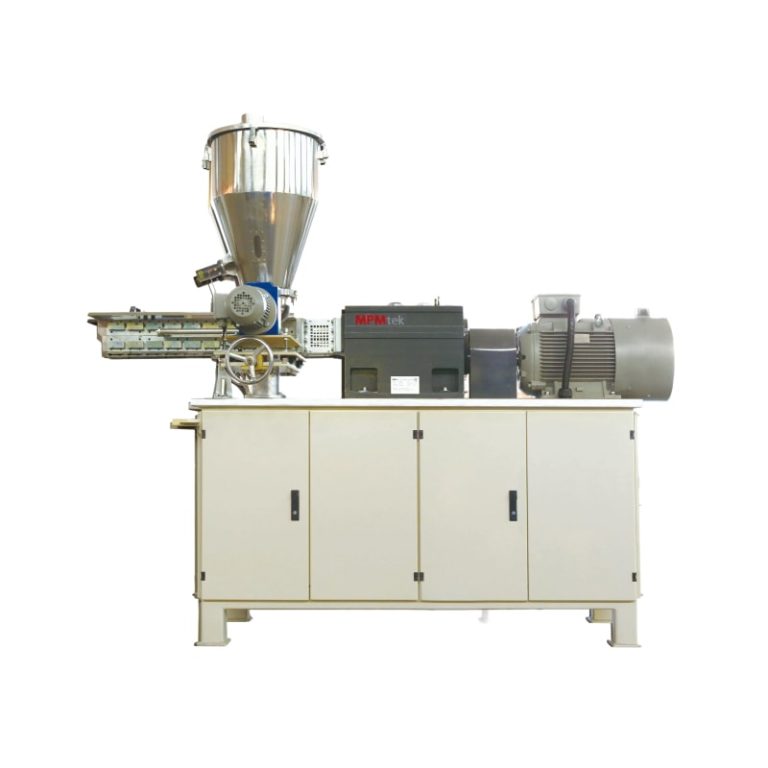
- Screw geometry and barrel configuration. Screw segments and kneading blocks on screw-shafts could be configured optimally according to technology requirements of powder coating processing. This customization allows tuning shear levels through mechanical design rather than just speed control.
Factors Affecting Screw Speed Ratio Adjustment
Material Properties and Rheological Behavior
Different materials respond differently under shear. Some polymers and additives are highly sensitive to shear-induced or thermal degradation. For example, thermoset resins used in powder coatings often require controlled input energy to avoid premature crosslinking.
Formulations with fillers or pigments also influence flow characteristics. High filler content may increase viscosity and require adjusted screw speeds to ensure consistent dispersion without overloading the system.
Product Performance Requirements
End-use product specifications often drive process parameters. In powder coatings, surface finish, gloss, and color uniformity are critical. Inadequate dispersion due to suboptimal screw speed can lead to streaks or inconsistent coloration.
Mechanical properties like impact strength or adhesion are also affected by how well the components are melted and mixed—again tying back to how the screw speed ratio manages energy input.
Extruder Configuration and Operating Conditions
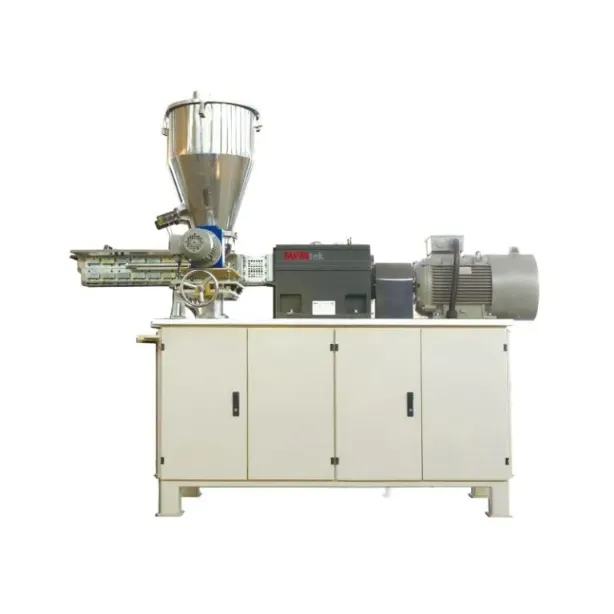
The design of the extruder heavily influences how much speed adjustment room exists. The barrel is designed with efficient heating/cooling system, Temperatures of multiple zones are precisely controlled within ±2 C. Proper temperature zoning helps offset some of the thermal risks associated with varying screw speeds.
Feeding systems also matter. Twin screw feeder is forced to feeding materials of bad fluidity and low specific gravity, which helps maintain a consistent material supply even when adjusting speed dynamically.
Practical Steps for Adjusting Screw Speed Ratio
Pre-adjustment Analysis of Material and Output Goals
Before making any changes, it’s critical to analyze the product formulation relative to known processing limits. This includes understanding melt temperatures, sensitivity to shear, and target output volume. Define clear quality benchmarks—whether mechanical, visual, or thermal—based on where the final product will be applied.
Establishing an Initial Screw Speed Setting
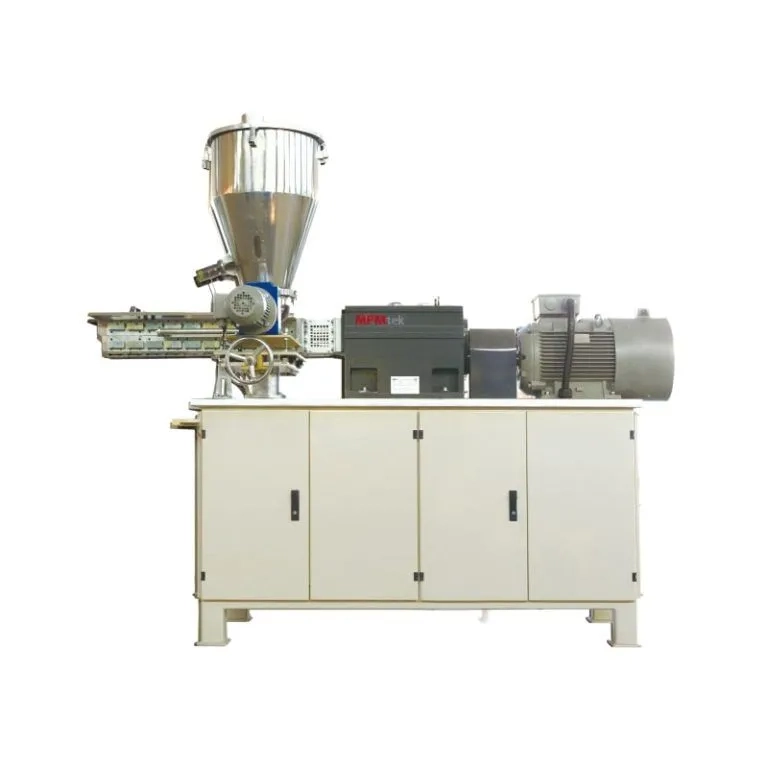
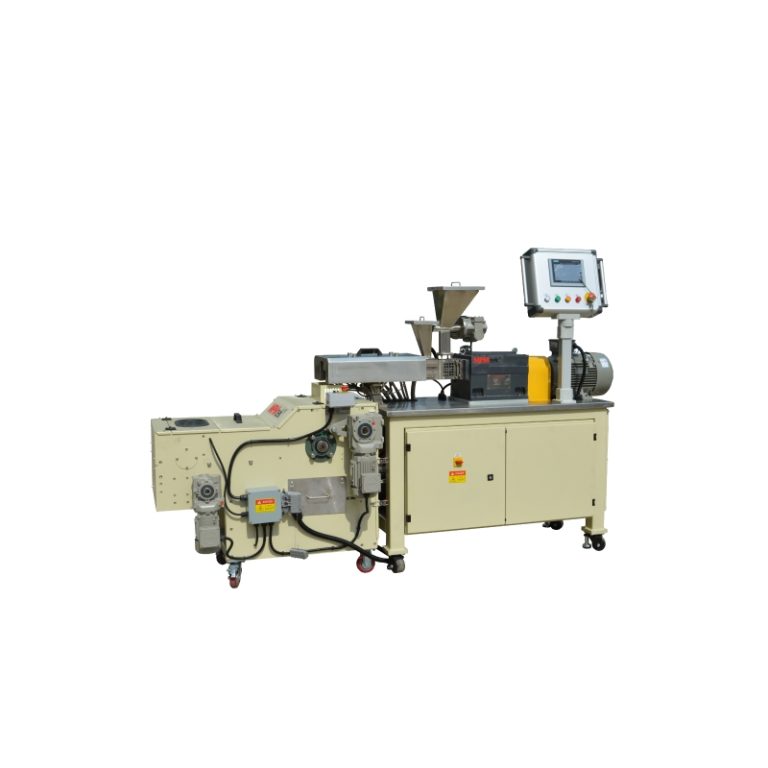
Begin with baseline values recommended by equipment manufacturers or derived from similar past runs. For instance, MPMtek’s TSE series extruders specify maximum speeds up to 616 rpm depending on model type.
| Model | Max Speed (rpm) | Motor Power (kW) |
| TSE-26C | 520 | 5.5 |
| TSE-48D | 564 | 37 |
| TSE-70D | 616 | 110 |
Historical data from previous batches can offer a reliable reference for initial conditions.
Monitoring Process Stability During Operation
Ongoing observation is essential during speed adjustments:
- Watch for signs of overloading like rising melt pressure or torque.
- Use motor current as a proxy for mechanical stress.
- Take regular samples to check for consistency in extrudate morphology or color.
Incremental Adjustment Based on Process Feedback
Make small changes incrementally rather than large leaps. If torque approaches gearbox limits, scale back or adjust other variables like feed rate or barrel temperature. Maintaining safe load levels ensures system longevity and stable output.
Verifying Product Quality Post Adjustment
Once adjustments are made, validate results through quality testing—both mechanical (impact resistance, hardness) and visual (gloss, color consistency). If results fall outside spec, revisit earlier stages or consult technical support.
Tools and Technologies Supporting Adjustment Accuracy
Application of Variable Frequency Drives (VFDs) in Control Systems
VFDs offer fine-tuned control over screw rotation speeds even under variable loads. This enables lower-speed operations without sacrificing motor efficiency, improving both energy consumption and process accuracy.
Integration of Process Control Software for Data Monitoring
Modern systems integrate PLCs and recipe management systems. All processing parameters are recipe-mode managed (data storage, recall and modify), and monitored by the production controller in office terminal or mobile terminal. This ensures traceability and allows consistent replication of optimal setups across batches.
Common Challenges in Screw Speed Ratio Optimization
Balancing Throughput with Product Quality Constraints
Running at high speeds may boost productivity but can compromise sensitive formulations. Excessive shear can degrade resins or distort filler distribution—especially in pigment-heavy coatings.
| Aspect | Low Screw Speed | High Screw Speed |
| Shear Intensity | Low | High |
| Residence Time | Long | Short |
| Risk of Degradation | Low | Higher |
Managing Thermal Build-up in High-Speed Conditions
Frictional heat from high-speed operation can cause localized overheating. The barrel is designed with efficient heating/cooling system, but operators still need to fine-tune cooling zones actively during ramp-ups.
Application-Specific Considerations in Powder Coating Production
Processing Demands Unique to Powder Coating Formulations
Powder coatings typically exhibit low melt viscosity and require carefully managed shear for effective pigment dispersion. Uniformity in particle morphology directly impacts appearance and application efficiency downstream.
Equipment Alignment with Powder Coating Industry Needs
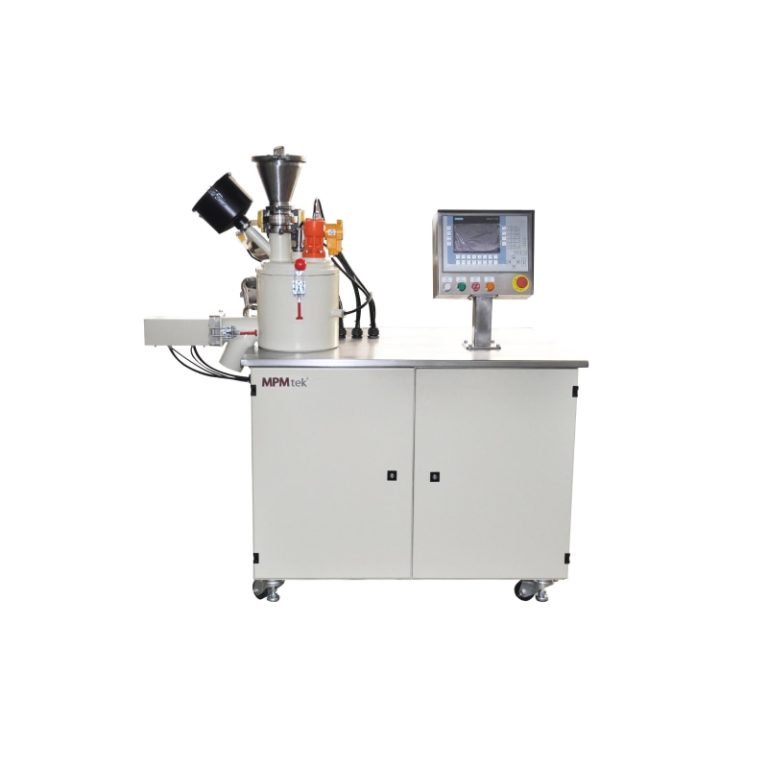
MPMtek systems designed with high torque capacity for thermoset resins provide robust platforms for such requirements. Screw segments and kneading blocks on screw-shafts could be configured optimally to ensure appropriate mixing under various speed settings without risking material degradation.
Operational Best Practices from Industrial Implementation
Importance of Cross-functional Coordination During Adjustment
Successful adjustment often involves collaboration across departments—engineering for calculations, operations for control, and QA for validation. Documenting each step helps build a repeatable knowledge base for future runs.
Leveraging Equipment Capabilities for Long-Term Optimization
MPMtek extruders support modular upgrades to adapt speed ratios flexibly. Their high-quality alloy steel components with precision machining ensure sustained performance even at demanding settings.
Strategic Role of Equipment Suppliers in Process Optimization
Partnering with Specialized Suppliers for Technical Support
Process optimization isn’t a one-time task—it evolves with new formulations and market demands. MPMtek provides integrated solutions across powder coating production lines, from lab-scale trials to full-scale deployment.
Continuous Improvement Through Feedback Loops
Data collected from each run informs future adjustments. Training sessions conducted by experienced suppliers help plant staff develop better intuition on when and how to adjust screw speeds effectively.
FAQ
Q: What is the ideal screw speed ratio for powder coating extrusion?
It depends on material formulation and target output but usually ranges between 400–600 rpm on MPMtek models.
Q: Can high screw speeds damage sensitive materials?
Yes, excess shear and heat can degrade thermoset resins or cause color shift in pigments.
Q: How does MPMtek ensure consistent extrusion at varied speeds?
Their extruders use high-torque gearboxes, efficient thermal control, and customizable screw elements.
Q: What role does feeding consistency play in speed adjustment?
Uniform feeding stabilizes extrusion pressure, essential when modifying screw speeds during operation.
Q: Are MPMtek extruders suitable for scale-up after lab testing?
Yes, MPMtek’s laboratory twin screw extruders simulate production conditions accurately, easing transition from R&D to full-scale manufacturing.