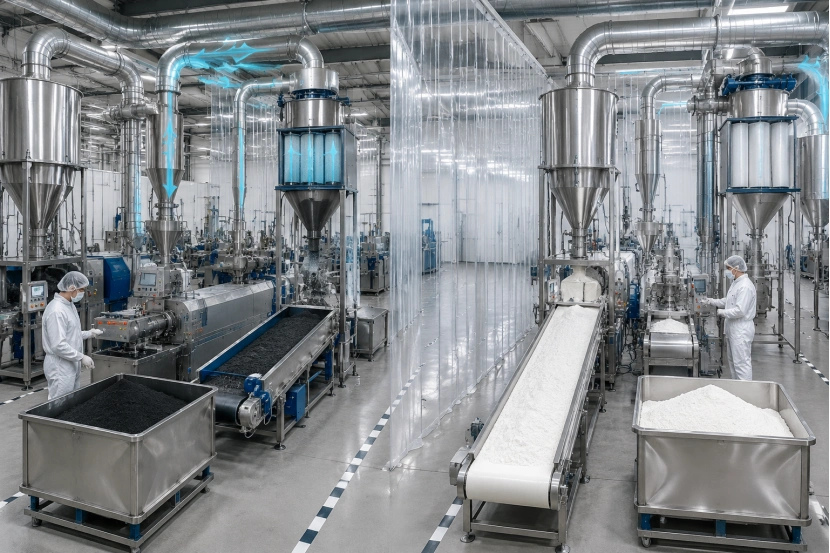
Загрязнение на предприятии по порошковой окраске редко является результатом единичного катастрофического сбоя; обычно это следствие множества микроскопических недочетов. Взвешенные в воздухе частицы с соседних производственных линий часто оседают на открытых поверхностях, создавая эффект «дрейфа», который особенно опасен при переходе от темного полиэстера к глянцевому белому. Если производственный цех не зонирован должным образом, даже простое перемещение между линиями может перенести достаточно пыли, чтобы испортить всю партию.
Распространенные источники перекрестного загрязнения на предприятиях по производству порошковых материалов
Остатки порошка, застрявшие в прокладках, уплотнениях и скрытых уголках оборудования, действуют как бомба замедленного действия. Вы думаете, что система чистая, но вибрация следующего цикла производства вытряхивает несколько граммов предыдущего пигмента. Использование общих чистящих инструментов и рабочей одежды операторов для переноски пигментов между партиями также создает проблемы. Шланг вакуумной установки, используемый на красной линии, никогда не должен касаться белой линии, однако в условиях высокой температуры производственной смены эти границы часто размываются. Кроме того, недостаточная вентиляция или локальные неисправности системы пылеудаления позволяют мелким частицам оставаться во взвешенном состоянии в воздухе, в конечном итоге попадая в бункер или на охлаждающую ленту.
Оптимизация стадии предварительного смешивания для достижения чистоты.
На этапе предварительного смешивания начинается борьба за чистоту. Если сырье загрязнено на этом этапе, никакая экструзия или измельчение не исправят изменение цвета.
Почему конструкция смесителя имеет значение?
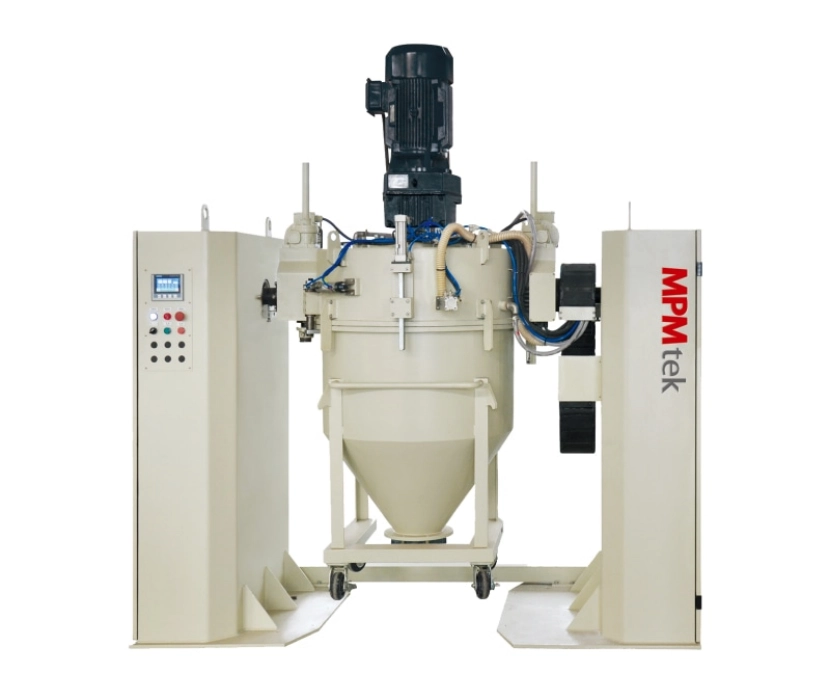
Геометрия миксер Это первая линия защиты. Оптимизированные смесительные инструменты и полированные внутренние поверхности предотвращают накопление материала, устраняя точки трения, где порошок склонен «забиваться». При работе с высокоэффективными пигментами даже тонкая пленка остатков может изменить значение Delta E следующей партии. Легкодоступные разгрузочные клапаны снижают риск образования «мертвых зон», где старый цвет задерживается, часто скрываясь за заслонкой клапана или внутри корпуса уплотнения. Современные инженерные решения отдают предпочтение автоматизированным циклам очистки в современных смесителях, чтобы обеспечить равномерное удаление мелкой пыли, исключая «человеческий фактор» из процесса очистки. Это простая реальность: машина не устает и не пропускает углы, как это может сделать оператор вручную в 3 часа ночи.
Разработка технологии экструзии для предотвращения переноса пигмента.
Экструзия — это основа производства порошковой окраски, но это также и самая сложная зона для обеззараживания. Цель состоит в том, чтобы перемещать материал через цилиндр настолько эффективно, чтобы ничего не оставалось внутри.
Самоочищающаяся винтовая геометрия
Совмещенное вращение двойные винтовые экструдеры Обеспечивает высокую степень самоочистки, что крайне важно для быстрой смены цвета. Шнеки, по сути, очищают друг друга по мере вращения. Использование модульных конфигураций шнеков позволяет инженерам создавать специальные блоки перемешивания, которые минимизируют застой расплава. Эти блоки обеспечивают полную гомогенизацию смолы и пигмента без образования «карманов» из текучего материала. Конструкция с высоким крутящим моментом гарантирует полную продувку цилиндра во время смены материалов, выталкивая остатки предыдущего цвета с достаточной силой, чтобы оставить металлические поверхности непокрытыми.
Оптимизация конвейерной ленты охлаждения и установки для производства хлопьев.
После выхода расплава из экструдера он попадает на стадию охлаждения. Охлаждающие ленты из нержавеющей стали обеспечивают более гладкую поверхность, которую легче дезинфицировать, чем старые конвейерные ленты, которые часто имели пористую текстуру или сложные соединения. Встроенные воздушные ножи и скребки удаляют мелкие частицы, которые могут загрязнить следующий цикл, обеспечивая полную очистку ленты перед поступлением следующей ленты экструдата.
Могут ли современные системы измельчения устранить остатки мелких частиц?
Измельчительный цех часто является наиболее пылеемой частью завода. Внутренние облицовки ACM (Классификационная мельница воздухаНеобходимо проверять наличие следов износа, способствующих накоплению пыли; поцарапанная футеровка притягивает мелкие частицы. Механизмы быстрого снятия классификационного колеса и крышки мельницы позволяют проводить глубокую очистку между сменами цвета, сокращая время, затрачиваемое оператором на работу с гаечным ключом, и увеличивая время, затрачиваемое на чистку тряпкой. Для поддержания стабильной среды высокоэффективные циклонные сепараторы уменьшают количество сверхмелкой пыли, рециркулирующей в системе, что имеет решающее значение для поддержания гранулометрического состава без загрязнения между партиями.
Стратегические протоколы технического обслуживания для частой смены цвета
Техническое обслуживание – это не просто ремонт сломанных деталей; это обеспечение целостности процесса. Внедрение стратегии «очистки» или использования продувочных составов для очистки цилиндра экструдера – это стандартная, но часто недооцениваемая тактика. Эти составы предназначены для более эффективной «очистки» шнеков, чем исходная смола. Для производителей, работающих в условиях высокой контрастности, использование выделенных воздуховодов или мобильных пылесборников для чувствительных цветов, таких как ярко-белые или прозрачные, является разумным вложением. Лучше иметь выделенную «чистую линию», чем тратить шесть часов на очистку «грязной линии». Наконец, разработка стандартизированных контрольных списков для операторов, подтверждающих чистоту оборудования, гарантирует, что «чистота» означает одно и то же для каждого человека в каждой смене.
Роль планировки помещений в минимизации загрязнения воздуха
Неправильно спроектированная планировка помещения всегда будет препятствовать работе даже самого лучшего оборудования.
Физическая изоляция против открытой планировки.
Разделение высококонтрастными цветовыми линиями (например, черными и белыми) предотвращает перекрестное влияние воздушных потоков. Если невозможно построить стену, используйте хотя бы прочные пластиковые занавесы. Поддержание отрицательного давления в шлифовальных камерах удерживает мелкие частицы в определенной зоне, предотвращая распространение «облака» в зону смешивания. Стратегическое размещение воздухозаборных и вытяжных вентиляционных отверстий для контроля направления распространения гарантирует, что любая выходящая пыль будет отводиться от производственной зоны и попадать в систему фильтрации.
Использование технологии MPMtek для бесперебойных переходов
В условиях современного производства оборудование должно быть спроектировано для высокой скорости. Наше оборудование ориентировано на высококачественную полировку и технологию «легкой очистки» для сокращения времени простоя, особенно в тех местах, где обычно скапливается порошок. Мы интегрировали датчики, которые контролируют поток воздуха и эффективность фильтрации, чтобы предупреждать операторов о потенциальных утечках до того, как они приведут к загрязнению. Кроме того, мы предлагаем настраиваемые схемы производственных линий, разработанные с учетом конкретной производительности и частоты смены цвета производителя, гарантируя, что физическое пространство будет работать в гармонии с оборудованием, а не против него.
Свяжитесь с нами Приглашаем вас сегодня обсудить ваши производственные потребности и узнать, как индивидуально разработанная линия порошковой окраски может помочь вашему предприятию добиться более чистого, быстрого и эффективного производства.
Часто задаваемые вопросы
В: Где чаще всего обнаруживаются скрытые загрязнения?
Обычно это прокладки в пневматических конвейерных линиях или уплотнения вокруг классификационного колеса в мельнице. В этих местах задерживаются мелкие частицы, которые трудно обнаружить при обычной промывке.
В: Как часто следует использовать очищающие составы?
В идеале, это следует делать каждый раз при смене цветовой гаммы (например, при переходе от эпоксидно-полиэфирного гибрида к чистому полиэфиру) или при переходе от темного цвета к светлому.
В: Ручная уборка лучше, чем автоматизированная?
Эффективность ручной очистки зависит от внимания оператора к деталям. Автоматизированные системы обеспечивают повторяемый базовый уровень, но для точного подбора цвета всегда рекомендуется окончательная ручная «проверка».
В: Может ли одна лишь фильтрация воздуха предотвратить перекрестное заражение?
Нет. Фильтрация — это вторичная защита. Первичная защита — это локализация загрязнения в источнике (смеситель, экструдер и мельница).