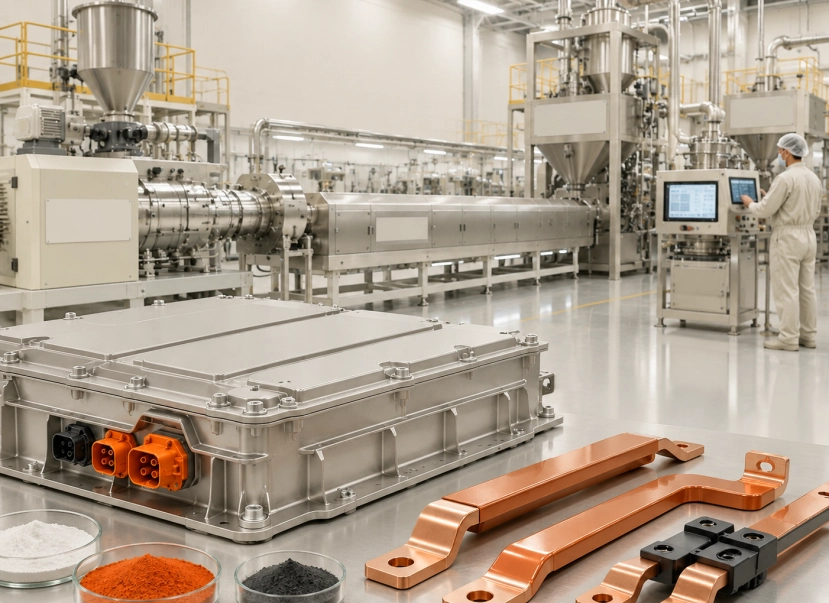
Los sistemas de baterías para vehículos eléctricos han aumentado la exigencia de los recubrimientos en polvo. La carcasa de la batería necesita protección contra la corrosión, mientras que el recubrimiento de las barras conductoras puede formar parte del sistema de aislamiento eléctrico. Un borde delgado o una partícula conductora pueden comprometer la fiabilidad.
Eso cambia la forma en que se debe producir el polvo. La línea debe controlar la contaminación, la dispersión, el historial de temperatura, el tamaño de partícula y los registros de lotes, no solo la producción por hora.
¿Qué rendimiento deben ofrecer los recubrimientos en polvo para baterías y barras colectoras de vehículos eléctricos?
Las carcasas de los paquetes de baterías, las barras colectoras y los componentes de refrigeración no requieren el mismo comportamiento de recubrimiento.
| Componente | Funciones principales del recubrimiento | Implicaciones para la fabricación |
| Carcasa del paquete de baterías | Resistencia a la corrosión, la humedad, los productos químicos y el calor. | Dispersión estable y tamaño de partícula uniforme. |
| Barra colectora | Aislamiento dieléctrico, adhesión, cobertura de bordes, estabilidad térmica | Baja contaminación y comportamiento de fusión controlado |
| Componente de refrigeración | Resistencia a la corrosión y a los ciclos térmicos | Dosificación precisa y respuesta de curación repetible. |
Un recubrimiento de barras conductoras en polvo puede tener un aspecto aceptable tras su aplicación, pero aun así presentar fallos eléctricos. La rigidez dieléctrica, la continuidad de la película, la cobertura de los bordes y la adhesión tras ciclos térmicos son más importantes que la apariencia.
La línea de producción debe seleccionarse en función del rendimiento medible del recubrimiento. La capacidad nominal se determinará más adelante.
¿Por qué una línea estándar de recubrimiento en polvo decorativo suele ser inadecuada?
Los polvos decorativos suelen evaluarse según su color, brillo, cobertura y resistencia a la intemperie. Los polvos aislantes eléctricos suponen un riesgo adicional.
En un revestimiento arquitectónico, un rastro de pigmento metálico en una mezcladora o tubería puede ser inofensivo. Sin embargo, en una formulación dieléctrica, puede resultar inaceptable. Lo mismo ocurre con el negro de humo y los aditivos conductores.
La amplia distribución del tamaño de las partículas también causa problemas. El exceso de partículas finas altera el comportamiento de carga. Las partículas de gran tamaño pueden producir rugosidad o una cobertura deficiente de los bordes. Una temperatura de extrusión inestable puede provocar una mala dispersión de los aditivos, mientras que un calor excesivo puede acelerar el curado.
En ocasiones, se puede adaptar una línea convencional, pero corregir problemas de acceso para la limpieza y un diseño de transferencia deficiente resulta costoso.
¿Qué equipamiento se necesita para un vehículo eléctrico? ¿Línea de producción de recubrimiento en polvo de alta calidad?
La secuencia sigue siendo la misma: dosificación, mezcla, extrusión, enfriamiento, molienda, clasificación, tamizado y envasado. La diferencia radica en el control preciso de cada etapa y en la perfecta sincronización de las máquinas.
Información en bruto precisa Dosificación de materiales y premezcla homogénea
Las formulaciones de grado eléctrico pueden contener resina epoxi, agentes de curado, cargas, modificadores, pigmentos y aditivos en bajas dosis. Un pequeño error de pesaje puede alterar el tiempo de gelificación o la viscosidad de fusión lo suficiente como para afectar el espesor de la película.
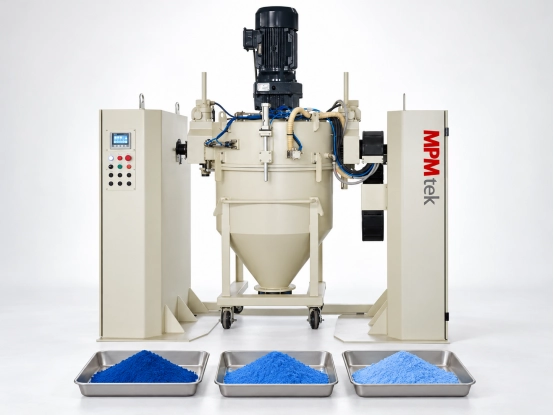
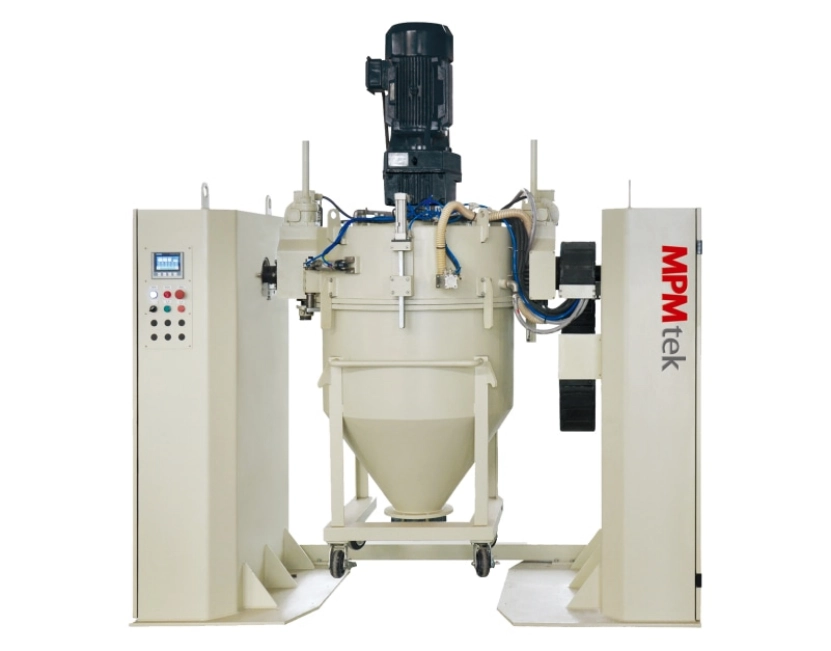
La alimentación sellada reduce la entrada de material extraño en el lote. Mezcla de contenedores Resulta adecuado para cambios frecuentes, mientras que las mezcladoras fijas de alta velocidad siguen siendo prácticas para lotes repetitivos de mayor tamaño.
El tiempo de mezclado debe ser validado. Un tiempo mayor no siempre es mejor.
Gemelo controlado Extrusión por tornillo y refrigeración eficiente
La extrusora debe proporcionar la fuerza de cizallamiento suficiente para distribuir los ingredientes sin someter la formulación a un exceso de calor. La alimentación estable, el diseño del tornillo, las temperaturas de las zonas, el par de torsión y el tiempo de residencia son factores importantes.
Una carga del motor fluctuante junto con una extrusión inconsistente es una señal de alerta. La causa puede ser la alimentación, la premezcla o el equilibrio de temperatura, no necesariamente el husillo.
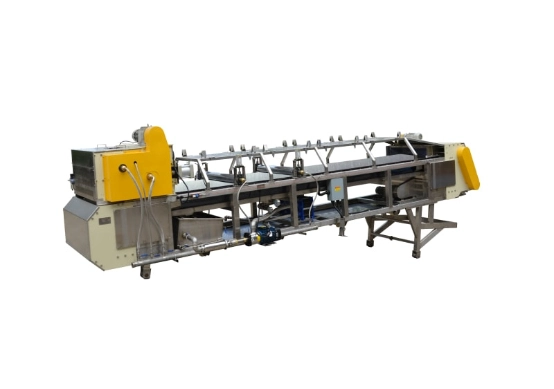
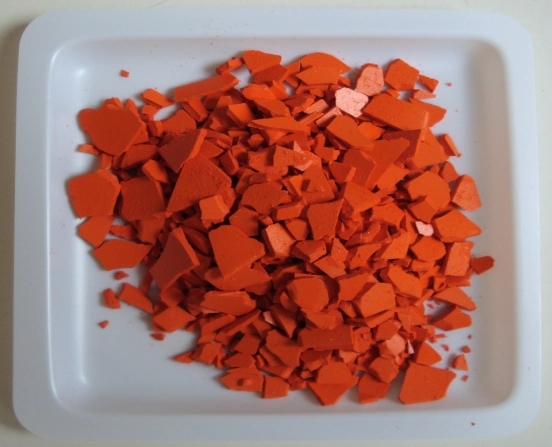
La capacidad de enfriamiento debe coincidir con la producción de extrusión. Las escamas blandas que ingresan a la trituradora provocan que se apelmacen, se formen virutas irregulares y la molienda sea inestable. La cinta transportadora de enfriamiento forma parte del control del tamaño de partícula.
Fresado de precisión, clasificación, tamizado y envasado.
Un molino clasificador neumático ajusta el tamaño de las partículas mediante la velocidad del rotor, la velocidad del clasificador y el flujo de aire. Estos parámetros interactúan entre sí. Mejorar el D50 puede, sin embargo, empeorar el D90.
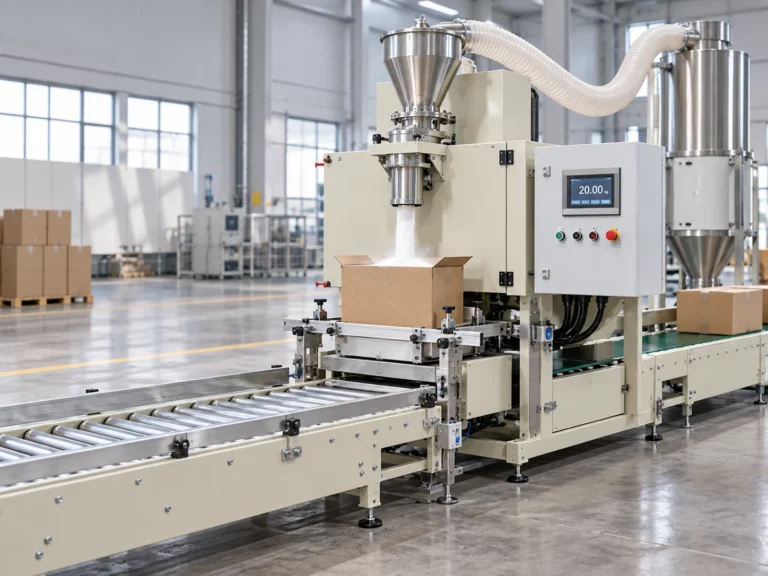
El tamizado final elimina el material de gran tamaño y retiene las partículas extrañas. El transporte cerrado y la recolección de polvo reducen la contaminación cruzada entre lotes. El envasado también requiere control.
MPMtek integra mezcladores, mellizo extrusoras de tornillo, transportadores de enfriamiento, molinos ACMtamices y equipos de manejo de polvo como sistemas combinados. Para los polvos aislantes, una discrepancia en la capacidad entre la extrusión y la molienda se convierte rápidamente en un problema de calidad.
¿Qué controles de proceso son fundamentales para la calidad del polvo dieléctrico?
Un buen equipo ayuda, pero el proceso aún requiere disciplina. Muchos fallos en la ampliación de escala se deben a variaciones que no se registraron durante las pruebas de laboratorio.
Control de la contaminación y la limpieza
Siempre que sea posible, los polvos dieléctricos deben separarse de los productos metálicos, conductores y altamente pigmentados. El uso de equipos compartidos requiere procedimientos de limpieza documentados y un tiempo de limpieza realista.
Los puntos clave de la inspección incluyen:
- Esquinas del mezclador y válvulas de descarga
- Tornillos alimentadores y juntas de tolva
- Área de entrada y boquilla del extrusor
- Carcasa del molino, ciclón, filtro y mangueras
- Boquillas de empaque
Los filtros merecen atención. Las partículas finas retenidas pueden volver a entrar en un lote posterior cuando cambia el flujo de aire.
Temperatura, cizallamiento y residencia Control de tiempo
Los registros de extrusión deben incluir la velocidad de alimentación, la velocidad del husillo, la carga del motor, las temperaturas de las zonas y la temperatura del producto, siempre que sea posible. Los operarios necesitan un rango aprobado, no un valor objetivo fijo.
Un procesamiento insuficiente resulta en una dispersión deficiente. Un procesamiento excesivo puede reducir la estabilidad durante el almacenamiento o alterar la respuesta de curado. El margen aceptable puede ser estrecho en sistemas epoxi de curado rápido.
Partícula Tamaño y lote Control de consistencia
Una comprobación práctica de la liberación puede incluir:
- D10, D50 y D90
- Contenido de gran tamaño y multas
- Tiempo de gel
- Flujo y densidad aparente
- Contaminación visual
- Panel de pulverización y muestra retenida
El tamaño de las partículas afecta la carga, la deposición, la fusión, la cobertura de los bordes y el espesor de la película. En el caso de los polvos para barras conductoras, esta cadena de factores es difícil de ignorar.
¿Cómo deben los fabricantes seleccionar la capacidad de producción y el nivel de automatización?
La capacidad debe basarse en la producción vendible después de la limpieza, el muestreo y el mantenimiento, y no solo en la información que figura en la placa de características de la extrusora.
Una planta que fabrica dos formulaciones estables en campañas prolongadas puede utilizar un sistema de control sencillo. Un proveedor que produce diversos tipos de aislamiento en lotes pequeños necesita una limpieza más rápida, control de recetas, verificación de materiales y una trazabilidad más rigurosa. Incluso con una producción menor, podría requerir mayor automatización.
Los parámetros de selección deben incluir:
- Tamaño típico del lote y demanda anual
- Número de formulaciones
- Tiempo de cambio y limpieza
- Requisitos de trazabilidad
- Planos de superficie y ampliación
- Normas de protección contra polvo y explosiones
MPMtek ofrece sistemas de laboratorio y líneas industriales con diversas capacidades, lo que permite una ampliación gradual de la producción.
¿Qué se debe validar antes de completarlo? ¿Producción comercial a gran escala?
Una fórmula que funciona en una pequeña mezcladora y una extrusora de laboratorio aún no constituye un proceso de producción.
Las pruebas piloto deben confirmar la secuencia de adición, el tiempo de mezclado, la disposición del tornillo, el perfil de temperatura, el comportamiento de enfriamiento, los parámetros de molienda y el tamaño de partícula deseado. Posteriormente, el polvo debe probarse con el espesor de película previsto.
En el caso de las barras conductoras, la cobertura de los bordes merece una revisión aparte. Los paneles planos pueden ocultar esta deficiencia. En una prueba, los resultados dieléctricos parecían aceptables en los paneles, pero fallaron en las proximidades de los bordes afilados del cobre. Fue necesario ajustar la formulación y la distribución del fresado.
La validación debe incluir varios lotes consecutivos. Un solo lote bueno demuestra muy poco.
Conclusión: Construyendo la línea en torno al rendimiento funcional
Los polvos para baterías y barras conductoras de vehículos eléctricos requieren una línea de producción centrada en la limpieza, el control térmico, la dispersión y la repetibilidad. La mezcla, la extrusión, el enfriamiento y la molienda deben considerarse como un único proceso. La coordinación temprana entre el formulador, el laboratorio y el proveedor de equipos suele evitar costosas correcciones posteriores a la instalación.
Preguntas frecuentes
Pregunta: ¿Qué tipo de recubrimiento en polvo se utiliza habitualmente para las barras conductoras de los vehículos eléctricos?
Los polvos termoendurecibles a base de epoxi se utilizan ampliamente para la adhesión, el aislamiento dieléctrico y la resistencia química. El sistema exacto depende del espesor de la película, la temperatura de funcionamiento, la flexibilidad y los requisitos eléctricos.
Pregunta: ¿Por qué es partícula? ¿Es importante la distribución del tamaño de las partículas para el polvo aislante de barras conductoras?
Afecta a la carga, la deposición, el flujo de la masa fundida, la cobertura de los bordes y el espesor de la película. Una distribución controlada es más útil que un único tamaño de partícula promedio.
Pregunta: ¿Se puede producir el polvo aislante en la misma línea de producción que el polvo decorativo?
Sí, pero el riesgo de contaminación debe evaluarse cuidadosamente. La producción compartida requiere una limpieza validada, un acceso adecuado y una programación estricta. Los polvos metálicos y conductores presentan el mayor riesgo.
Pregunta: ¿Es necesario contar con una línea de laboratorio antes de comprar una línea de producción?
Para una nueva formulación de grado EV, es una inversión acertada. Las pruebas piloto permiten detectar problemas de mezcla, extrusión, enfriamiento y molienda antes de que se instale el equipo comercial.