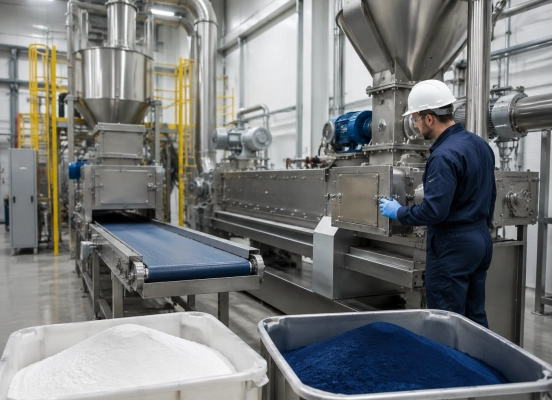
O tempo de troca de cor raramente se perde em um único atraso óbvio. Ele desaparece em detalhes menores: uma extrusora quente que ainda não pode ser aberta, pó atrás de um lacre, ferramentas faltando ou uma verificação de qualidade que começa tarde demais.
O objetivo real não é simplesmente uma limpeza mais rápida. É o tempo entre o último produto aceitável de uma cor e o primeiro produto aceitável da cor seguinte.
Por que a troca de cores demora tanto em uma linha de produção de pintura a pó?
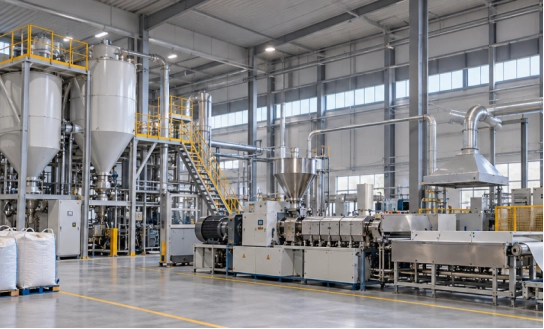
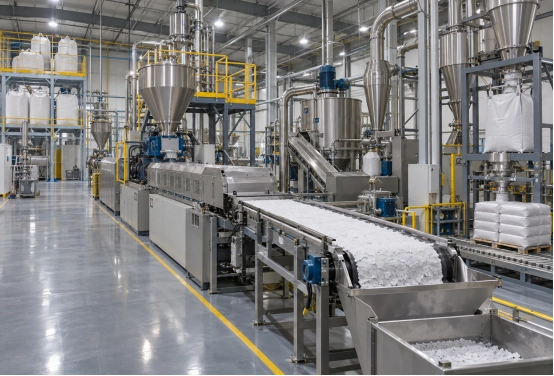
Uma mudança completa abrange pré-mistura, alimentação, extrusão, resfriamento, britagem, moagem, peneiramento, transporte e coleta. Cada seção processa o material de maneira diferente.
A maioria dos atrasos decorre de resíduos de pó, resfriamento do equipamento, desmontagem e remontagem, purga e aprovação de qualidade. Os pontos de retenção costumam ser pequenos: válvulas, roscas alimentadoras, bordas de juntas, curvas de dutos, rodas classificadoras e filtros.
Uma fábrica registrou duas horas para "limpeza", mas menos de 70 minutos foram efetivamente dedicados à limpeza. O tempo restante foi gasto resfriando a extrusora, localizando vedações de reposição e repetindo uma inspeção que não havia sido documentada. Esse padrão não é incomum.
O que deve ser preparado antes do término da atual temporada de cores?
A troca rápida de cores começa enquanto a cor atual ainda está em uso.
Tons semelhantes devem ser agrupados sempre que a formulação e as necessidades do cliente permitirem. A transição do branco para o cinza claro geralmente é mais fácil do que a do preto para o branco. A compatibilidade da resina também é importante; uma sequência de cores conveniente pode dificultar a mudança de cor por extrusão se a química for ignorada.
Antes da paralisação, a próxima formulação, matérias-primas, rótulos, recipientes, ferramentas, lacres e formulários de inspeção já devem estar disponíveis. Os operadores devem saber quais seções lhes são responsáveis. A equipe de qualidade deve saber quando a primeira amostra de transição chegará.
Uma lista prática de preparativos inclui:
- Confirme a próxima receita e os limites de aceitação.
- Ferramentas de aspiração de palco, escovas, raspadores, vedações e recipientes.
- Atribua zonas de limpeza a operadores específicos.
- Identifique os filtros, mangueiras e recipientes que precisam ser trocados.
- Prepare o material de purga aprovado quando necessário.
Isso elimina o tempo ocioso e evita decisões precipitadas após a parada da linha de produção.
Qual é a sequência de limpeza mais rápida e segura para uma mudança de cor?
A limpeza deve seguir o fluxo normal de materiais. Uma seção a montante limpa com atraso pode liberar material em equipamentos que já foram aprovados.
A linha de produção também precisa de um estado seguro definido. Regras de bloqueio, limites de temperatura, controle de poeira e restrições de acesso determinam quando o equipamento pode ser aberto e como o trabalho prossegue.
Equipamentos de pré-mistura e alimentação
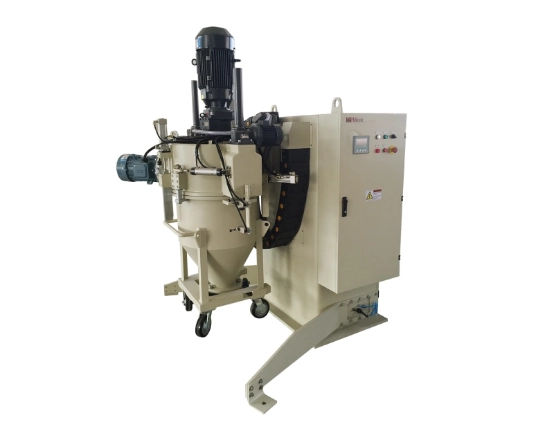
Antes de abrir o misturador, a tremonha, o alimentador e a válvula de descarga, esvazie-os pelo caminho normal do produto. O pó solto é mais fácil de coletar antes que se espalhe pelas superfícies internas.
A limpeza a vácuo geralmente é mais controlada do que a limpeza com ar comprimido. Verifique a ferramenta de mistura, a junta do recipiente, a face da válvula, a rosca alimentadora e os encaixes da junta. Essas áreas liberam material lentamente durante a próxima operação.
Para lotes pequenos e frequentes, recipientes de mistura intercambiáveis podem eliminar o tempo de espera do processo. MPMtek's misturador de recipientes Os arranjos são usados desta forma: um recipiente pode avançar enquanto outro é limpo ou preparado.
Extrusora, Correia de Resfriamento e Triturador
A extrusora geralmente controla o cronograma de troca de formato. Ela contém material quente e compactado e nem sempre pode ser inspecionada imediatamente após o desligamento.
Execute o procedimento de purga aprovado, isole a máquina e aguarde a temperatura de acesso especificada. Inspecione a abertura de alimentação, as superfícies da rosca, a saída do cilindro, a matriz e as juntas onde ainda existam finas camadas de material.
A desmontagem completa não é automaticamente melhor. Abrir todas as seções a cada troca pode desperdiçar mão de obra, danificar as vedações e prolongar o tempo de reinício. O acesso necessário deve depender do contraste de cores, da compatibilidade da resina e dos registros de inspeções anteriores.
Verifique a correia de resfriamento, o raspador, as bordas dos rolos e a entrada do britador. Uma correia com aparência limpa ainda pode transportar várias lascas escuras para um lote claro. Superfícies de contato lisas e conjuntos de raspadores acessíveis, como os usados em MPMtek Os sistemas de refrigeração tornam esta etapa mais fácil de verificar, em vez de apenas mais fácil de limpar.
Sistema de Moagem, Dutos e Coleta de ACM
Limpe a seção de moagem desde o moinho até o ponto de coleta final. Esvazie o Fabricante ACM, zona de classificação, ciclone, peneira, tubulações e recipientes de produto em sequência.
Inspecione as juntas do revestimento, as lâminas do classificador, os cotovelos dos dutos, os conectores flexíveis, as válvulas rotativas e os filtros. O pó fino migra e se deposita. O material em uma curva do duto pode aparecer somente após alterações no fluxo de ar.
Tampas de abertura rápida e conjuntos de classificadores acessíveis reduzem o tempo de inspeção. As configurações do MPMtek ACM podem ser projetadas levando em consideração o acesso para limpeza, o que muitas vezes é mais valioso em uma fábrica multicolorida do que um pequeno aumento na produção nominal. Um laminador difícil de inspecionar acabará sendo limpo por princípio.
Como a purga e a inspeção podem reduzir o tempo de limpeza e o desperdício de materiais?
A purgação deve ser feita após a avaliação de risco, não após o hábito.
Uma mudança de cor, de um tom escuro para um claro, pode exigir mais material de purga do que duas tonalidades adjacentes. Uma mudança de resina pode exigir um procedimento diferente. Usar a mesma quantidade de purga para todos os trabalhos desperdiça material em mudanças simples e pode resultar em limpeza insuficiente em mudanças complexas.
Defina pontos de inspeção fixos e critérios de aceitação claros. Fotos, luzes de inspeção, espelhos e panos brancos ajudam os operadores a verificar os mesmos locais sempre.
Após a remontagem, execute uma quantidade limitada de transição e colete uma amostra antes do início da embalagem normal. Verifique a cor, a presença de partículas visíveis, o tamanho das partículas e a aparência do filme, quando necessário. A linha não é trocada quando a limpeza termina, mas sim quando o novo produto passa na inspeção.
Quais recursos do equipamento facilitam a troca frequente de cores?
Plantas que lidam com muitas cores devem avaliar a facilidade de limpeza juntamente com a produção e a potência do motor.
Funcionalidades úteis incluem:
- Recipientes de mistura móveis ou intercambiáveis
- Superfícies de contato com o produto lisas e com poucas zonas mortas.
- Válvulas acessíveis, roscas de alimentação, vedações e raspadores.
- Seções da extrusora que se abrem sem desmontagem excessiva
- Rotas de transporte curtas com menos curvas.
- Tampas ACM de acesso rápido e peças do classificador
- Compartimentos, mangueiras e seções de filtro removíveis
O design ideal depende do padrão de produção. Uma linha de produção longa, fabricando um único produto branco, tem necessidades diferentes de uma fábrica terceirizada que produz oito cores por turno.
Quando uma linha MPMtek é configurada para produção em pequenos lotes, a pergunta útil não é apenas "Qual a velocidade da máquina?", mas também "Quais peças precisam ser separadas entre as cores e quanto tempo isso levará?". Essa resposta afeta o layout, a estratégia de contêineres, o roteamento dos dutos e o espaço de acesso.
Como padronizar e medir o desempenho da troca de cores?
Uma troca de ferramentas que depende de um único operador experiente não é um processo controlado.
Crie procedimentos separados para alterações de baixo, médio e alto risco. Registre o tempo gasto em resfriamento, limpeza, desmontagem, espera, remontagem, purga e aprovação de qualidade. O maior atraso geralmente ocorre onde a equipe espera.
Acompanhe três números:
- Tempo decorrido entre o último bom produto e o próximo bom produto.
- Peso do material de purga e rejeitado
- taxa de aceitação na primeira tentativa
Analise trocas de ferramentas excepcionalmente longas ao lado da linha de produção enquanto os detalhes ainda estão frescos na memória. Dez minutos de observação direta muitas vezes revelam mais do que uma planilha mensal.
A troca de cores melhora quando o planejamento, o acesso aos equipamentos, a sequência de limpeza e os critérios de aceitação se complementam. Para um sistema novo ou atualizado Linha de produção MPMtekEsses detalhes devem ser definidos antes da conclusão do layout. Espaço para limpeza é difícil de ser adicionado posteriormente.
FAQ
P: Quanto tempo deve levar a troca de cor da pintura a pó?
Não existe um objetivo universal. Dimensão da linha, contraste de cores, sistema de resina, acesso aos equipamentos e requisitos de inspeção são fatores importantes. Um parâmetro útil é o tempo de repetibilidade da planta para cada classe de troca de produto.
P: O ar comprimido pode ser usado para limpeza?
Somente seguindo o procedimento de controle de poeira aprovado pela fábrica. A limpeza com aspirador é mais fácil de conter. O ar comprimido pode deslocar o pó para áreas escondidas ou criar uma nuvem de poeira no ar.
P: A extrusora deve ser completamente desmontada a cada troca de cor?
Geralmente não. O desmantelamento completo deve depender do risco de contaminação, da compatibilidade da formulação, do projeto do equipamento e do histórico de inspeções.
P: Qual é a maneira mais rápida de reduzir o tempo de troca de ferramentas?
Meça uma troca completa minuto a minuto. A primeira melhoria útil costuma ser um melhor preparo, coordenação do resfriamento ou disciplina na inspeção — não uma escovação mais rápida.