Grinding problems rarely come from one setting alone. A powder coating mill can produce coarse particles, excessive fines, unstable throughput, heat, or vibration when feed, airflow, classifier operation, temperature, and wear move out of balance. Record the symptom and last process change, isolate the machine under site procedures, and test one cause at a time. Do not replace the equipment manual with a generic alarm value or maintenance interval.
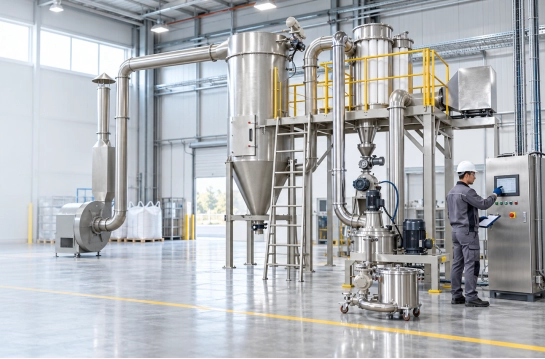
What Should You Check First in Powder Coating Grinding Machine Troubleshooting?
Start with safety and a baseline. Stop the machine for abnormal vibration, rubbing, smoke, a damaged guard, suspected foreign material, or an interlock fault. Apply your plant’s lockout procedure before opening an inspection point. Record the formulation family, batch, feed rate, classifier setting, airflow or pressure, product temperature, particle-size result, and symptom time.
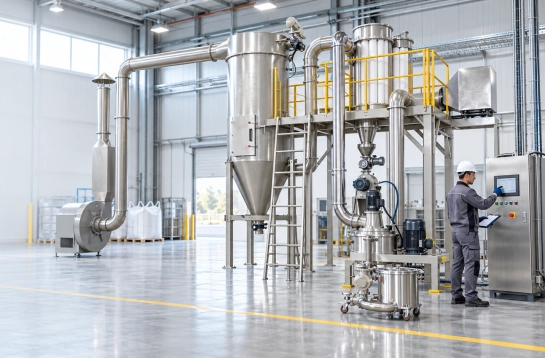
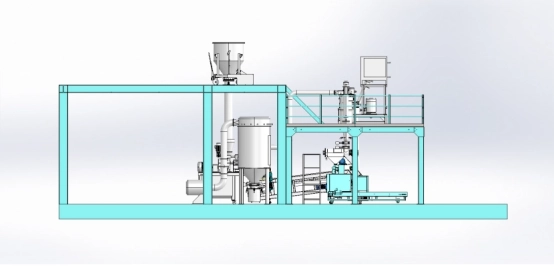
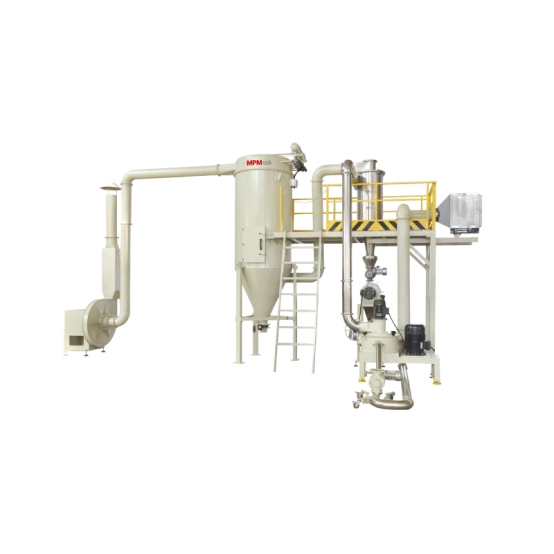
Compare the record with a known-good batch. A useful ACM Değirmeni review includes the full boundary: feeder, chamber, classifier, fan, cyclone or filter, ducts, valves, hoses, and collection bin. This prevents classifier adjustment when the real restriction is a blocked duct or unstable feed.
How Do You Diagnose Powder Coating Mill Problems by Symptom?
Use the symptom to choose the first measurement, not the first adjustment.
| Semptomları | İlk kontroller | Likely mechanism | Immediate response |
| Throughput falls | Feeder output, hopper bridging, inlet pressure | Starved or restricted feed | Confirm material flow and inspect the inlet after isolation |
| Product is too coarse | Classifier speed, airflow, rotor condition, retained sample | Cut point has shifted coarse or recirculation is weak | Verify readings, then change one variable within the approved window |
| Aşırı para cezaları | Feed load, classifier speed, airflow leaks, product temperature | Over-grinding or an overly fine cut | Check distribution data before reducing speed or increasing feed |
| Product heats or cakes | Airflow, recirculation, feed load, ambient air, buildup | Frictional or compression heat is not leaving the system | Reduce risk, inspect airflow, and do not continue with heat-sensitive powder |
| Vibration or noise rises | Buildup, imbalance, bearing condition, loose mount, foreign object | Mechanical condition has changed | Stop, isolate, and escalate if the cause is not immediately safe to inspect |
| Output oscillates | Feeder trend, fan stability, filter loading, valve cycling | A control loop or restriction is hunting | Trend the signals together rather than tuning one setpoint blindly |
Do not treat a visual sample as proof. Different distributions can look similar, and a short stable period can hide a developing restriction.
How Can You Apply ACM Mill Troubleshooting to Feed and Airflow Problems?
Work from material entry toward collection. For intermittent feed, check bridging, damp or compacted chips, an emptying hopper, a worn screw, or feeder calibration. An overloaded inlet can raise torque and heat; an underfed mill can destabilize the classifier. Confirm mass flow where possible instead of relying only on feeder speed.
Next inspect airflow. A clogged filter, closed damper, leaking connector, damaged seal, or duct buildup can change pressure balance. Compare the current fan or pressure reading with a known-good record and inspect filters and collection points under isolation. Do not compensate by simply increasing fan speed; that can move the cut point, increase carryover, or overload filtration.
Classifier speed affects the separation cut but cannot correct every result. Check rotor cleanliness, wear, direction, and its relationship with airflow and feed load. For hot product, investigate recirculation, airflow, ambient conditions, and buildup before changing a temperature setting. Softening or caking powder can alter feed stability and the grinding surface.
Make one controlled change, hold other variables steady, and retain a sample. Record the change, start time, stabilized readings, and result. If it requires guard removal, bearing work, electrical intervention, or a value outside procedure, stop and request qualified support.
How Do You Verify Powder Coating Particle Size After a Fix?
Verification should combine process data with a retained sample. Measure distribution using your quality method and compare d10, d50, d90, or the accepted specification—not only an average or sieve result. For example, if a reference batch has d50 of 32 micrometers and the troubled batch is 45, a lower d50 may indicate improvement but does not prove that tails, yield, color, gloss, or application behavior are acceptable.
Check stabilized feed rate, airflow, classifier setting, product temperature, mill load, and collection losses. Confirm downstream flow, appearance, cure response, and application-specific film tests. The particle-size distribution guide can structure the comparison. Release only against the plant’s specification and sampling plan.
How Should Grinding Machine Maintenance Be Planned?
Use a documented checklist with an owner and escalation rule. At intervals defined by the OEM manual and risk assessment, inspect and clean the feeder, chamber, classifier, seals, liners, filters, ducts, valves, bearings, guards, grounding points, and bins. Trend vibration, pressure, temperature, and motor load so gradual wear appears before quality drifts.
Cleaning must include hidden retention points and prevent cross-contamination between incompatible colors or chemistries. Replace worn contact parts only after confirming material and fit. MPMtek’s maintenance guidance is a reference; site-specific intervals and safety controls remain controlling.
Sık Sorulan Sorular
The questions below address common edge cases after the main diagnostic sequence.
Can a Higher Classifier Speed Always Make Powder Finer?
No. It may shift the cut finer, but airflow, feed load, rotor condition, and formulation also matter. Verify the complete particle-size distribution after the system stabilizes.
Why Does a Mill Heat Up Even When the Heater Is Off?
Friction, recirculation, blocked airflow, high feed load, or warm ambient air can add heat. Trend product temperature and airflow before changing settings, and stop if the powder is softening or caking.
Should Operators Change the Classifier and Feed Rate Together?
Usually no. Change one controllable factor at a time, record the result, and keep a reference sample. Otherwise, the team cannot tell which change caused the improvement or deterioration.
What Does Repeated Vibration Usually Indicate?
Possible causes include imbalance, buildup, bearing wear, loose mounts, or a foreign object. Stop and isolate the machine before inspection. Do not treat recurring vibration as a normal tuning issue.
When Should a Plant Ask the Equipment Supplier for Help?
Escalate when safe checks do not restore stability, a guard or bearing is involved, contamination persists, or the correction exceeds the approved operating procedure. Continuing to tune around a mechanical fault can increase damage and downtime.
Prepare a Useful Troubleshooting Request
Send MPMtek the formulation family, symptom timeline, batch size, feed rate, classifier and airflow data, particle-size reports, temperature trend, photos of buildup or wear, utilities, and maintenance history. Include last known-good settings and samples if available. You can MPMtek ile iletişime geçin for a review based on these records rather than a single maximum-capacity number.